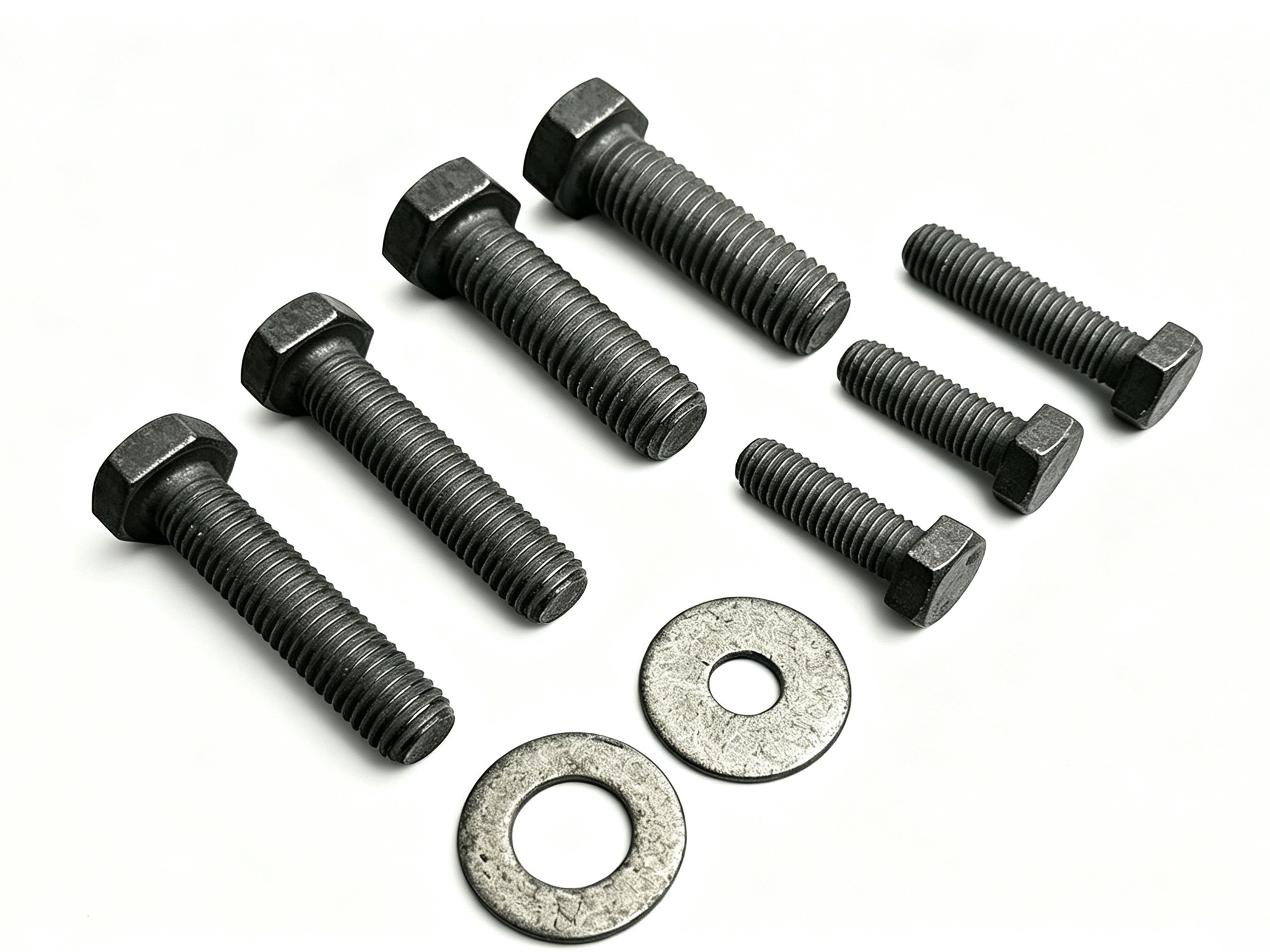
When engineering critical infrastructure for offshore wind farms, high-speed rail networks, and marine environments, standard anti-corrosion methods are often the weakest link in the supply chain. These are not static environments; they are dynamic systems subjected to relentless vibration, tidal fluctuations, extreme temperature swings, and constant UV exposure. In these demanding conditions, the durability of every bolt, beam, and fastener directly dictates the operational lifespan, maintenance frequency, and, most critically, the safety of your entire structure.A single fastener failure in a wind turbine gearbox or a rail transit junction can lead to millions in unplanned downtime, catastrophic equipment damage, and severe safety hazards. As engineering standards tighten and assets are pushed to their limits for 25+ years, the industry can no longer afford the hidden costs of inadequate corrosion protection.
The Limitations of Traditional Galvanizing
For decades, electroplating and hot-dip galvanizing (HDG) have been the default choices for protecting steel. However, these conventional methods carry critical, often overlooked drawbacks that high-end engineers are increasingly rejecting.
Electroplating-provides a thin, purely physical barrier. It is highly susceptible to surface wear during assembly and offers minimal protection against impact damage.
Hot-Dip Galvanizing-requires immersion in molten zinc. The intense thermal shock can cause pre-existing residual stresses to warp the steel. Furthermore, the coating thickness is notoriously inconsistent, often clogging precision threads and requiring costly re-tapping.
Most alarmingly, the traditional pre-treatment for electroplating involves acid pickling. This acidic bath releases atomic hydrogen, which diffuses into the steel lattice. For high-strength steels (Grade 8.8 and above), this leads to hydrogen embrittlement—a delayed fracture phenomenon that can cause fasteners to snap without warning. This is a deal-breaker for safety-critical applications.
What Exactly is Sherardizing? The Metallurgical Alternative
Enter Sherardizing—not a coating, but a state-of-the-art metallurgical heat treatment. Named after its inventor, Sherard Cowper-Coles, this process involves sealing steel components in a rotating drum with zinc powder and inert fillers. The drum is heated to precise temperatures—typically between 380°C and 450°C—without reaching the melting point of zinc.Under these controlled conditions, a solid-state diffusion reaction occurs. Zinc vaporizes and penetrates the crystalline structure of the steel surface, forming a series of distinct zinc-iron intermetallic phases (specifically, the Gamma, Delta, and Zeta layers). Unlike conventional coatings that merely adhere to the surface via mechanical or chemical bonding, sherardizing creates a true metallurgical bond.Because this layer is grown into the steel rather than onto it, it fundamentally eliminates the core weaknesses of legacy treatments. There is no peeling, no chipping, and no shedding, even under extreme mechanical stress.
4 Key Advantages of the Upgraded Sherardizing Process
Modern technological breakthroughs have further enhanced the classic sherardizing process, positioning it as the ultimate solution for high-end steel protection.
1. Extreme Corrosion Resistance (Tailored 120 – 5,000+ Hours)
Sherardizing offers unparalleled flexibility in corrosion resistance. Through customized post-treatment processes—including advanced passivation and specialized sealing agents—the neutral salt spray test (NSS) performance can be engineered to meet specific project demands. The coating can withstand rigorous testing from 120 hours to over 5,000 hours without the appearance of red rust.Whether components are exposed to acidic condensate, high-humidity open-air weather, or direct seawater splash zones, sherardized steel vastly outperforms standard galvanizing. The zinc-iron alloy layer is less reactive than pure zinc, providing a slower, more controlled sacrificial rate, which translates to a longer lifespan for your assets.
2. High Surface Hardness ( HV 300)
Surface durability is paramount during transport and high-speed assembly lines. The intermetallic zinc-iron layer formed during sherardizing achieves a surface hardness exceeding HV 300.This extreme durability acts as a robust armor against abrasion. It prevents bump damage, thread deformation, and wear during transit and assembly processes. This dramatically lowers product scrap rates and preserves the integrity of precision thread geometry, ensuring perfect torque-tension relationships during installation.
3. Built-In Self-Healing Protection (Cathodic Sacrifice)
Even the toughest surfaces suffer minor scratches or impact marks during installation. This is where the electrochemical genius of sherardizing shines. The zinc-iron alloy layer acts as a sacrificial anode relative to the steel substrate (the cathode).If the surface is breached, the surrounding zinc-iron matrix preferentially corrodes to protect the exposed steel. This "self-healing" galvanic action prevents rust from creeping under the coating, effectively isolating the damage and halting corrosion at the source. Unlike organic paints or thin plated layers, rust cannot spread laterally under a sherardized coating, ensuring long-term structural integrity.
4. Zero Hydrogen Embrittlement Risk for High-Strength Steels
Perhaps the most significant advantage for the engineering community is the elimination of hydrogen embrittlement risk. Sherardizing's pre-treatment relies on mechanical sandblasting rather than acid pickling to clean the steel surface. This completely removes the source of hydrogen ions from the equation.Because the process occurs at elevated temperatures, any residual hydrogen already present in the steel is driven out (baked out) during the heat treatment cycle. This makes sherardizing 100% safe for high-strength fasteners, allowing the process to be applied confidently to grades ranging from Class 8.8 through 12.9, where hydrogen-induced stress corrosion cracking is a major liability.
Versatile Application & Large-Scale Component Sizing
Modern upgrades to the sherardizing process have shattered the misconception that it is limited to small parts like nuts and washers. Today, this technology offers exceptional processing versatility:
Large-Scale Capability:
Modern furnaces are large enough to accurately process components up to 6 meters (nearly 20 feet) in length. This includes heavy-duty structural beams, long embedded anchor bars for concrete foundations, and complex custom-fabricated shapes used in utility-scale solar trackers and offshore module supports.
The process is now a proven standard across wind and solar energy generation, high-speed railway systems, marine engineering, and municipal bridge construction.
Engineering Note on Tolerances & Specifications
To deliver maximum durability, the finished sherardized coating maintains a minimum thickness of 45 μm (micrometers), ensuring long-term performance in highly corrosive zones.Critical engineering considerations for designers:
Thread Clearance:
Because of the added surface volume from this protective layer, threaded workpieces require matched reamed nuts (or oversize tapping) to ensure a seamless, friction-free fit during assembly.
Size Recommendations:
The process is highly recommended for thread sizes M4 and larger. Ultra-fine thread specifications (e.g., M2.5 or M3 with fine pitch) are generally not recommended for mass production, as the coating thickness may compromise the tolerance stack-up.
The Sustainable and Future-Proof Choice
As global infrastructure pivots toward greener, longer-lasting equipment, traditional surface treatments are giving way to smarter metallurgical solutions. Sherardizing offers a strong sustainability angle: it is a dry, solid-state process with virtually zero liquid effluent, unlike the toxic waste streams generated by electroplating and acid pickling baths.By successfully breaking through previous technical bottlenecks, the upgraded sherardizing process delivers the unparalleled safety, toughness, and longevity that modern high-end steel structures demand. When the risk of failure is not an option, sherardizing is the only option for future-proofing your infrastructure investment.
 EN