EN

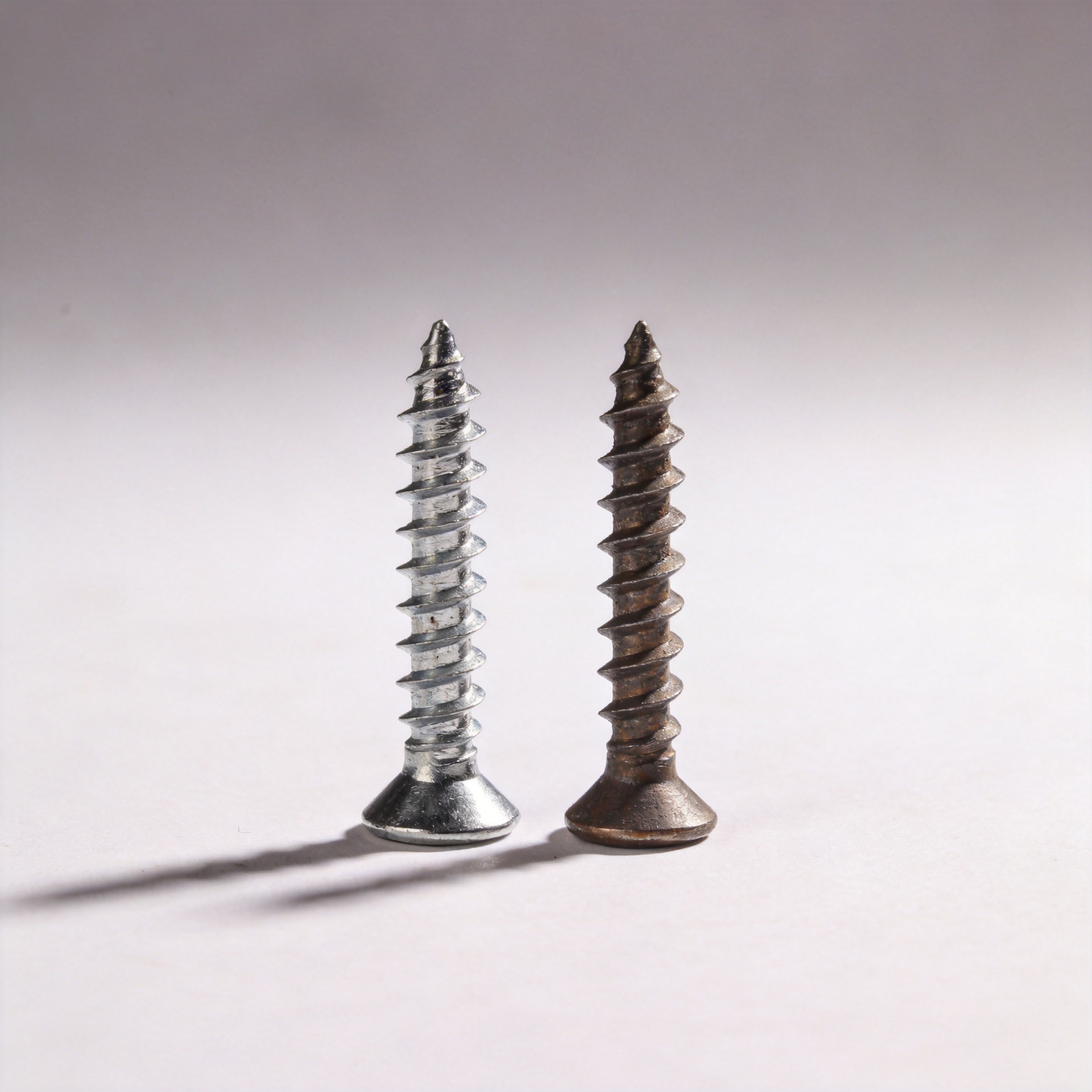
Drywall Screw vs Wood Screw: Why the Two Should Never Be Swapped
A fastener can look like a small, interchangeable piece of hardware until the wrong one breaks, strips, or leaves a loose connection behind. That is why drywall fastener vs wood fastener is not a cosmetic comparison. Each fastener is shaped and tempered for a different job: drywall attachment is a light cladding task, while a wood-to-wood joint may need dependable holding power and resistance to bending or shear.
At the workbench, “Will it go in?” is the wrong test. Both types may enter softwood. The better question is: what material is being joined, what load will the joint see, and is the fastener intended for that connection? That distinction can save a quick fix from turning into a repair.
The short answer: match the fastener to the job
Use a drywall fastener to fasten gypsum board to the correct framing. Use a wood fastener when wood is the material that must be held together. A drywall fastener may seem convenient for a shelf, cabinet, jig, or framing repair, but that convenience does not make it the right structural choice. Conversely, a wood fastener can damage the paper face of drywall or sit proud when its head and thread pattern do not suit the board-and-stud assembly.
One installation detail deserves attention. Coarse-thread drywall screws are commonly used to attach drywall to wood studs; fine-thread drywall screws are generally intended for drywall-to-metal-stud work. That is still drywall installation, not permission to use a drywall fastener as a general wood fastener.
Drywall fastener vs wood fastener: the design differences that matter
| Feature | Drywall fastener | Wood fastener | Why it matters |
|---|---|---|---|
| Primary task | Attach gypsum board to framing | Join wood members or wood-based materials | The connection requirements are different. |
| Thread pattern | Fine or coarse thread chosen for the framing material | Deeper, wider threads that bite into wood fibers | Wood needs strong thread engagement without excessive splitting. |
| Head profile | Typically a bugle-style head that dimples drywall paper | Often flat, pan, round, washer, or other task-specific heads | Head geometry affects seating, surface finish, and pull-through behavior. |
| Material behavior | Often hard for fast driving, with limited tolerance for bending in demanding joints | Selected for wood fastening and available in designs suited to installation loads | A fastener that drives easily is not automatically suitable for a loaded joint. |
The main difference is purpose. A wood fastener needs threads that grip wood fibers and a shank/head combination appropriate for the joint. A drywall fastener needs to draw board tight to framing while keeping the drywall face intact enough for finishing. Similar length and color do not make the two types equivalent.
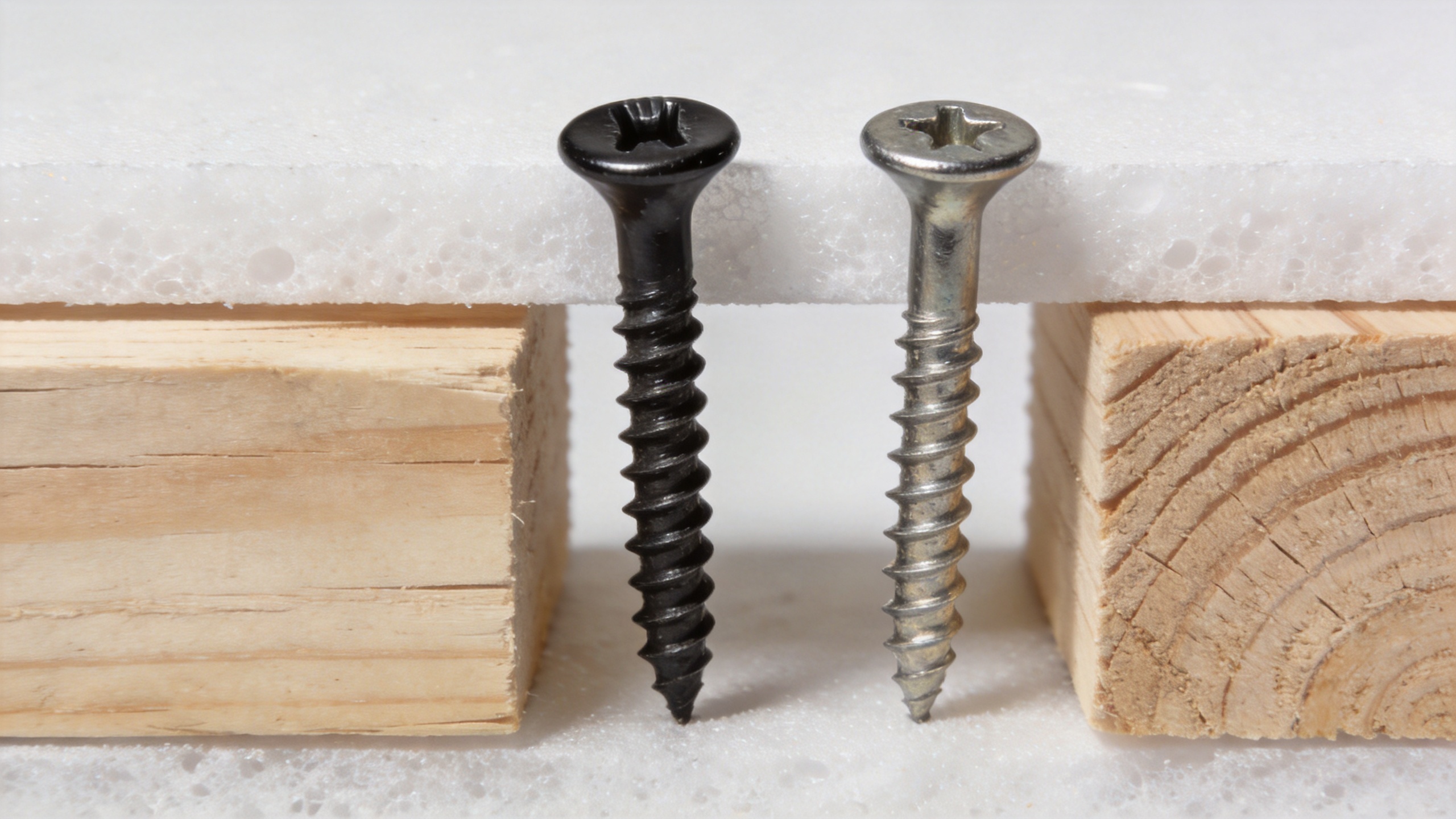
Why a drywall fastener is a poor substitute for a wood fastener
1. The threads address a different fastening problem
Wood fastener threads are designed to pull and hold wood fibers. In a wood joint, deeper and more aggressive thread engagement helps the fastener develop useful withdrawal resistance. A drywall fastener is optimized around board-to-framing attachment, so its thread choice is tied to the stud material. If you use the wrong fastener in a wood joint, it may bite at first yet deliver less reliable long-term holding behavior than a purpose-made wood screw.
2. Bending and side load can expose the weakness
Drywall fasteners are widely described as hard and relatively brittle compared with a screw designed for general woodworking. In a loaded shelf bracket, a cabinet rail, or a joint that is forced slightly out of alignment, the fastener can see bending or shear rather than simple pull-in. A broken screw buried in wood is far more difficult to correct than selecting the proper wood screw at the outset.
3. The head is made for drywall finishing, not wood joinery
The bugle head on a drywall screw helps form a shallow dimple in drywall paper for joint compound. In wood, that same profile can crush fibers at the surface or sit in a way that does not suit the finish. A wood screw head can be selected for countersinking, visible trim, hardware mounting, or broad bearing area. The head choice is part of the design, not an afterthought.
4. A successful drive is not a successful connection
It is easy to judge a screw only by whether the driver seats it. That is a misleading test. A properly selected screw must also suit the joint geometry, wood species, pilot-hole need, expected movement, and load direction. For hardwood, near-edge fastening, or a critical joint, a pilot hole and a wood screw matched to the application are often a more sensible route than forcing a drywall screw until it snaps.
When a drywall screw is the right screw
Drywall screws are useful when the task is actually drywall installation. Choose the thread based on the framing: coarse thread is commonly paired with wood studs, while fine thread is commonly paired with light-gauge metal studs. Select a length that passes through the board and engages the framing without creating avoidable interference on the opposite side.
Drive the drywall screw until the head creates a controlled dimple in the paper face. If the head tears through the paper, the holding area is reduced. If the head remains proud, finishing becomes difficult. Aim for a clean recess rather than extra torque.
How wood screw, machine screw, self tapping screw, and hex screw differ
Fastener names can overlap, so it helps to separate function from head or drive style:
- Wood screw: made to grip wood or engineered wood in wood-fastening work.
- Machine screw: normally mates with a pre-tapped hole or a nut; it is not the usual choice for cutting its own purchase in wood.
- Self tapping screw: forms or cuts a thread in the receiving material. The exact design must match the substrate, whether sheet metal, plastic, or another material.
- Hex screw: commonly describes a hex head or drive form, not a complete application category. A hex screw can be made for different materials, so verify its thread and intended use.
Head shape alone does not answer the material question. Check the product specification and select the screw for the material pair, not simply for the driver bit already in hand.
A practical selection checklist
- Name both materials. Is this drywall-to-wood stud, drywall-to-metal stud, wood-to-wood, sheet metal, or a pre-threaded assembly?
- Identify the load. Decorative cladding, a light fixture, furniture joinery, and a load-bearing connection do not make the same demands on a screw.
- Match the thread and tip. Choose the thread pattern and point style intended to engage the base material.
- Choose a suitable head. Consider flush finish, bearing area, hardware clearance, and the risk of damaging the surface.
- Plan the installation. Check length, edge distance, pilot-hole needs, driver fit, and the manufacturer’s guidance for the fastener.
The bottom line
Drywall screw vs wood screw comes down to design intent. A coarse-thread drywall screw can be correct for hanging drywall on wood framing, but it is still not the go-to screw for a wood joint. Use drywall fasteners for drywall work and wood screws for wood fastening. For a machine screw, self tapping screw, or hex screw, look beyond the name and confirm the thread, material, and intended load before installation. That brief check supports a sound connection and a clean finished surface.