EN

How to Manage Fastener Stock for Multi Phase Construction Projects
On a multi phase construction project, a fastener is easy to underestimate. It may be small, inexpensive, and stored in thousands of pieces, yet the wrong fastener at the wrong work front can interrupt installation, create a traceability question, or leave a crew waiting for a simple item. The practical answer is not to buy every fastener at the beginning. It is to make stock follow the project’s release plan.
From a procurement-manager viewpoint, fastener control starts with visibility: what the drawings call for, which phase consumes it, where it is held, and who may issue it. That approach applies to a threaded fastener, a mechanical fastener, a stainless fastener, or a custom fastener. The detail of the controls changes, but the planning logic stays the same.
Build a fastener register before the first delivery
Start with a register rather than a single purchase total. Each line should identify the fastener by a unique internal code and include its drawing reference, type, diameter or thread, length, material, finish, grade where applicable, compatible washer or nut, planned phase, planned location, and supplier lot reference. If a fastener has a special installation method, note the tool or torque documentation that must travel with it.
A broad description such as “M12 bolts” is rarely enough. A threaded fastener with the same nominal diameter can still differ in length, coating, thread form, or mating-part requirement. The register gives the site team one language for ordering, receiving, bin labeling, and issuing. It also makes design revisions visible: when a revision changes a callout, the affected register line can be marked for review instead of being mixed into normal stock.
Separate the register into three views: committed demand, received stock, and released stock. Committed demand comes from approved drawings and the current phase schedule. Received stock is what has passed the receiving check. Released stock is what has been issued to an identified crew or area. These views are more useful than one on-hand number because they show whether a fastener is available for work, merely on site, or already committed elsewhere.
Convert the schedule into phase kits, not one bulk pile
Construction material planning works when quantities and delivery dates are tied to scheduled work. Apply that principle to every fastener family. Break the project into practical release windows such as foundations, structural framing, envelope work, services, fit-out, and closeout. For each window, calculate a phase quantity from the latest approved takeoff, then add only the project-approved allowance for handling loss or approved contingency.
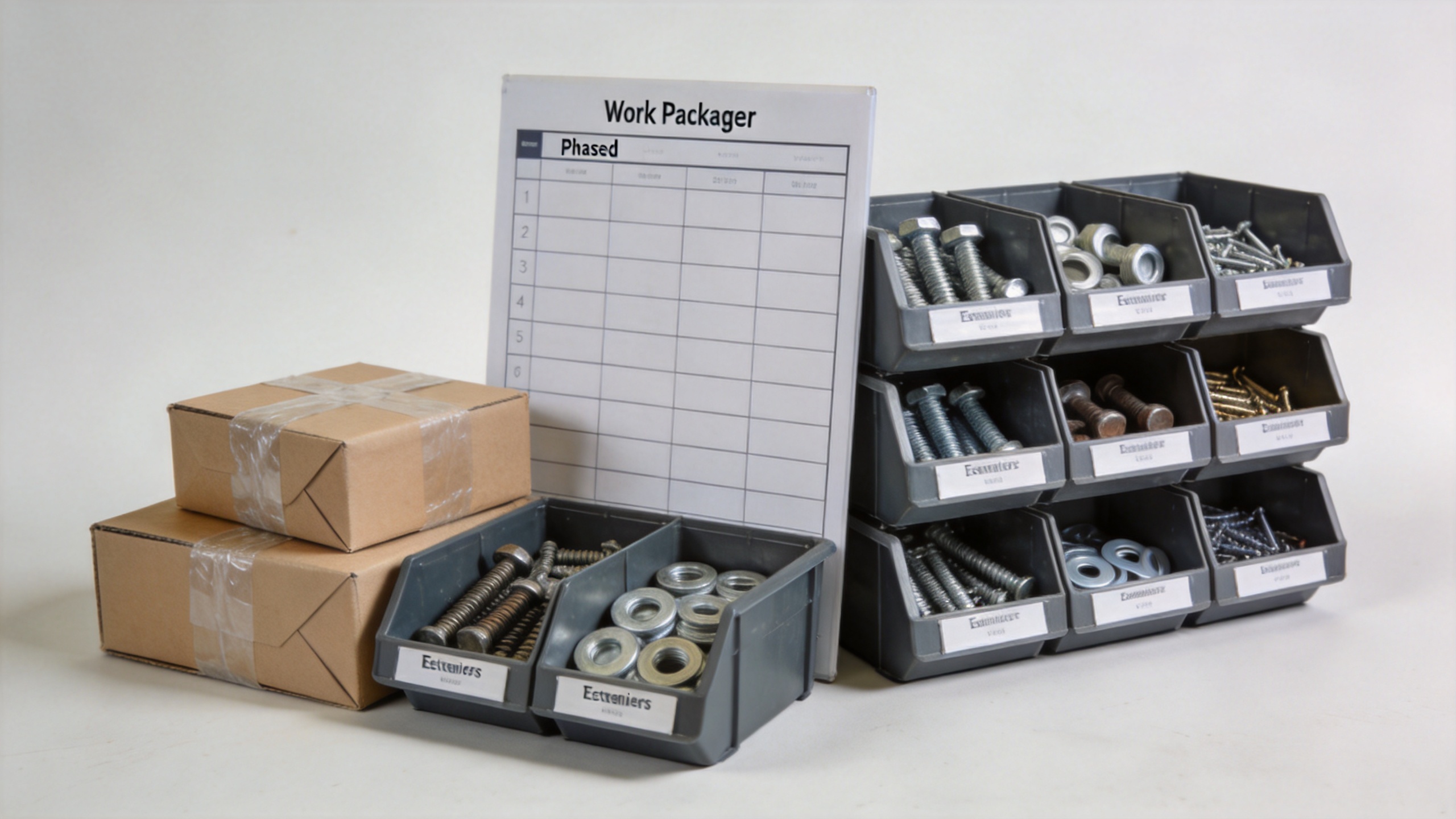
Do not let a total project quantity become permission to open every carton. A phase kit is a labeled group of fastener stock reserved for one work package, area, or installation sequence. The label should state the register code, phase, zone, quantity, date released, and receiving lot. If the schedule slips, the kit can remain closed and accounted for. If the sequence changes, the planner can reassign it deliberately rather than relying on memory.
This is particularly important when several subcontractors share a laydown area. A mechanical fastener intended for façade brackets may look close enough to an item used for temporary works, but “close enough” is not a stock-control category. Clear phase kits lower the chance of a silent substitution and make shortages easier to identify before the crew reaches the work face.
Set reorder points around the next release window
Reorder points should reflect upcoming demand, delivery lead time, inspection time, and an agreed buffer; they should not be copied from a generic warehouse formula. Review each fastener family at the phase meeting. Ask four questions: What quantity will the next two work fronts consume? What quantity is physically accepted and still unissued? What quantity is already on order with a confirmed delivery date? What event would force a new order today?
For common stock, a simple trigger may be enough: reorder when accepted, unissued quantity falls below the expected demand before the next planned receipt. For a custom fastener, the trigger needs more attention because replacement lead time, approval status, packaging, and inspection requirements can be different. Treat a custom item as a planned release, not an emergency purchase, whenever the schedule gives that visibility.
Review consumption after a meaningful installation block, not only at month end. A revised connection detail, damaged packaging, or a change in crew productivity can shift demand quickly. The value of a short review is that it catches variance while the next delivery can still be adjusted.
Protect identity and condition in the storage area
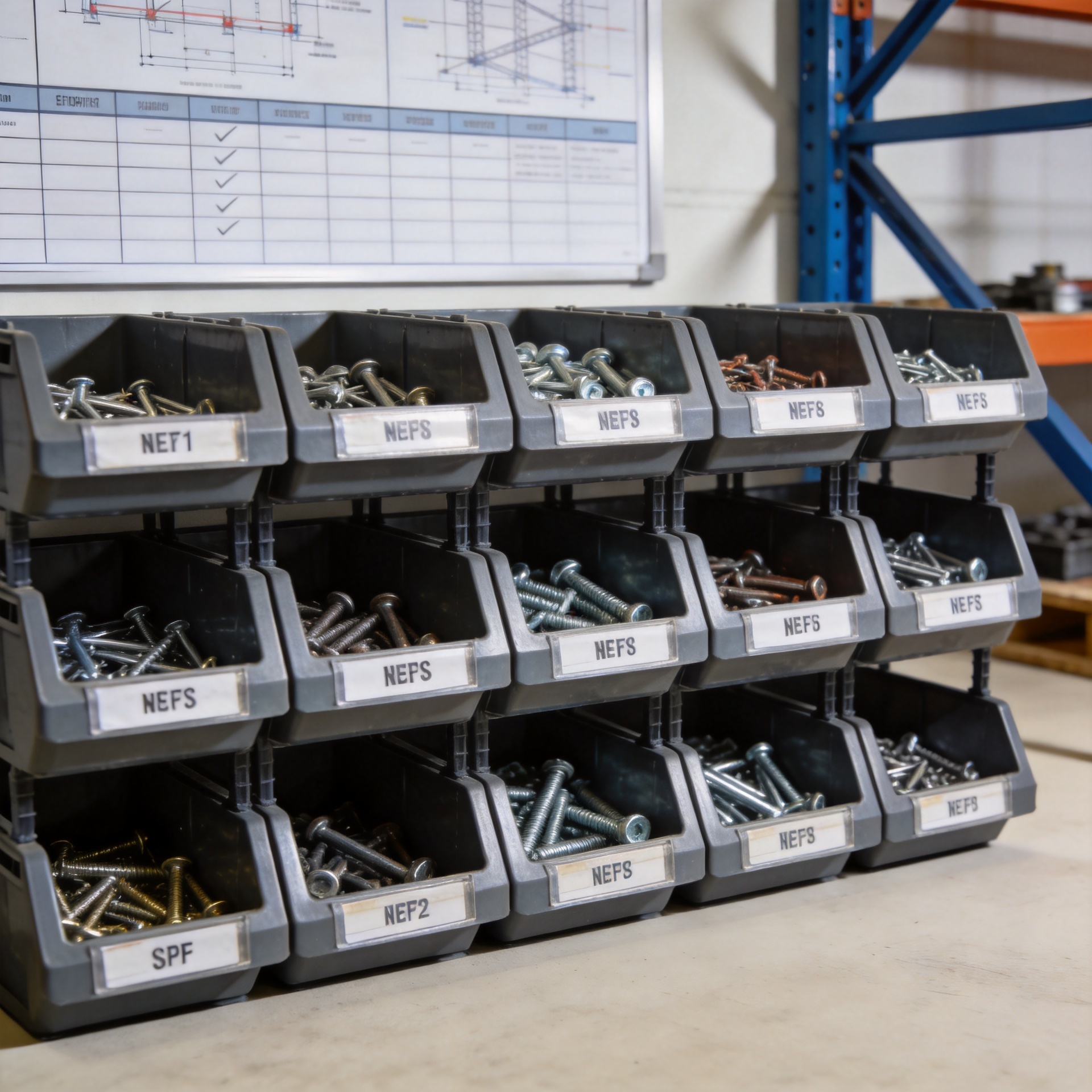
Fastener stock needs physical controls as well as spreadsheet controls. Store unopened packages in a clean, dry, protected location. Keep labels visible, keep different finishes and sizes separated, and avoid decanting mixed items into unmarked containers. If repacking is necessary, transfer the full identification to the new container before it is moved.
Receiving staff should verify count, visible condition, label match, and available documentation against the purchase order and register. Quarantine a package when the label is unclear, the packaging is wet or damaged, the lot cannot be linked to the record, or the contents do not match the expected item. A stainless fastener may be selected for a corrosive environment, but it still needs clean separation from incompatible handling practices and unverified materials.
Use a simple location system that matches the register: aisle, rack, bay, bin, and phase-kit reference. Photographing a bin label during receiving can support internal traceability, but it is not a substitute for a controlled issue record. The essential point is that a supervisor can locate the right fastener and its status without depending on one person’s memory.
Control issue, returns, and substitutions at the work front
An issue record should show what fastener left stock, how many pieces were released, which zone received them, who accepted them, and which lot or package was used. It does not need to be complicated. A barcode scan, a controlled spreadsheet, or a signed issue sheet can work if the same fields are consistently captured.
Returns deserve the same discipline. Unused fastener packages should be counted, inspected, and returned to the correct location with their identity intact. Open packages with uncertain quantity or identity should be held for review, not placed back into available stock. This is where many inventory records diverge from physical reality.
Treat a field substitution as more than an inventory adjustment. If a specified threaded fastener is unavailable, the issue affects engineering, quality, and schedule decisions. Route it through the project’s approved technical-change process, then update the register, phase demand, and affected kit after a decision is documented.

Run a short phase-gate check
Before each phase release, bring procurement, site supervision, quality, and the relevant trade lead together for a focused check. Confirm that the required fastener stock is accepted, labeled, located, protected, and sufficient for the planned work window. Compare open demand with approved revisions, expected delivery dates, and current issue records. Then flag items that need escalation: low stock, unclear lot identity, damaged packaging, incomplete documentation, or a pending substitution.
This check does not need a long meeting. Its purpose is to expose a stock problem early enough for the project team to act. When planning is linked to phase releases, storage is controlled, and every issue is visible, fastener stock becomes a managed construction input rather than a last-minute search through cartons.