EN

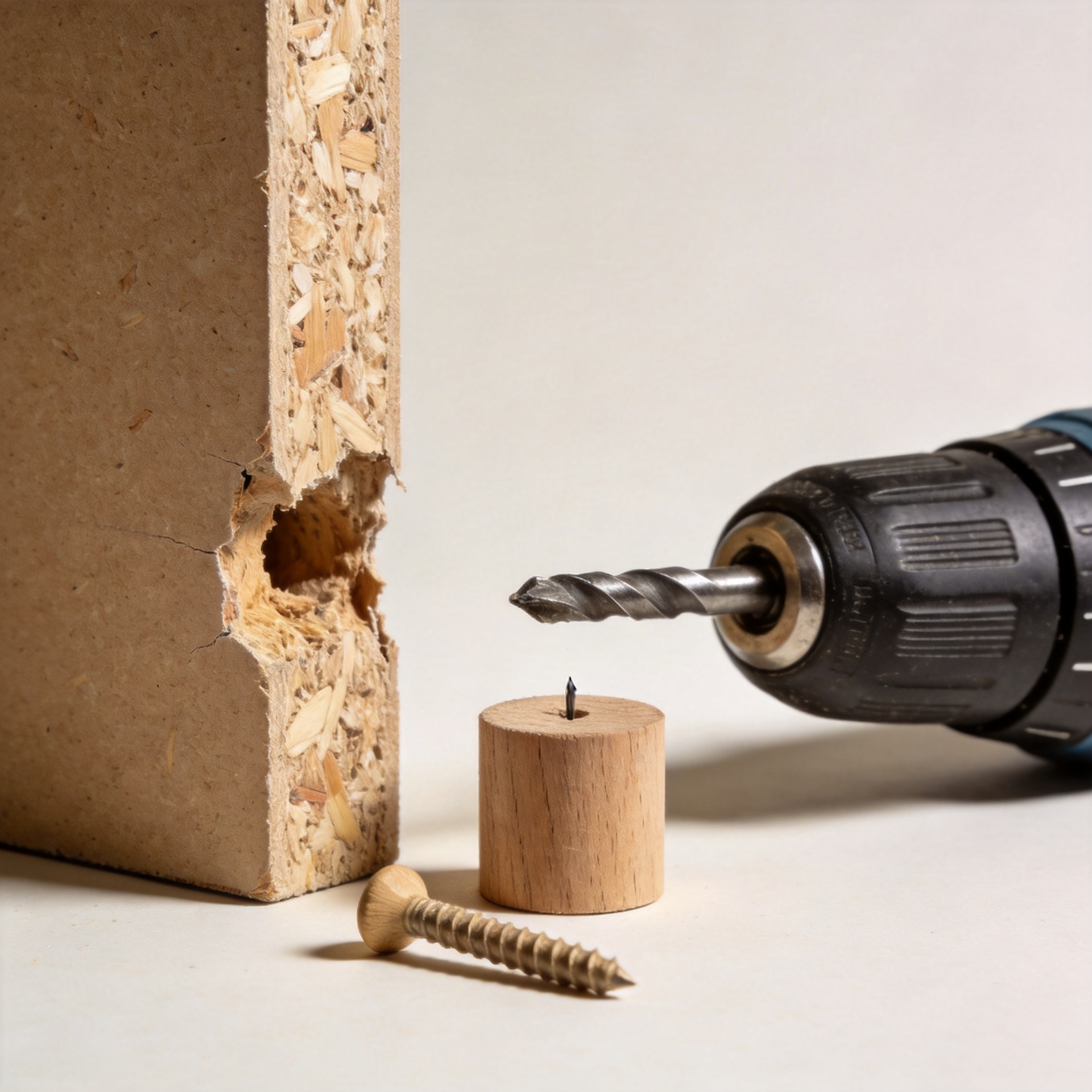
How to Recover a Screw Hole That Has Blown Out in Particle Board
A screw that spins without tightening is a familiar furniture repair problem. In particle board, the threads can crush the wood particles around the hole, so the fastener no longer has enough material to grip. The repair does not automatically call for a bigger screw. First decide what the connection carries, then rebuild or bypass the damaged area in a way that suits that load.
As a fastener-selection engineer, I look at the board, the screw, and the load together. A cabinet-back clip and a heavily used hinge are not the same job. The practical goal is to give the screw sound material to bite into, while keeping the panel from splitting or crumbling further.
Check the damage before choosing a repair
Remove the loose screw and inspect the hole with a flashlight. If the hole is only slightly enlarged and the surrounding face is firm, a small wood-and-glue repair may be enough for a light-duty fitting. If the edge is swollen, dark from moisture, cracked, or crumbles when pressed, filler alone is unlikely to hold a working load for long.
Also identify the direction of force. A screw holding a thin back panel mainly resists a light pull. A hinge, drawer runner, shelf bracket, or item that is opened repeatedly puts much more stress on the repair. Particle board has a weaker edge than its face, so an edge-mounted fitting needs extra care. If failure could drop a heavy object or affect a safety-critical assembly, replace the damaged panel or use an engineered mechanical connection rather than relying on a cosmetic patch.
Choose the recovery method by load
Method 1: Wood splints for a small, light-duty hole
For a small hole in otherwise solid board, coat several hardwood splints or trimmed toothpicks with wood glue and press them tightly into the opening. Allow the adhesive to set for the period stated on its label, trim the excess flush, and make a small pilot hole before reinstalling the screw. The splints work because they add wood fiber where the original threads lost purchase; they are not a substitute for a sound panel around a loaded hinge.
Method 2: A glued wood plug for a more substantial repair
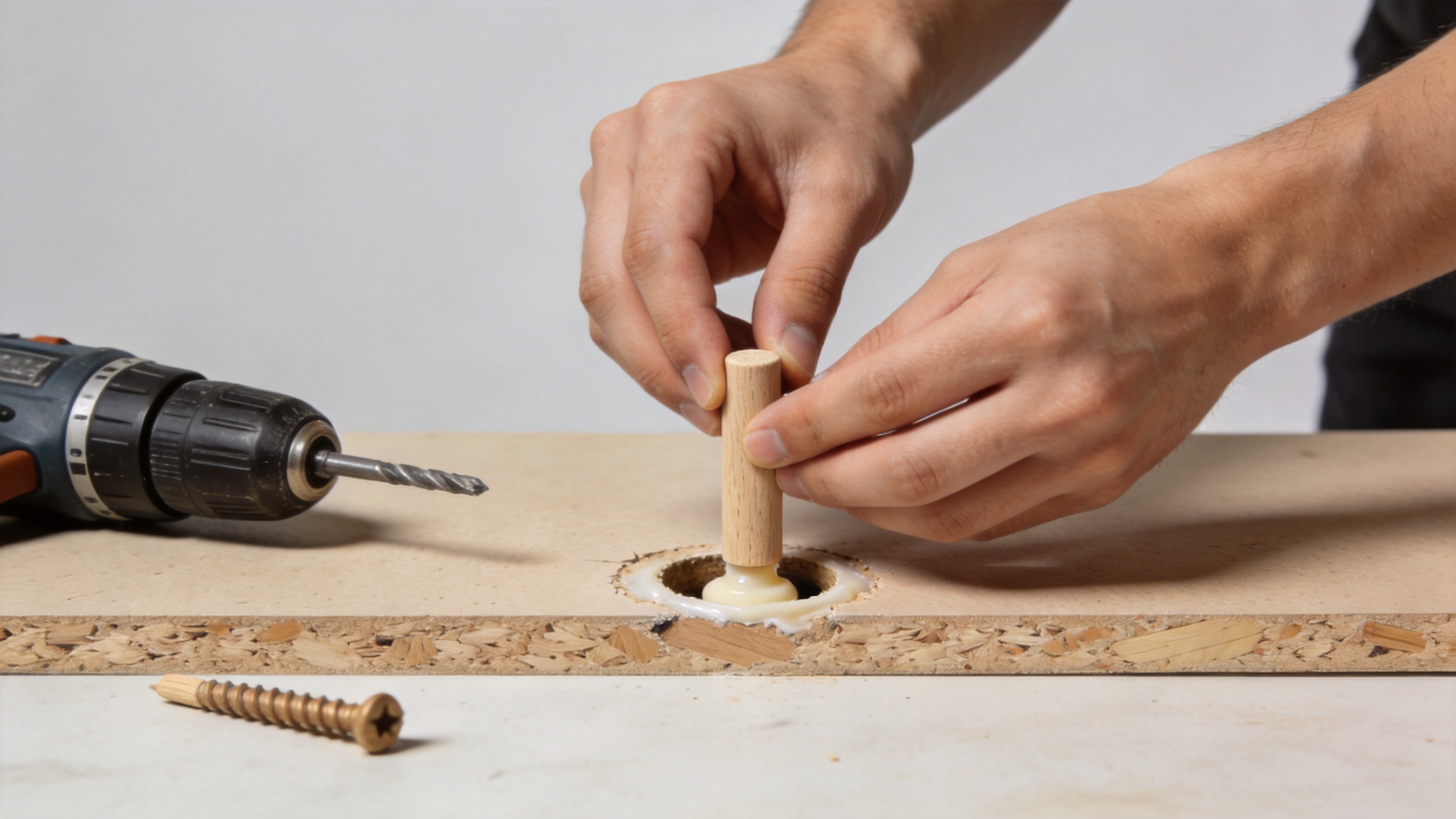
When the hole is badly blown out, drill it cleanly to accept a short hardwood dowel or shaped wood plug. Test the plug dry first: it should fit snugly without forcing the particle board apart. Apply wood glue to the plug and hole, seat it to a depth that does not break through the opposite face, and allow the bond to set fully. Then mark the original location, drill a centered pilot hole, and drive the new screw slowly. This method creates a denser core for the threads than loose filler can provide.
A repair is more reliable when the plug is larger than the crushed zone, not merely the visible opening. Keep enough undamaged board around it. If the old hole is close to an edge, shifting the fitting slightly or using a larger mounting plate can be more sensible than drilling an even larger hole at the same weak spot.
Method 3: Threaded inserts, bolts, or a mounting plate for repeated load
A machine screw does not form useful threads directly in damaged particle board. If the fitting must be removed and refitted, consider a threaded insert designed for wood-based panels, provided the panel thickness and fitting geometry allow it. For a through-panel location, a machine screw with washers and a nut or a purpose-made mounting plate can spread the load over a larger area. Check clearance on the back side before drilling. These approaches change the connection from thread-in-board fastening to a mechanical clamp, which is often a better answer for a stressed fitting.
Select the right screw after the repair
For a repaired wood-based panel, a coarse-thread wood screw is usually more appropriate than a fine-thread machine screw unless an insert or nut supplies the threads. Choose a diameter that matches the fitting hole and the rebuilt material; oversizing it aggressively can split a narrow edge or crush the plug. Length matters as well: it should provide useful engagement without exiting the far face or colliding with hardware.
A self tapping screw is useful when its design matches the material and the manufacturer specifies it for that application, but its cutting action cannot restore missing particle-board fibers. Do not use a self tapping screw as a shortcut around a loose, powdery hole. In light-gauge metal work, a hex screw may be chosen for its drive style and application requirements; in particle-board furniture, head style alone does not determine holding strength. The substrate and thread engagement still matter more.
Drill a pilot hole and tighten with control
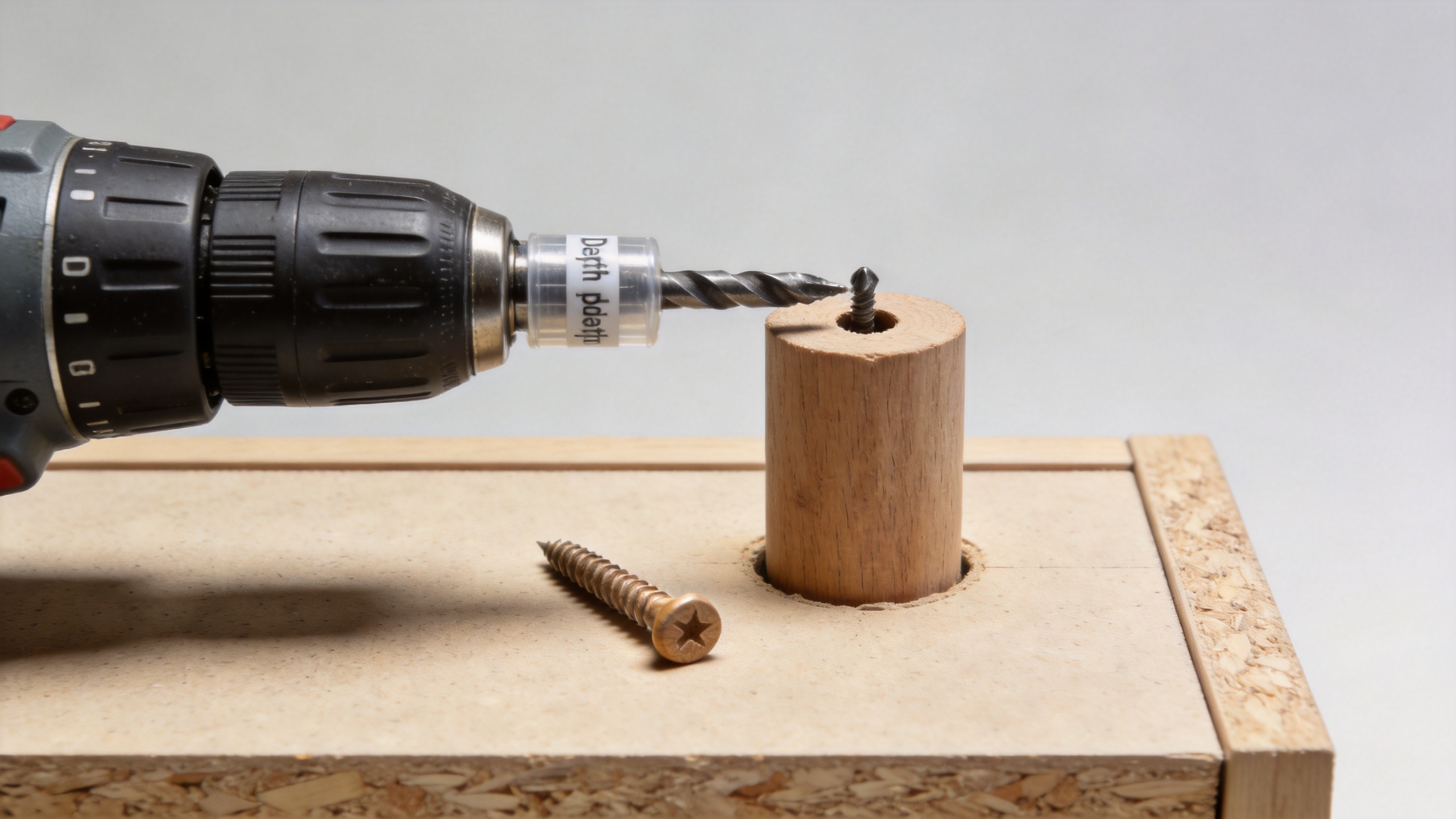
After the glue has set, use an awl or brad point to mark the center. Drill straight and stop at the planned depth with tape on the bit. A pilot hole should leave material for the screw threads to engage; one that is too large can reduce grip. The precise bit size depends on the screw’s root diameter, the board density, and whether the fastener is entering a plug, face, or edge. When in doubt, test the selected screw in an offcut or concealed area first.
Drive the screw at low speed and stop when the fitting is seated. Continuing to turn after the head has clamped the hardware is a common way to strip fresh material. If the screw begins to spin before the fitting is secure, remove it rather than forcing it; reassess the hole, the pilot size, and the load path.
Common mistakes that lead to another blowout
- Adding glue and immediately reinstalling the screw: the repair needs setting time before it can support thread pressure.
- Using filler as structural material: lightweight patching compounds can level a surface but may not provide dependable thread engagement.
- Moving to a larger screw without checking edge distance: a larger diameter can open a crack in thin or damaged particle board.
- Mixing fastener types: use a wood screw for a wood-plug repair; use a machine screw only where an insert, nut, or threaded component receives it.
- Ignoring moisture damage: swollen, friable board usually calls for replacement or a load-spreading hardware solution.
A quick decision checklist
Use a glued splint repair for a light fitting and a firm surrounding panel. Use a hardwood plug when the hole is enlarged but there is enough intact material around it. Use an insert, through-bolt, or plate when the fastener will see repeat movement or a meaningful load. Replace the panel when moisture, cracking, or broad crumbling extends beyond one location. In each case, a centered pilot hole and controlled tightening give the repaired screw a far better chance of staying secure.
Before putting furniture back into service, pull gently on the fitting and cycle it several times. Look for movement, new cracking, or a screw head that will not stay seated. That small check helps you catch a marginal repair while it is still easy to change the method.