EN

Why Do Industrial Buyers Choose High Quality Bolts for Assembly?
For an industrial buyer, a bolt is rarely a small purchasing detail. It is part of the load path, the assembly sequence, the inspection plan, and often the service record for the finished equipment. A low unit price can look attractive until inconsistent dimensions, unclear material records, or uneven thread quality slow the line. That is why buyers commonly evaluate a high quality bolt as a controlled component rather than an interchangeable piece of hardware.
In practice, the decision is not about paying more for a label. It is about reducing uncertainty. A suitable bolt specification, repeatable manufacturing, clear lot identification, and a supplier who can answer technical questions make it easier to assemble products consistently and investigate a problem if one arises later. This matters in steel structures, machinery, pipeline supports, agricultural equipment, renewable-energy hardware, and many other applications where joints work under vibration, load, moisture, or changing temperature.
A Bolt Must Match the Joint, Not Just the Drawing Callout
Buyers start with the joint’s real conditions: clamped materials, hole geometry, access for installation, expected load direction, service environment, and maintenance approach. The right bolt for a dry indoor panel is not automatically the right bolt for a galvanized outdoor frame or a machine subjected to repeated cycling. Diameter, thread pitch, grip length, head style, material, coating, nut, washer, and tightening method all influence whether the assembled joint behaves as intended.
That is why an industrial bolt purchase should be reviewed as an assembly system. A bolt can have an appropriate nominal size while still creating trouble if its thread engagement is short, its coating changes the tightening behavior, or its mating nut and washer are not specified as a compatible set. Buyers who map these details before release reduce last-minute substitutions and unclear responsibilities on the production floor.
Consistency Makes Assembly More Predictable
Assembly teams value a high quality bolt because consistent parts make routine work less variable. When head dimensions, thread form, length, finish, and markings remain within the agreed requirements, tools fit as expected and inspectors have a clearer basis for checking incoming material. This does not remove the need for installation controls, but it gives those controls a stable starting point.
Thread quality is a useful example. Rough threads, damaged starts, inconsistent plating, or burrs can change how a bolt runs into its mating part. Operators may spend more time correcting cross-threading, reworking holes, or sorting mixed material. A properly specified industrial bolt supports smoother assembly because it is supplied with documented dimensions and a defined manufacturing route, rather than only a visual resemblance to the requested part.
Strength Grades Need Context
“Higher strength” is not a universal answer. The chosen bolt must suit the joint design and applicable specification. For structural applications, ASTM F3125/F3125M covers chemical, physical, and mechanical requirements for heat-treated high-strength structural bolts and assemblies. Its scope includes inch-series minimum tensile strengths of 120 ksi, 144 ksi, and 150 ksi, plus metric strengths of 830 MPa and 1040 MPa. Those values illustrate why a buyer should identify the required grade and connection type rather than request a strong bolt without a defined use case.
For many industrial assemblies, the engineering team will also consider proof load, hardness, ductility, corrosion exposure, and compatibility with the surrounding material. A high quality bolt is therefore one that fits the approved design window and is supported by suitable records—not simply one with the largest advertised strength figure.
Reliable Preload Depends on the Whole Assembly Process
In bolted joints, the installed clamping force often matters as much as the bolt’s material properties. Guidance on structural bolt installation highlights the role of pretension in connections subject to impact or cyclic loading. The key purchasing lesson is straightforward: a bolt, nut, washer, lubrication condition, and tightening method need to work together. Changing one of those items without review can change the relationship between applied torque and achieved tension.
Industrial buyers therefore ask practical questions before placing a repeat order. Is the assembly tightened by torque, angle, direct tension indication, or another approved method? Are the mating components supplied as a system? Is the coating specified? Can the supplier identify the production lot? These questions help production and quality teams set realistic incoming checks and installation instructions.
Traceability Helps When a Problem Needs an Answer
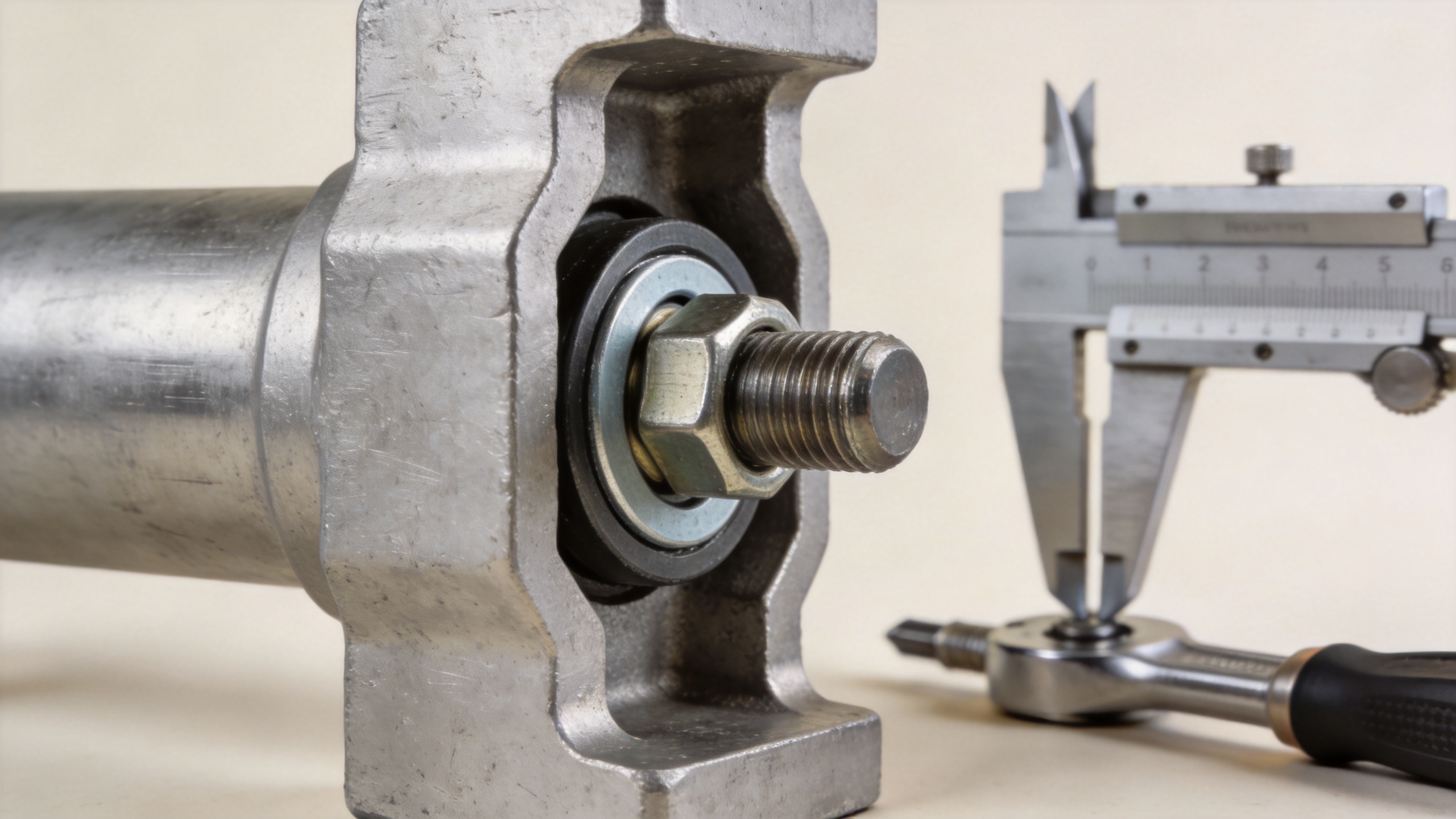
Traceability is one reason buyers choose a high quality bolt supplier for critical assemblies. If a joint concern appears during receiving, assembly, or field service, lot identification makes it possible to isolate the affected material and review the relevant inspection or test documentation. Without that link, a team may need to quarantine a wider range of stock while it reconstructs what was installed where.
For industrial bolt sourcing, useful documentation may include the ordered specification, material or test records where applicable, lot or heat references, coating information, dimensional inspection results, and packaging identification. The needed level of evidence depends on the application. A buyer should define it in the purchase requirement instead of assuming every bolt will arrive with the same documentation.
Corrosion Decisions Affect Long-Term Assembly Value
A bolt that looks acceptable at receiving can face a very different environment after assembly. Humidity, chlorides, chemicals, trapped moisture, dissimilar metals, and damaged coatings can all affect the joint over time. Selecting a suitable material and finish is therefore part of the quality decision. Zinc plating, hot-dip galvanizing, zinc-flake systems, stainless grades, and other options have different uses, limitations, thicknesses, and installation implications.
The buyer’s job is to connect the environmental exposure to the specification. In a coastal or chemical setting, material and coating selection may need more attention than in a protected indoor enclosure. In an assembly that uses aluminum, stainless steel, or coated steel, compatibility should be reviewed as well. A high quality bolt supports the selected corrosion-control plan only when its finish and documentation match the actual service conditions.
What to Ask a Bolt Supplier Before Approval
- Can the supplier confirm the exact bolt standard, grade or property class, dimensions, thread, material, and finish?
- Are nut and washer requirements defined where the joint calls for them?
- What lot identification and inspection records are available for this industrial bolt order?
- Can the supplier support drawings, special lengths, nonstandard threads, or packaging controls when the assembly requires them?
- What incoming inspection points should the buyer verify before releasing the bolt to the line?
- How will coating, lubrication, and tightening guidance be controlled so the assembly process remains consistent?
Choose the Cost of Control, Not Just the Piece Price
Industrial buyers choose high quality bolts because the purchase affects more than hardware inventory. A well-defined bolt program can reduce sorting, rework, installation variation, and the time needed to trace a concern. It also gives engineering, procurement, and quality teams a common language for approving substitutions and managing changes.
When comparing a bolt supplier, use the joint requirements as the reference point. Request the specification, confirm the applicable records, define the inspection plan, and review assembly conditions before approving production material. That approach helps turn a bolt from an uncertain commodity into a controlled part of a reliable assembly process.