EN

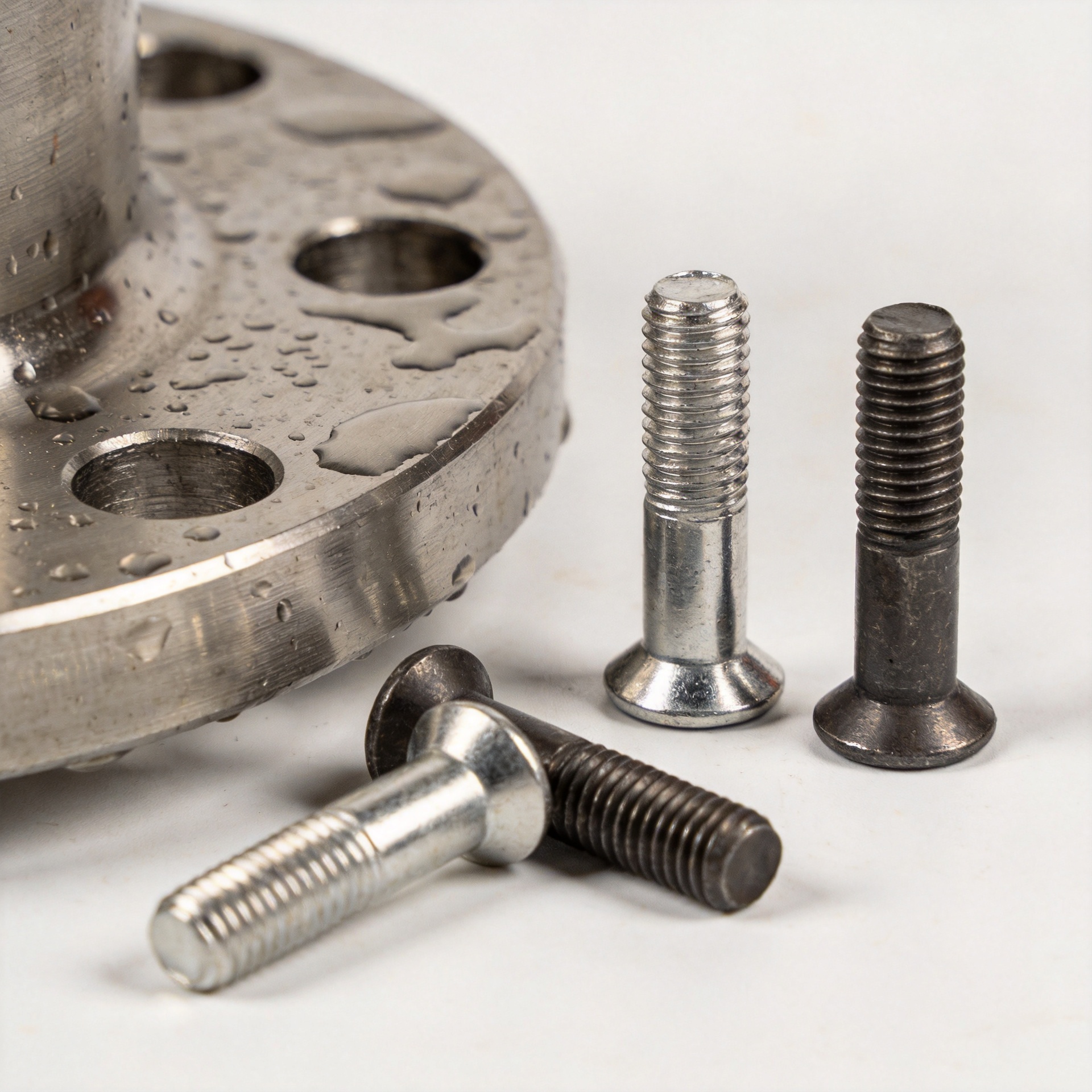
Stainless Stud vs Carbon Steel Stud: Corrosion Logic Compared
When buyers compare Studs for an outdoor machine, structural connection, or process-equipment assembly, the question is usually framed as “stainless or carbon steel?” That is a useful starting point, but corrosion performance is not a material label contest. It is the result of the alloy, the surface condition, trapped moisture, adjacent metals, and the access available for inspection. A threaded connection that stays dry and clean behaves very differently from one that holds chloride-bearing water in a narrow gap.
From a fastener-selection perspective, the practical goal is to choose Studs whose material and protection system fit the joint, rather than simply selecting the higher-priced option. This article compares the corrosion logic behind stainless and carbon steel Studs, then turns it into a usable specification checklist.
Start with the service environment, not the material name
A threaded stud may see indoor humidity, rain wash, marine spray, condensation, process chemicals, or a combination of these. Ask four questions before comparing grades: Will the joint stay wet? Can deposits or water remain under a nut, washer, or flange? Is chloride exposure likely? Will the stud contact a different metal while an electrolyte is present?
For sheltered, dry service, a carbon steel stud with an appropriate coating can be a sensible, economical choice. For repeated wetting, marine air, washdown, or poor drainage, stainless often offers a more stable starting point. The important qualifier is that “stainless” does not mean every grade suits every corrosive medium. Grade, finish, contamination, crevice geometry, and cleaning practice still matter.
Why stainless steel resists corrosion differently
Stainless alloys rely on a thin chromium-rich passive film at the surface. When that film is intact and the environment supports passivation, it slows the metal-loss process that produces visible rust. This is why stainless Studs are frequently considered for wet or corrosive applications.
The passive-film explanation also defines the limit. Chlorides, oxygen-starved crevices, surface iron contamination, and aggressive chemical exposure can challenge that film. A double ended stud buried behind a wet flange has less opportunity to dry than an exposed fastener. In that situation, the selection should consider the exact stainless grade and the joint design, not only the word “stainless” on a bill of materials.
For procurement teams, that means asking the supplier to align the grade, thread form, dimensions, finish, and inspection requirements with the drawing and the actual environment. It is more reliable than treating corrosion resistance as a generic add-on.
How carbon steel Studs manage corrosion
Carbon steel does not form the same durable passive surface as stainless. Its corrosion control usually depends on a barrier or sacrificial protection system, such as zinc-based coating, zinc flake treatment, paint, or another specified finish. The base material may be appropriate for the required strength and manufacturing route, but the protection must remain continuous where the joint is exposed.
Threads make this harder. Tightening a nut, handling a welding stud, abrasion during installation, and damaged edges can disrupt a coating. If moisture then reaches exposed carbon steel, corrosion can begin at local defects or under deposits. This does not rule out carbon steel Studs; it means the specification needs to include coating type, thickness or performance requirement where applicable, post-treatment handling, and any limits on field modification.
In a controlled indoor assembly with predictable maintenance, coated carbon steel may offer a balanced solution. In an inaccessible location where a coating failure would be difficult to detect or repair, a stainless option may reduce the dependency on coating continuity—provided the grade is fit for the exposure.
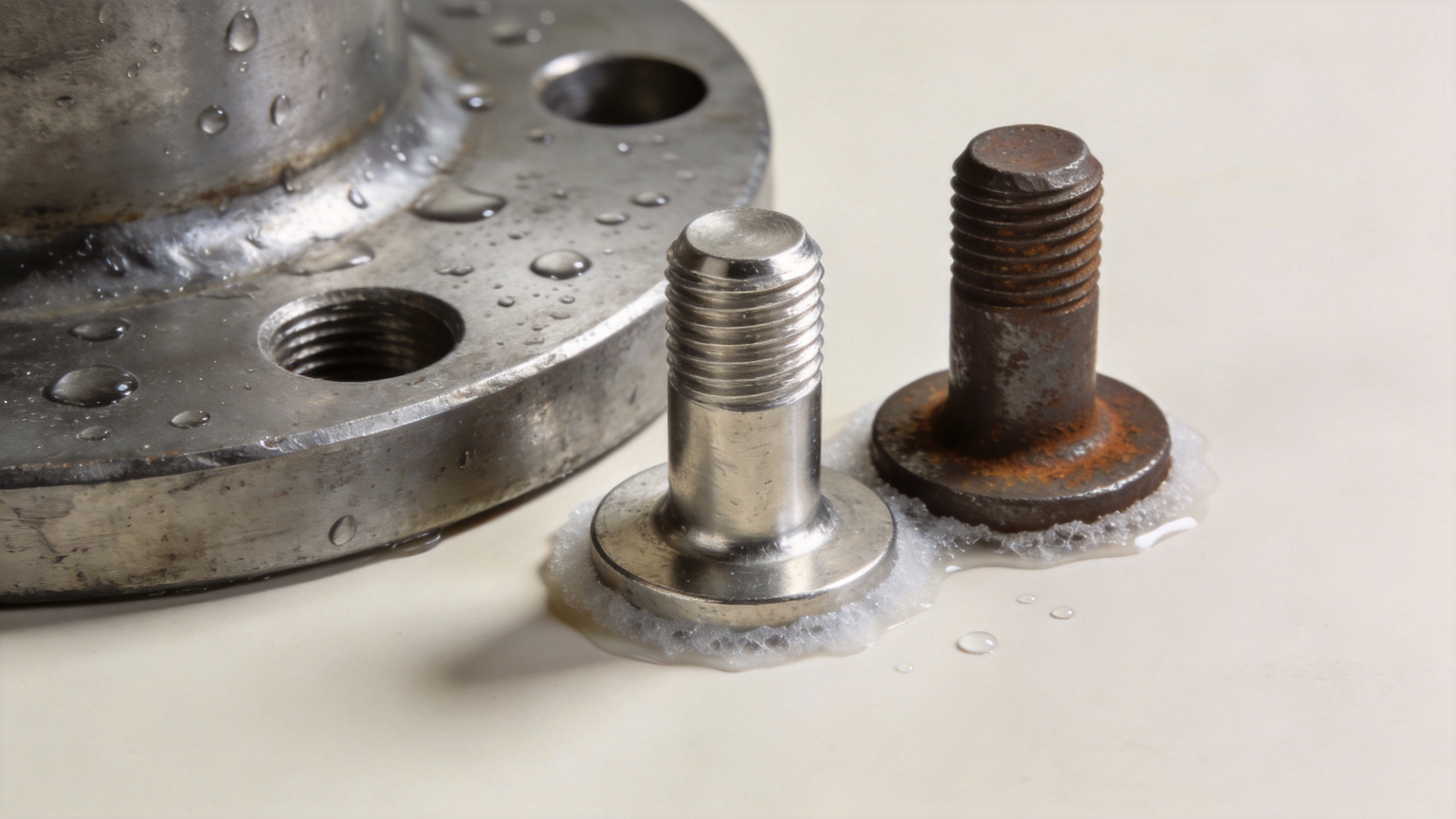
The mixed-metal joint: stainless can change the risk for carbon steel
A common mistake is to view each fastener in isolation. When stainless and carbon steel are electrically connected and moisture provides an electrolyte, galvanic action can make the carbon steel side the more vulnerable member. The risk depends on electrolyte availability, electrical continuity, exposed area ratio, coating condition, and whether water can remain at the contact zone.
This is especially relevant when a stainless threaded stud is fitted into a carbon steel component. The answer is not automatically to avoid stainless. Instead, assess the complete joint. Can the materials be electrically isolated where appropriate? Can the crevice be sealed or designed to drain? Is one surface coated, and will the coating be damaged at the bearing faces? A small carbon-steel area coupled to a relatively large stainless area deserves particular attention.
Many field problems are blamed on the stud material when the real issue is water retention at the contact zone. Improving drainage, avoiding absorbent deposits, controlling coating damage, and specifying compatible washers or isolators can be as important as selecting the stud alloy.
What changes for different stud configurations?
Threaded and double ended studs
A double ended stud often has one or both threaded ends hidden inside a tapped hole, flange, or enclosed assembly. Hidden threads can retain moisture or process residue, so specify a material-and-protection system for the less visible end, not only the exposed portion. Confirm installation torque and lubricant choices because galling and torque scatter can affect stainless threaded assemblies.
Welding studs
A welding stud requires another layer of review: the weld zone, heat input, parent material, and any post-weld protection. A coated carbon steel stud may need a process that restores protection around the weld area. For stainless welding studs, verify compatibility with the base metal and the service environment rather than assuming corrosion behavior will remain uniform through the connection.
Stud bolts in flanged joints
A stud bolt in a flange is exposed to both atmosphere and crevice conditions around nuts and washers. If the joint cycles through wet and dry conditions, choose a material system that accounts for trapped moisture, accessible inspection, and the consequences of seizure or corrosion product buildup during disassembly.
A practical selection framework
| Service condition | Corrosion logic to check | Specification focus |
|---|---|---|
| Dry indoor equipment | Atmospheric exposure is limited; coating damage is still relevant. | Strength class, coating compatibility, dimensional consistency. |
| Outdoor construction or transport equipment | Rain, condensation, deposits, and damaged coatings can drive localized attack. | Drainage, coating system, maintenance access, replacement plan. |
| Coastal or chloride-bearing exposure | Passive-film breakdown and crevice conditions deserve close review. | Stainless grade selection, crevice reduction, cleaning and inspection. |
| Mixed stainless/carbon steel assembly | Galvanic action is possible when electrical contact and moisture coexist. | Area ratio, isolation, coating continuity, water management. |
Specify the evidence, not just “stainless” or “coated”
For critical Studs, a purchase description should identify the material grade, thread standard, dimensions, strength requirement, surface condition or coating, and inspection expectations. Where corrosion matters, define the exposure category and any relevant customer validation method. This gives suppliers a clearer basis to quote and helps quality teams check whether the received parts match the intended service.
Qingdao Jeekuu Hardware Products Co., Ltd. supports custom fastener requirements across bolts, screws, nuts, and related hardware. For a non-standard stud requirement, provide the drawing, mating materials, environment, target market, and any finish or documentation expectations. That information is more useful than a generic request for “rust-resistant” parts.
Final decision: choose the joint system
Stainless and carbon steel Studs each have valid applications. Stainless is often selected when the environment requires a passive corrosion-resistant alloy, but grade and crevice conditions remain decisive. Carbon steel can be appropriate where the protection system, service exposure, and maintenance plan are controlled. When the two materials meet, evaluate galvanic conditions rather than assuming either material will solve the whole problem.
Before release, review the environment, joint geometry, adjacent metals, coating or grade, installation process, and inspection access. That sequence produces a corrosion decision that is more durable than choosing by material name alone.