EN


How to Address Anchor Loosening in Equipment Under Vibration Loads
When equipment starts moving on its base, the visible symptom may be a backing-off nut, a shifting base plate, or dust around a drilled hole. The practical issue is not simply whether to tighten an anchor again. It is whether the joint has lost preload, the anchor has slipped in the concrete, or the machine is imposing loads that the original connection was not prepared to manage. Those conditions call for different repairs.
From a fastener-selection engineer’s viewpoint, vibration troubleshooting starts with the operating condition: load direction, frequency, movement amplitude, base material, and access for inspection. A connection that stays stable on a lightly loaded frame can behave very differently beneath a pump, conveyor, fan, or automated machine. This guide gives a disciplined way to assess the anchor before maintenance turns a small issue into a damaged base or an unsafe restart.
First, identify what is actually loosening
“Loose anchor” is often used for several failures that look alike from above. Separate them before choosing a remedy:
- Loss of clamp load: the nut, washer, or mounted component settles, allowing movement even though the embedded portion remains sound.
- Thread movement: vibration works the nut along the thread because preload, locking method, or joint stiffness is insufficient.
- Anchor movement in the substrate: the anchor body rotates, pulls upward, or rocks in the hole. This may indicate unsuitable embedment, hole condition, substrate damage, or overload.
- Base-system movement: the grout, base plate, shim pack, frame, or machine feet move. Replacing an anchor alone will not correct that condition.
Do not assume that a higher strength grade solves every vibration problem. If preload is being lost because a soft layer settles or the base plate flexes, a stronger fastener can leave the mechanism unchanged. The repair has to address the load path as well as the anchor hardware.
Make the equipment safe, then inspect the complete joint
Use the site’s lockout and maintenance procedure before inspecting equipment. With the machine stopped, mark the relative position of the nut, washer, base plate, and anchor. Check whether the nut can be turned at low resistance, whether the anchor protrusion has changed, and whether cracks, spalling, rust staining, or crushed grout are visible.
Then check the equipment rather than the fastener alone. Misalignment, an unbalanced rotating assembly, worn isolators, loose guards, pipe strain, or a base plate with unsupported gaps can repeatedly introduce movement into the joint. If the source remains, retightening may only delay the next inspection finding.
A useful field record includes anchor size and type, installed embedment, edge distances, base material condition, equipment duty, observed movement, and the tightening method used. This record helps maintenance teams distinguish a one-time installation issue from a recurring vibration-load problem.
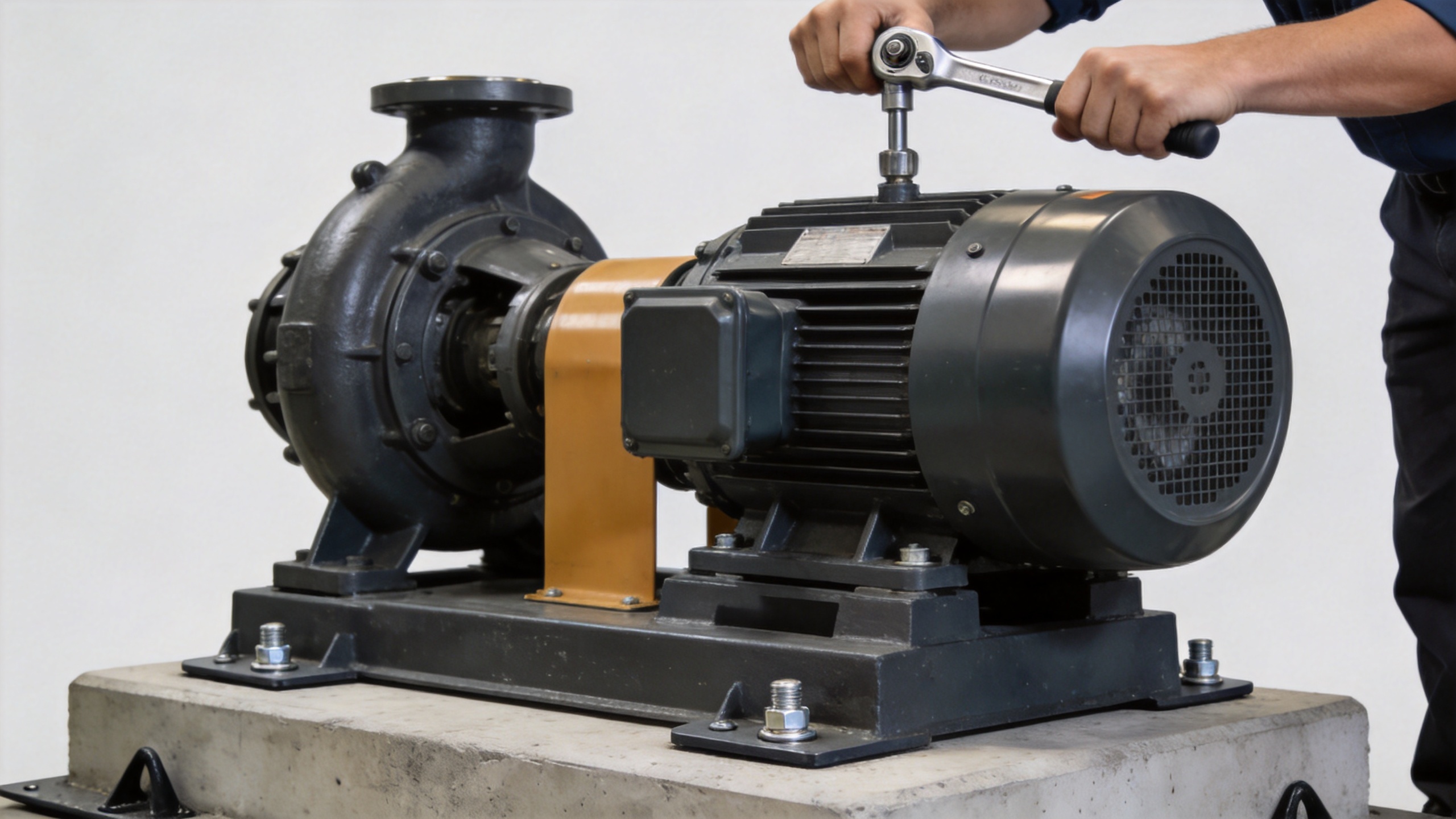
Verify installation before selecting a repair
Post-installed anchors depend on details that are easy to overlook: the specified hole diameter and depth, hole cleaning, effective embedment, component thickness, washer arrangement, and installation torque or adhesive setting schedule. Manufacturer instructions and the applicable engineering design requirements should govern these values. Do not substitute a generic torque value for the documented value of the selected system.
For a mechanical wedge anchor, inspect for a hole that is oversized, shallow, dusty, damaged, or too close to an edge. Expansion-based anchorage relies on engagement with sound base material, so a spinning body or cracked surrounding concrete needs engineering review rather than repeated tightening. A wedge anchor may be suitable in a qualified concrete application, but vibration does not remove the need to verify the supporting joint and the anchor’s approved use conditions.
A sleeve anchor also develops holding action mechanically, but its behavior and available installation range are system-specific. If a sleeve anchor loosens, check whether the fixture was clamped properly, whether the sleeve was installed to its documented depth, and whether the substrate is sound. Do not interchange installation assumptions between a sleeve anchor and a wedge anchor just because both are expansion products.
Match the corrective action to the failure mode
When the embedded anchor is sound but clamp load was lost
Correct the joint stack-up first. Remove paint buildup, debris, distorted washers, or unsupported shims that can settle after tightening. Confirm the base plate sits as intended and use the specified tightening sequence and tool method. Where the design permits, a locking approach may be considered as part of the complete joint design; it is not a substitute for correct preload or a stable bearing surface.
When the anchor rotates, pulls, or rocks
Take the connection out of service for technical evaluation. Reusing a compromised hole or continuing to torque a moving anchor can damage the surrounding concrete. The appropriate response may involve relocating the anchor, using a documented repair method, redesigning the connection, or evaluating an adhesive system. The decision depends on loading, hole condition, spacing, edge distance, and the approved design documentation.
A concrete anchor selected for a new or repaired position should be evaluated as part of the assembly, not as an isolated catalog item. The base material may be cracked, damp, aged, or locally damaged; the equipment can apply static, cyclic, shear, tension, or combined loads. Those inputs affect which qualified system and installation procedure is appropriate.
When access or fixture geometry is the limiting factor
A drop in anchor can be useful in some overhead or flush-installation arrangements when its system requirements match the substrate and load case. It is not a universal repair for vibration. Confirm the correct setting tool, embedment, thread engagement, and allowable loading for the exact product before using it in an equipment base. If the existing hole has already been enlarged or damaged, an engineer should assess whether it can support a repair at all.
Use a vibration-focused selection checklist
- Define the load path: record tension, shear, prying, cyclic effects, and any load reversals from startup or shutdown.
- Assess the base: identify concrete condition, cracking, thickness, edge distance, and signs of prior damage.
- Check joint stiffness: inspect plate thickness, washers, shims, grout, and mounting-foot contact. A flexible joint is more likely to lose preload.
- Choose the anchoring concept: compare a wedge anchor, sleeve anchor, adhesive approach, or drop in anchor only within each system’s qualified application limits.
- Install exactly to the documentation: use the listed drill size, cleaning sequence, embedment, setting method, torque, and documented setting period where applicable.
- Plan verification: establish an inspection interval based on equipment criticality and observed vibration, then document any movement or torque change.
For critical machinery, involve the equipment engineer and the anchor-system technical documentation early. That review is particularly important when there are cracks, cyclic tension, dynamic equipment loads, degraded concrete, or a need to relocate anchors near existing holes.
Common repair shortcuts to avoid
Several habits create repeat problems: tightening an anchor without identifying why preload fell; filling a damaged hole without a documented repair method; using a larger anchor without checking edge distance and spacing; mixing components from different systems; or restarting equipment before adhesive-based work has reached the documented handling and loading condition. These shortcuts can hide the root cause while reducing the margin for a later repair.
Keep the equipment-vibration correction separate from the anchor correction during diagnosis. Balancing a rotor, aligning a drive, restoring a base plate, and selecting an appropriate anchor are related tasks. Treating them as one maintenance decision produces a more reliable connection than treating the visible nut as the entire problem.
Final takeaway
An anchor that loosens under vibration is a signal to inspect the whole connection: equipment motion, joint preload, base condition, installation details, and anchor type. Begin with a safe shutdown and a clear diagnosis. Use the documented requirements for the selected wedge anchor, sleeve anchor, concrete anchor, or drop in anchor system, and seek engineering review where the substrate or load case has changed. This approach supports a repair that matches the equipment and its operating environment rather than a temporary retightening cycle.