EN

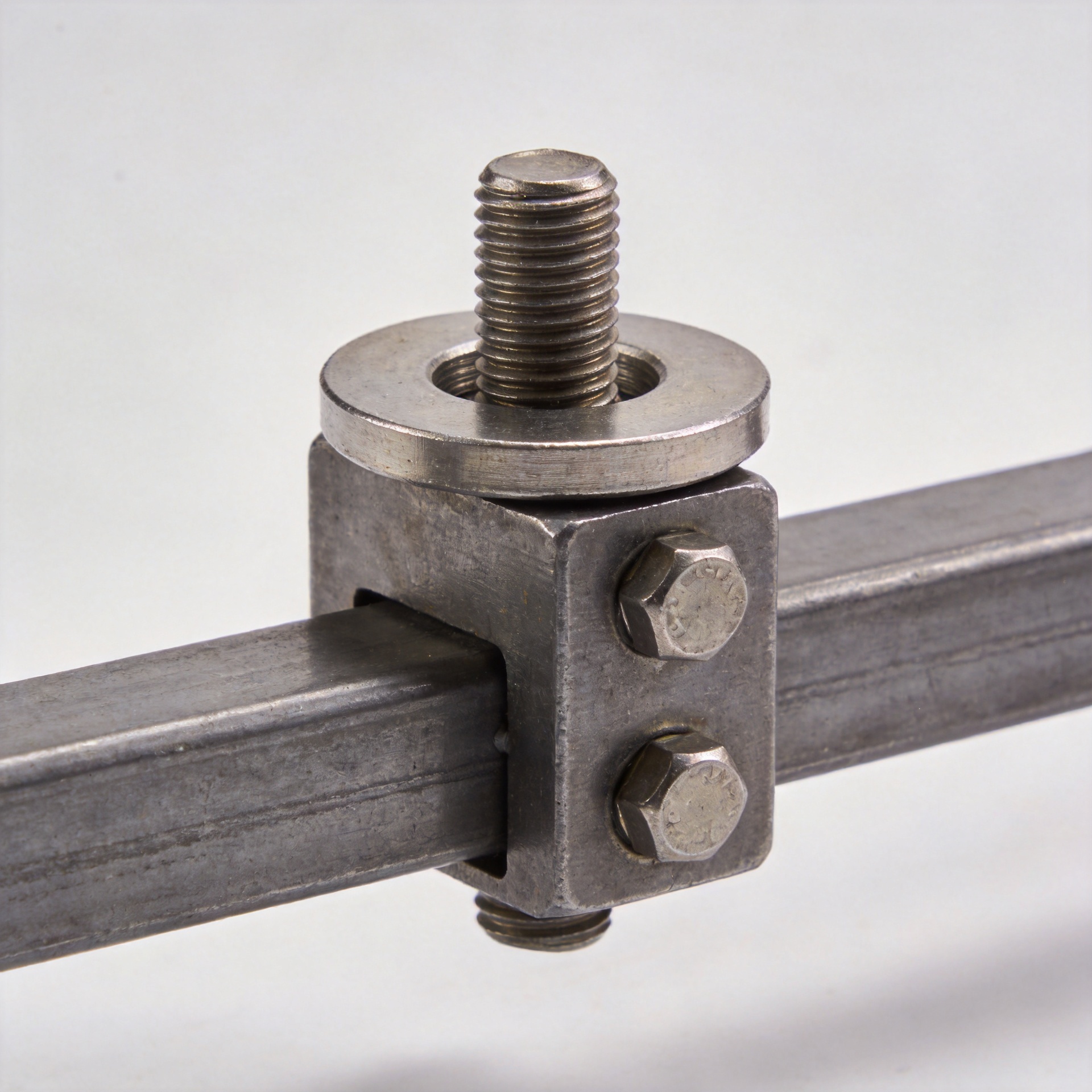
How to Limit Washer Hole Elongation Under Sustained Pressure
In an industrial bolted joint, a washer is not simply a spacer. The washer helps transfer clamp load into the clamped material and limits local surface damage under the nut or bolt head. When a bolt hole begins to ovalize, the practical issue is usually relative movement, excessive bearing stress, loss of preload, or a combination of all three. A larger washer can help in some joints, but a washer cannot correct an undersized fastener, poor edge distance, a soft plate, or uncontrolled installation torque.
This guide addresses fastener washer selection for steelwork, machinery, brackets, and fabricated assemblies—not laundry equipment. It explains why hole elongation develops and how a flat washer, lock washer, spring washer, or sealing washer fits into a sound joint design.
Why a washer hole elongates under sustained pressure
Hole elongation is typically a wear-and-load problem rather than a sudden defect. If preload falls, clamped parts can slip minutely under cyclic or sustained service load. The bolt shank then bears against one side of the hole. Repeated contact concentrates stress at the hole wall, removes coating, and can slowly turn a round hole into an oval opening. A washer may protect the outer bearing face, yet the hole itself still needs adequate geometry and a stable clamp load.
Embedment is another contributor. Small high spots on the washer, nut face, coating, or plate flatten after tightening. That settling reduces bolt tension. Temperature cycles, soft coatings, and creep-prone joint materials can also change preload over time. The key question is not merely “Which washer should I use?” but “Will this washer and joint retain enough clamp force to keep the parts from moving?”
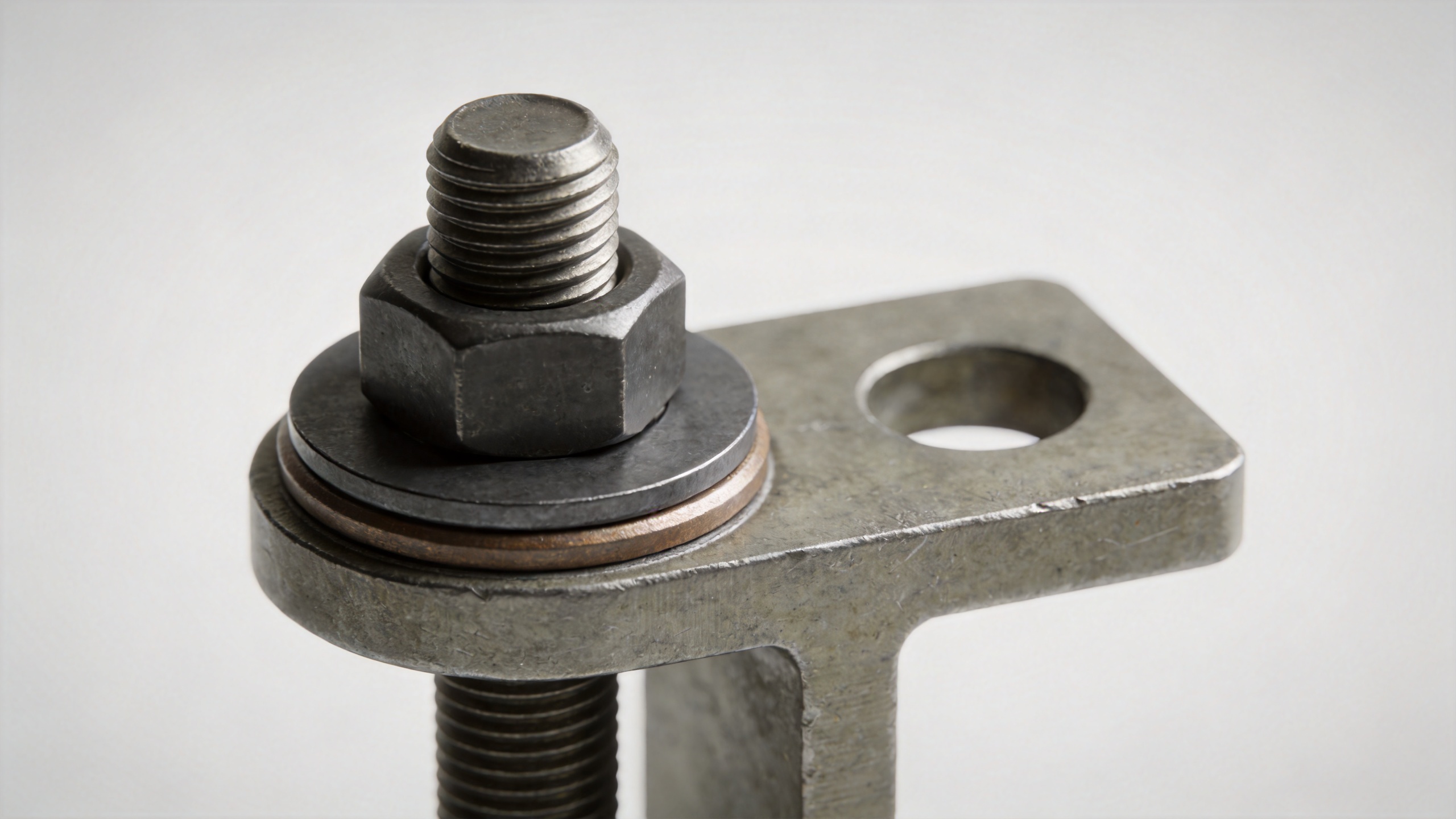
Start with diagnosis before changing the washer
Inspect the joint before specifying a replacement washer. Look for polished arcs, fretting debris, damaged coating, a witness mark under the washer, or a bolt that can shift in the hole. Check whether the damage is on the washer-bearing face, at the hole wall, or on both sides. Those details separate surface indentation from true hole elongation.
- Check hole clearance: Excess clearance allows the fastener to pick up load against the hole wall after joint slip.
- Check plate thickness and hardness: A broad washer lowers contact pressure on the face, but a very thin or soft member can still deform.
- Check edge distance: A washer cannot restore load capacity where the remaining material around a hole is too narrow.
- Check tightening method: Hand feel creates far more variation than a documented torque, angle, tension, or elongation method.
- Check service loading: Vibration, thermal cycling, impact, and transverse shear call for a joint-level review, not a washer-only change.
Match the washer to its job
Use a flat washer to spread face load
A flat washer is the normal starting point when the objective is to increase the bearing area beneath a bolt head or nut. Select outside diameter, thickness, hardness, and material for the bearing face and the expected clamp load. A washer that is too thin can dish into a soft substrate; a washer that is too soft can embed and reduce preload. For structural or high-load work, specify the washer standard and hardness together with the fastener grade instead of treating the washer as a generic accessory.
A flat washer is especially useful beneath a nut or bolt head on painted steel, slotted holes, aluminum, or fabricated surfaces where the local bearing face needs support. It does not, however, turn an oversize clearance hole into a close-fitting load-transfer feature. If transverse load is intended to be carried by a bolt shank, joint geometry and the selected bolt diameter must be evaluated together.
Do not use a lock washer as a bearing-area substitute
A lock washer is intended to support a particular anti-rotation or retention approach; it is not automatically the answer to hole elongation. Its contact geometry may be unsuitable as the only surface under a high clamp load, particularly where a smooth broad bearing area is needed. If rotation resistance is required, review the complete locking method alongside preload, surface finish, vibration level, and the assembly procedure.
In a joint that already shows oval holes, the first priority is normally to restore reliable clamp force and minimize slip. A lock washer may have a role in the selected fastening system, but it should not be assumed to compensate for inadequate bearing area or incorrect torque.
Use a spring washer only with an understood retention strategy
A spring washer can add compliance in some assemblies, but it should not be selected on the assumption that it will maintain preload in every sustained-load application. The available spring effect, surface condition, load range, and settling behavior all matter. In joints with significant vibration or critical preload, engineers often verify the chosen locking and tension-control method through testing rather than relying on washer type alone.
Where a spring washer is specified, confirm that its inside diameter clears the bolt shank correctly, its outside diameter bears fully on the mating surface, and its material and finish suit the environment. A spring washer installed on a damaged, uneven, or soft bearing face can add another settling contact surface instead of solving the source of movement.
Keep a sealing washer focused on environmental sealing
A sealing washer is valuable where fluid, dust, or weather exclusion is needed around a fastener. Its elastomeric or bonded sealing element has a different function from a hardened bearing washer. Do not assume a sealing washer alone can take high local bearing stress or retain preload like a structural washer. In demanding joints, the sealing function and the load-spreading function may need separate, compatible components.
Build a joint that keeps the washer loaded
Good washer performance starts with clean, flat mating surfaces. Remove burrs, weld spatter, loose scale, and thick soft material that can collapse after assembly. Use a washer with a hole that fits the fastener application and an outside diameter that bears on sound material. Place the washer on the side where surface protection or load distribution is required, and avoid stacking washers without an engineering reason because each contact surface can settle.
Then control installation. Use a defined tightening procedure that matches the fastener, lubrication condition, coating, and joint design. Record the tool setting or tension method for repeatable work. Recheck critical joints after an appropriate settling period when the specification requires it. If parts continue to shift, raising torque without reviewing fastener capacity can damage threads, crush the bearing face, or overload the bolt.
A practical selection checklist
- Define the sustained load, transverse load, vibration, temperature, and corrosion exposure.
- Confirm that bolt diameter, hole clearance, plate thickness, and edge distance are suitable for the load path.
- Select a hardened flat washer when broader bearing support is needed, and match its material and finish to the environment.
- Add a lock washer, spring washer, or sealing washer only when its specific function is justified by the application.
- Specify a controlled tightening method and verify actual clamp load when the joint is critical.
- Inspect early-service joints for fretting, coating damage, loss of torque, or renewed movement.
When repair is more appropriate than another washer
If the hole is already elongated, simply adding a larger washer can conceal a load-path problem. Depending on the design and governing specification, repair may require restoring the hole with an engineered method, using an approved sleeve or bushing, changing the fastener size, revising the connection, or replacing the affected member. The repair should restore alignment, bearing capacity, and inspection access. For safety-critical, structural, pressure-containing, or rotating equipment, have the repair reviewed by the responsible engineer.
Conclusion
The right washer supports a stable joint; it is not a substitute for proper geometry and preload. Use a flat washer to distribute face load, choose a lock washer or spring washer only for a defined retention strategy, and use a sealing washer for environmental protection. By controlling surface condition, fit-up, fastener selection, and tightening, you reduce the movement that drives washer hole elongation under sustained pressure.