EN

How to Choose the Right Fastener When Working With Composite Panels
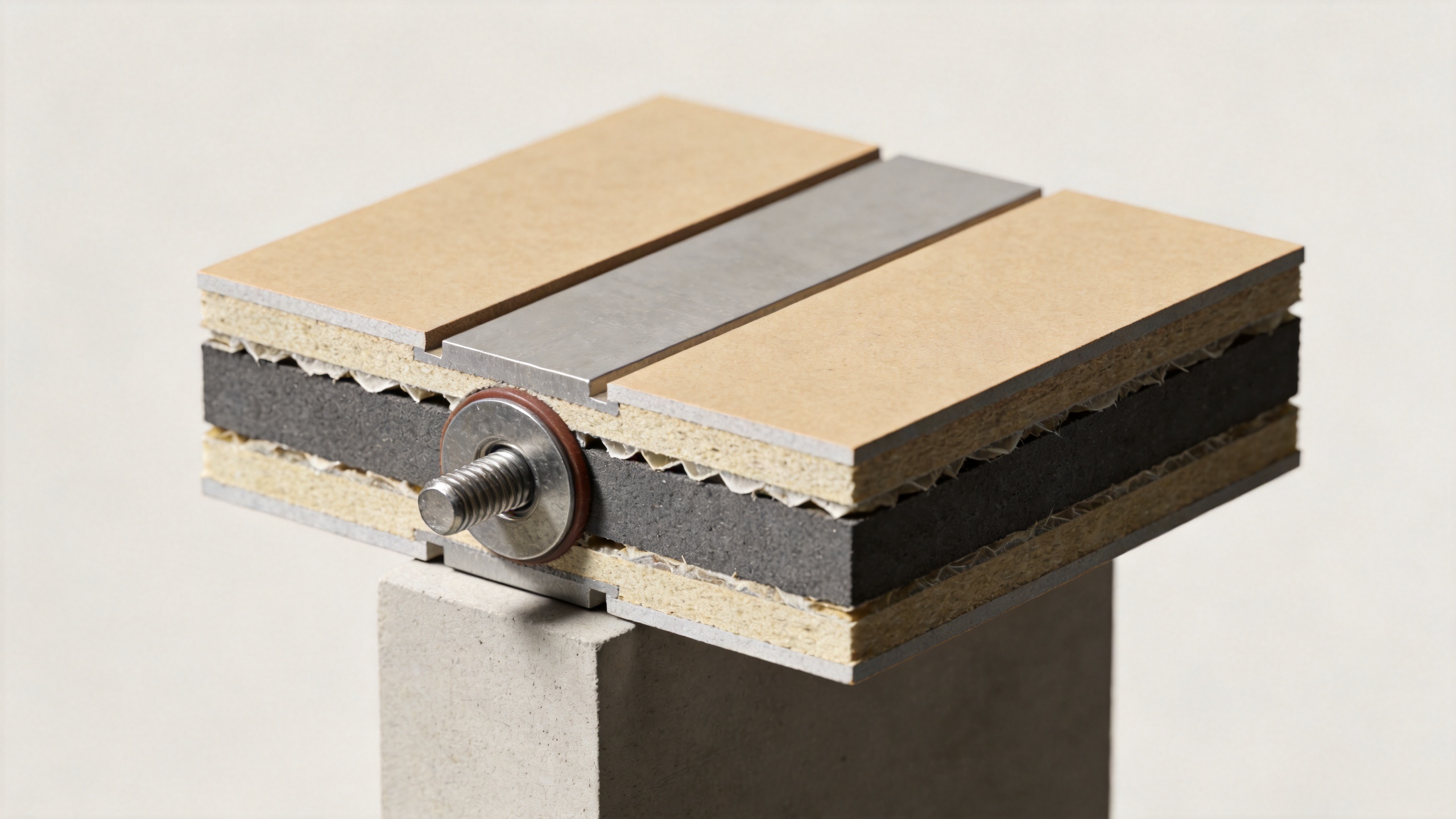
Choosing a fastener for a composite panel is not the same as choosing one for solid steel or timber. A panel may combine thin face sheets with a foam, honeycomb, mineral wool, or other core. That construction can deliver useful stiffness at low weight, but it also means a fastener must transfer load without crushing the core, dimpling the face, opening a leak path, or loosening after installation.
As an engineer reviewing fastening choices, I start with the panel itself rather than a screw catalogue. The practical question is not “Which fastener is strongest?” It is “Which fastening method fits this panel, this load path, and this exposure?” That framing gives a project team a clearer way to compare options before it commits to a drill pattern or production run.
Start with the composite panel construction
Document the outer face material, face thickness, core type, overall thickness, and the supporting substrate behind the panel. A fastener that works when it reaches a steel purlin is a different solution from one that must carry load within the panel alone. Similarly, a thin aluminum face, a coated steel face, and a fiber-reinforced laminate can react differently to drilling, bearing pressure, and corrosion contact.
Ask whether the joint is through-fastened to a known support, attached to an insert, or intended to grip only the face sheet. Face-sheet-only attachment is usually the most sensitive case because local bending, pull-through, and core damage can govern the result. For loaded accessories, an engineered insert or a through-fastened detail may be more appropriate than asking a small screw to carry an uncertain load in a low-density core.
Map the load before choosing the fastener type
Separate the load into tension, shear, vibration, thermal movement, and occasional impact. Tension tries to pull a fastener out of the panel. Shear acts across the joint. A canopy bracket, a façade rail, and a light trim piece may all use a mechanical fastener, yet their load paths are not comparable.
Do not rely on a generic catalogue value alone. A sandwich-panel fastening solution should be assessed in an installed panel specimen that reflects the actual face sheets, core, support, edge distance, and installation method. If the application is safety-critical, exposed to cycling, or close to a panel edge, obtain project-specific engineering review and representative testing.
Match thread, point, and bearing area to the joint
A threaded fastener needs a compatible material to form or engage threads. For a panel fixed to steel framing, a self-drilling or self-tapping threaded fastener may be selected around the support thickness and required penetration. For an attachment that depends on the panel, consider whether a blind insert, bonded insert, or through-bolt spreads load more effectively than a direct screw.
Head style and washer diameter matter because they distribute clamp force across the outer skin. A wider bearing surface can reduce local indentation, but it is not a substitute for a verified load path. Countersunk heads deserve special care: removing or deforming face material can reduce the area that resists pull-through. Where a flush surface is necessary, use a detail specifically designed for the panel construction.
Choose material and coating for the exposure
Corrosion selection begins with the full assembly: face material, fastener material, washer, coating, moisture, pollutants, and expected maintenance. A stainless fastener may be sensible in damp or corrosive service, but grade selection and compatibility still matter. Pairing dissimilar metals without considering the environment can create a corrosion concern at the joint.
For exterior insulated panels, sealing can be as important as mechanical strength. If the approved detail calls for an EPDM sealing washer, installation should compress it enough to form a visible seal ring without flattening or distorting it. Overdriving can damage the washer or panel coating; underdriving can leave a path for water. Confirm the panel system requirements before substituting washer materials or coatings.
Control installation, not just specification
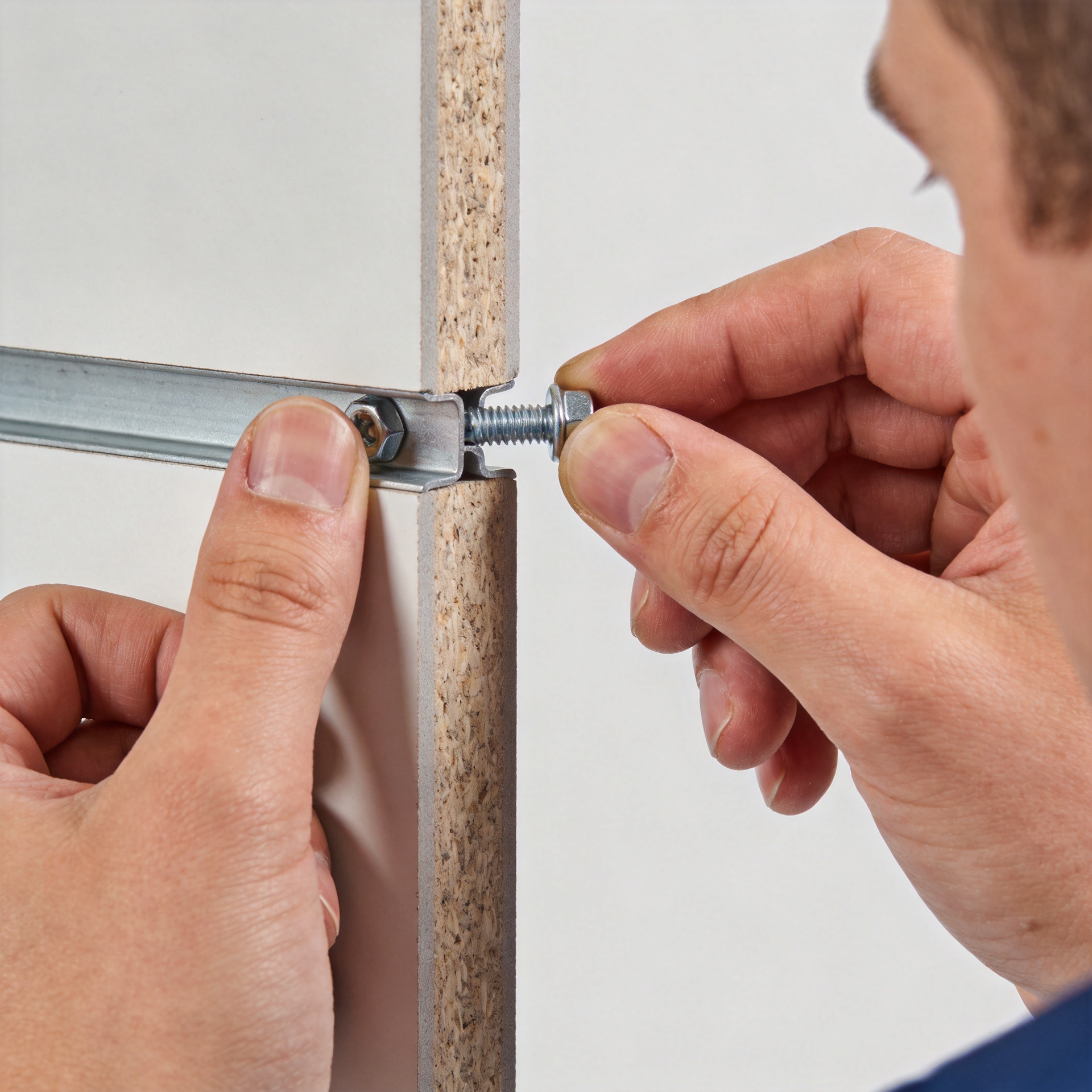
Even a suitable fastener can perform poorly when installed at the wrong angle or depth. Keep the tool square to the panel surface. Angled installation can reduce pull-out resistance and may damage the core. Use the specified drill point, pilot-hole method, drive setting, and support engagement. A clutch-controlled driver or depth-control arrangement is often useful where repeated installation must produce consistent compression.
Before full production, install a short trial row and inspect it from both sides where possible. Look for face dimpling, cracked coatings, distorted washers, stripped threads, uneven seating, and missed supports. That brief check matters most when panel thickness varies, the substrate is uneven, or installers are changing tools.
A practical fastener selection checklist
- Identify the face-sheet materials, core type, panel thickness, and support behind the panel.
- Define tension, shear, vibration, thermal movement, and exposure rather than using a single load label.
- Select the fastener method: supported screw, mechanical fastener, insert, or through-fastened detail.
- Check thread engagement, drill capacity, head bearing area, edge distance, and access for installation.
- Review material compatibility, coating, sealing washer requirements, and corrosion exposure.
- Use a trial installation and, for meaningful loads, validate the assembled panel joint rather than the hardware in isolation.
When to request a custom fastener or engineered detail
A custom fastener may be worth considering when the panel geometry, installation access, head profile, corrosion environment, or automation process falls outside common catalogue combinations. The goal is not customization for its own sake. It is to reduce uncertainty in the junction between the hardware, panel, support, and tool.
For routine panel work, a clearly specified fastener and controlled installation process may be sufficient. For high loads, unusual composite cores, exterior weather exposure, or repeated service loads, take the extra step of confirming the joint with the panel manufacturer, project engineer, and hardware supplier. The process gives the selection a sounder basis than choosing by diameter or strength class alone.
Make the final choice as a system decision
The right fastener for a composite panel is the one that matches the panel construction, load path, environment, and installation method together. Start with where the load goes, then select the threaded fastener, mechanical fastener, or insert that can carry it without overstressing the face or core. Finally, verify tool settings and sealing details in a representative trial. This sequence helps turn a simple hardware purchase into a controlled joint design decision.