EN

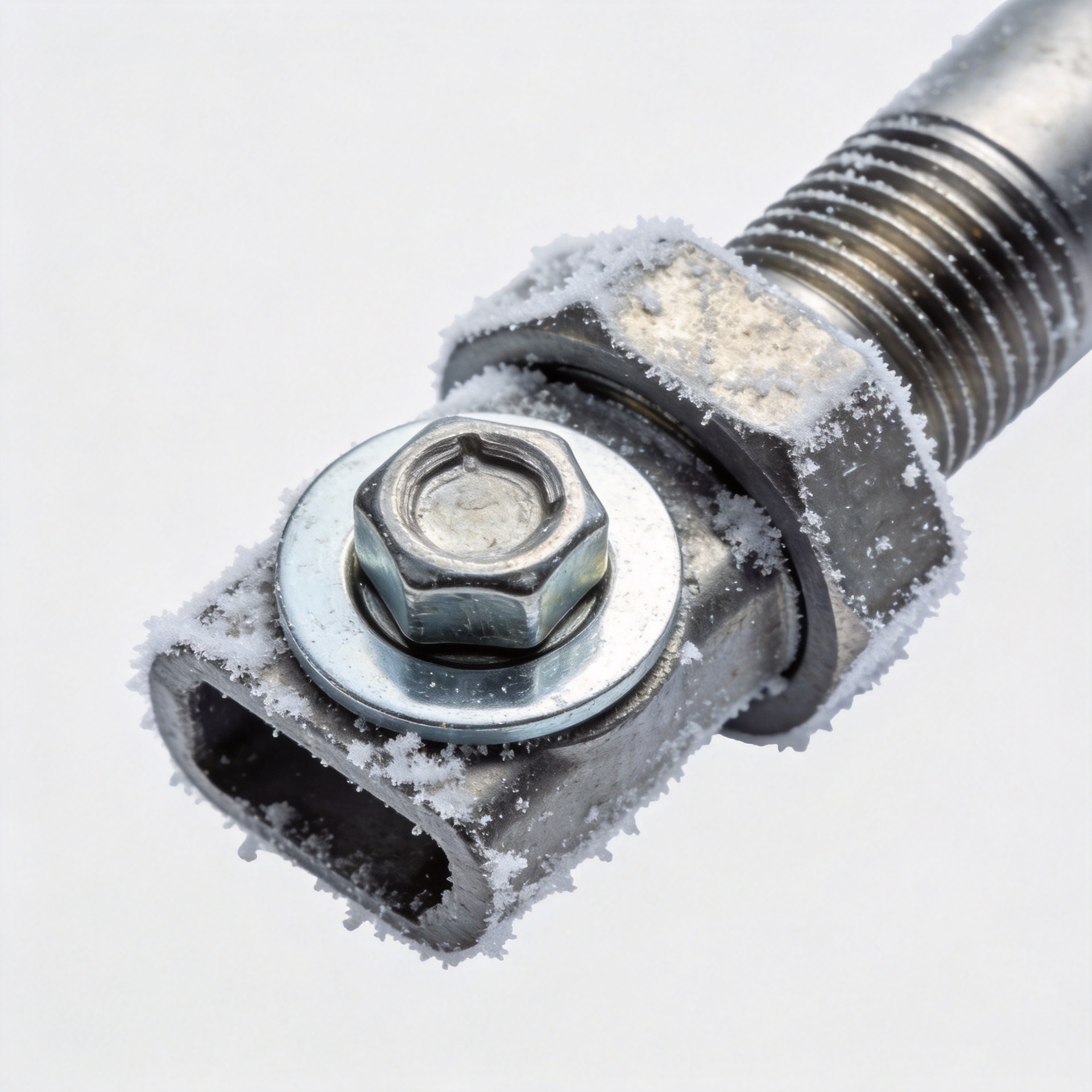
Why Washers Crack in Cold Conditions and How to Mitigate the Risk
A cracked washer can look like a minor hardware issue until clamp load drops, a joint moves, or a seal begins to leak. In cold service, a washer can be the first visible sign that the joint design, material condition, installation method, and temperature range were not considered as one system. This article refers to fastening components, not laundry equipment.
In a field review, the useful question is not simply “which washer is stronger?” It is whether the specified material and geometry can tolerate the lowest metal temperature, the local stresses created during tightening, and the assembly sequence used in the field. A component that performs normally at room temperature can behave differently after an overnight temperature drop or cold startup.
What changes when a washer gets cold?
Temperature does not create a crack by itself. Instead, cold conditions can reduce the amount of plastic deformation available before fracture in some materials, especially many ferritic steels. This change is commonly described as ductile-to-brittle transition behavior. The transition range is not a single universal temperature: chemistry, heat treatment, section thickness, notch condition, strain rate, and the applied stress state all matter.
That distinction matters for a hardened flat washer. Hardness may be needed to resist embedment under high bolt load, but hardness alone does not establish adequate fracture toughness for a low-temperature duty. If installation produces a pronounced local stress concentration at the bore, edge, or contact face, a washer with limited cold toughness can crack with little visible distortion.
Common cold-weather crack mechanisms
1. Excessive assembly stress
Over-tightening is a frequent starting point. The bolt head or nut face drives load through a small contact area, and a tilted or burred bearing surface can raise stress at one side of the washer. Reused hardware, damaged threads, an inaccurate torque method, or a poorly controlled lubricant condition can turn the specified torque into an unintended preload. In cold conditions, the resulting stress may leave less margin before a crack initiates.
2. Notches, burrs, and damaged edges
A nick at the inside diameter, a punched edge with an unfavorable finish, or a chip from handling acts as a stress raiser. Under compression, the damage may seem harmless; under cyclic vibration or a change in joint load, it can become the origin of a radial crack. Inspect the washer faces and bore before assembly rather than assuming a new-looking part is free of damage.
3. Material and heat-treatment mismatch
Different washer materials respond to cold in different ways. A specification should distinguish between carbon steel, alloy steel, stainless steel, and any coated or heat-treated variant rather than relying on appearance. The documented material grade, hardness range, and required test evidence should align with the actual minimum design metal temperature. Where a contract calls for impact-tested material or a project-specific toughness requirement, the fastener set should be reviewed against that requirement as a complete assembly.
4. Differential contraction and joint movement
Bolts, plates, flanges, coatings, and polymeric layers do not necessarily contract at the same rate. As temperature falls, the preload distribution can shift. A sealing washer may also stiffen, shrink, or lose conformability depending on its elastomer and backing construction. If joint movement concentrates load at one edge, the metal support can crack or the sealing function can be lost even when the bolt remains intact.
5. Using the wrong locking concept
A lock washer or spring washer is sometimes selected to address vibration, then treated as a universal answer for cold service. Its function, load behavior, material, and installation direction still need confirmation. In a joint where preload retention is critical, consider the entire locking method and the joint stiffness, not just whether a washer has a split or spring form.
How to diagnose a cracked washer
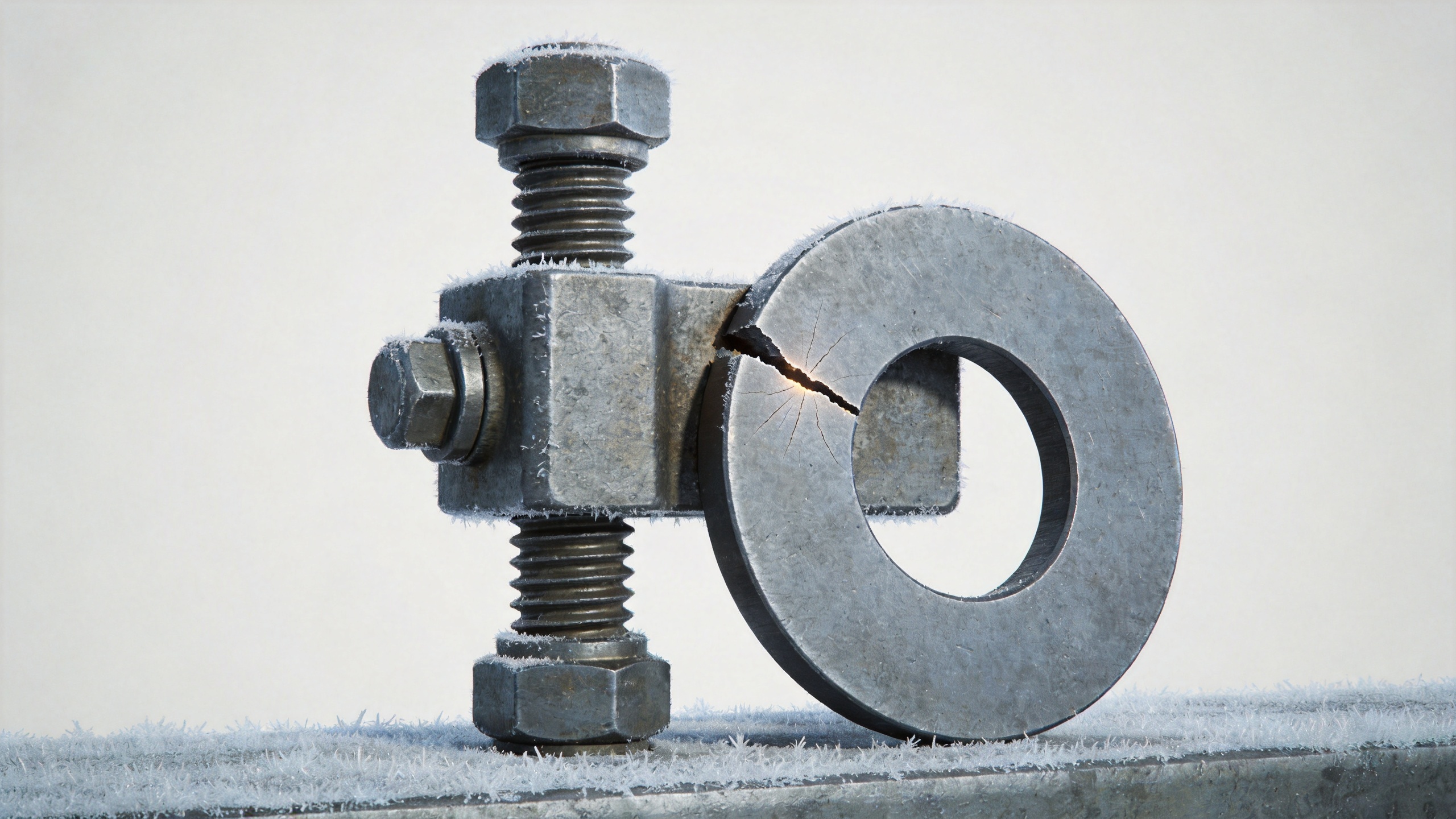
Start with evidence, not a replacement order. Photograph both faces, note the crack direction, retain the mating bolt and nut, and record the ambient and estimated metal temperature at the time of failure. A radial crack from the bore can point toward local bearing stress or a notch. Multiple cracks around the perimeter may indicate distortion, poor seating, or uneven compression. Rust staining inside a crack can suggest that damage began before the final cold event, while a bright fresh fracture may support a recent overload or brittle event.
Then check the joint stack-up. Was the washer installed against a flat, clean bearing surface? Was paint, scale, ice, or debris trapped below it? Was the specified torque method used, and was the tool verified? Those checks often reveal more than a visual comparison with an unused washer, particularly when the joint has seen a cold soak.
A practical mitigation plan
- Define the real temperature envelope. Use the minimum metal temperature, including wind exposure, startup conditions, and cold-soak time, rather than a broad regional weather average.
- Specify the complete hardware set. Identify bolt, nut, washer, coating, lubrication condition, and any locking or sealing element together. Confirm that the standard or project requirement applies to the selected configuration.
- Request traceable documentation when service is demanding. Material certificates, hardness data, coating information, and any required toughness evidence give purchasing and quality teams a basis for review. ASTM F436/F436M, for example, addresses hardened steel washer requirements, but a designation must still be checked against the joint and service requirement.
- Control installation. Use a documented tightening sequence, clean bearing surfaces, compatible lubrication assumptions, and calibrated tools. Do not force a washer over a damaged thread or use it to correct a misaligned joint.
- Inspect after cold exposure. For critical joints, schedule visual checks for cracks, displaced components, coating damage, seepage, or changed preload indicators after the first cold cycle and after unusual loading.
Choosing among flat, locking, spring, and sealing washers
A flat washer primarily spreads bearing load and protects the mating surface; it is not automatically a low-temperature solution. A lock washer or spring washer should be selected only after the vibration and preload-retention mechanism is understood. A sealing washer adds an environmental function, so its metal and nonmetallic elements need compatible temperature and chemical limits. In each case, the material record and the joint design matter more than the component name alone.
Final takeaway
Cold-weather cracking is usually a system problem expressed through a small component. Treat every failed washer as a clue: verify the material condition, minimum temperature, surface quality, joint geometry, and tightening practice. That approach helps maintenance teams replace the right hardware, gives purchasers clearer documentation requirements, and reduces the chance that the next washer sees the same concentrated stress.