EN

How Do Custom Washers Support Specialized Engineering Needs?
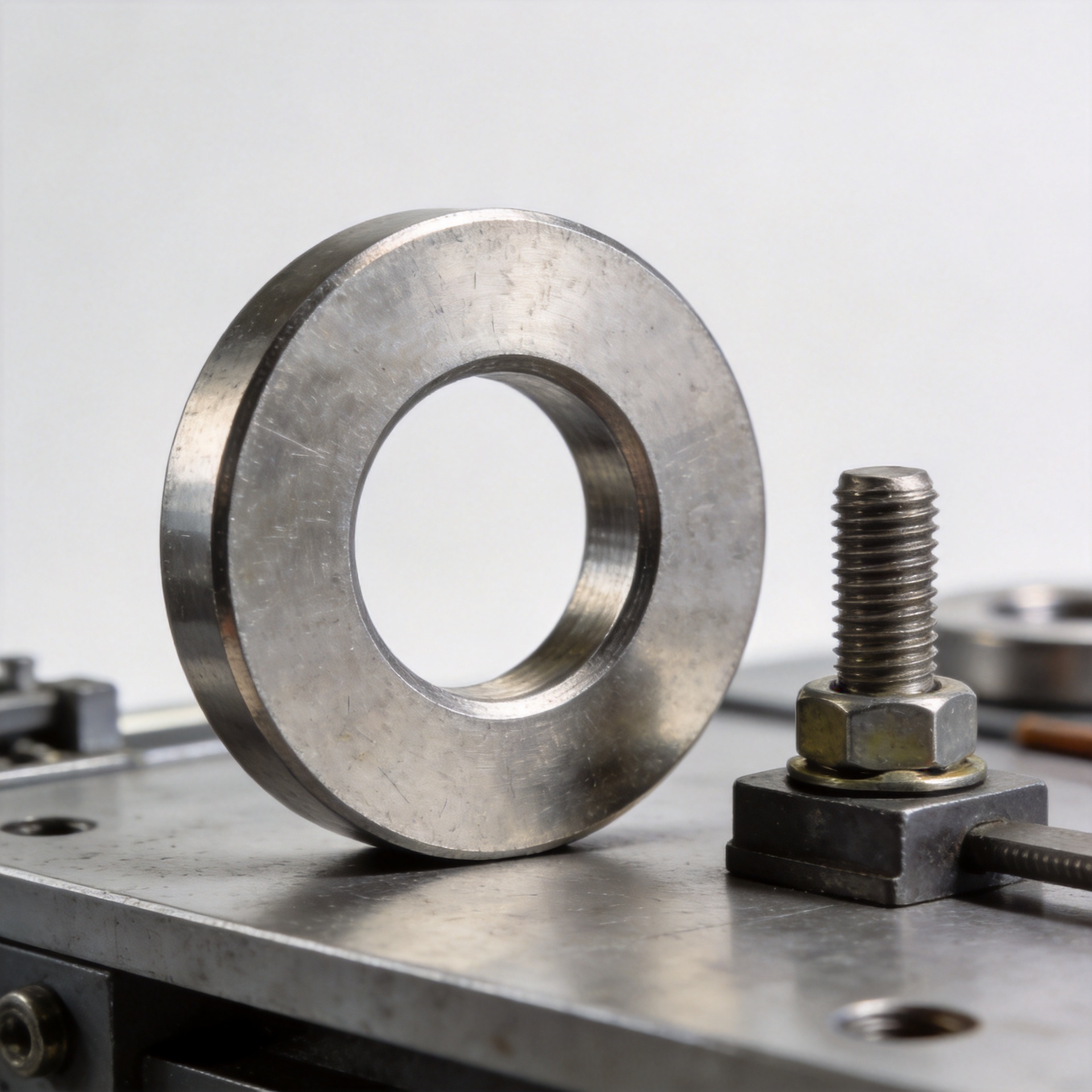
In a critical joint, a washer is not merely a spacer under a bolt head. It can distribute clamp load, protect a mating surface, control stack height, isolate dissimilar materials, retain preload, or help create a seal. That is why a custom washer becomes valuable when a catalog part does not match the real contact geometry. From a fastener-selection engineer’s viewpoint, the first question is not “Which washer is strongest?” It is “What must this washer do in this assembly, under its actual load, environment, and installation method?”
A generic web search for washer often leads to laundry equipment, so engineering teams should state the fastening context early in drawings and sourcing requests. A well-defined engineering washer lets an OEM convert a functional requirement into a controlled component rather than asking a standard part to solve a non-standard problem.
Why a standard washer can fall short
Standard flat washers are useful when hole size, bearing area, material, thickness, and surface condition are already suitable. Non-standard assemblies often introduce a conflict that a standard item cannot resolve. A soft enclosure may need a larger bearing area to avoid local damage. A precision stack may need a tightly controlled thickness. An outdoor assembly may need a material and finish that suit the service environment. Electronics may need electrical isolation, while a fluid-facing joint may need a sealing feature.
The practical issue is interaction. Changing outside diameter affects bearing pressure and available clearance. Changing thickness affects grip length and preload behavior. A harder material may resist deformation but may not be appropriate against a finished or softer mating surface. This is why an OEM washer should be treated as part of the joint design, not as an afterthought on the bill of materials.
Start with the function of the washer
Before selecting geometry, write one primary function and any secondary functions. The primary function guides the design; secondary functions reveal trade-offs that need review.
- Load distribution: increase the bearing area beneath a head or nut to reduce localized surface stress.
- Spacing and stack control: establish a repeatable stand-off or compensate for a known assembly stack.
- Retention of preload: support a joint subjected to vibration, thermal cycling, or relaxation, using a geometry appropriate to the validated joint strategy.
- Sealing or shielding: pair a metal backing with an elastomer, or shape the washer to support a controlled sealing contact area.
- Isolation: separate conductive or dissimilar materials where electrical, galvanic, abrasion, or noise considerations apply.
- Location: use an internal feature, tab, profile, or shaped outer diameter to orient the part or limit movement.
One point is easy to miss: a washer designed to spread load is not automatically a vibration solution, and a washer used for spacing is not automatically a seal. When multiple functions are requested, identify which function cannot be compromised and test the others against the assembly conditions.
Translate the application into a custom washer specification
A reliable custom specification begins with the joint, not the purchasing description. Supply the fastener size and mating-part information, then define the following features in the drawing or technical request.
1. Geometry and fit
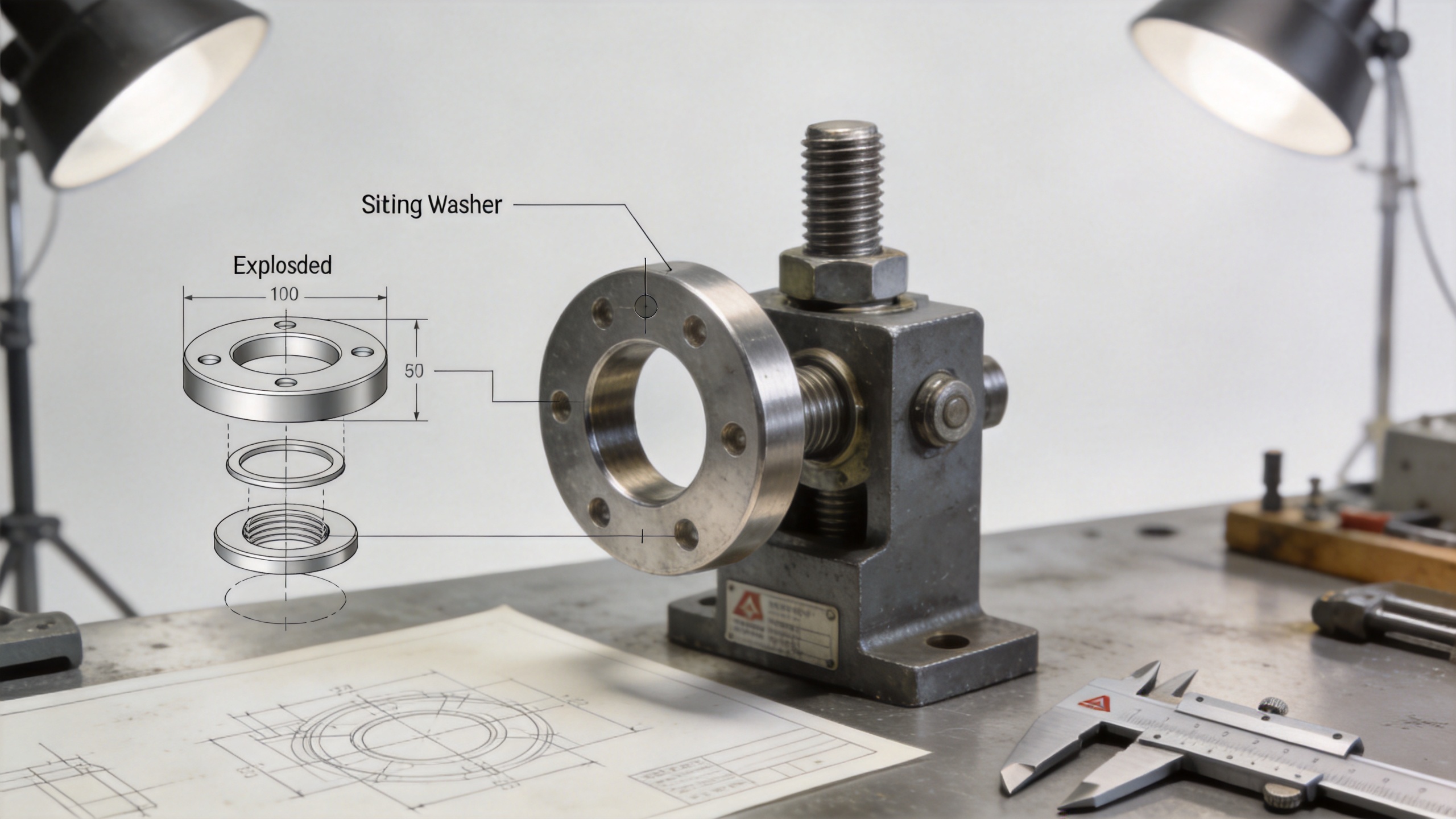
Specify inside diameter, outside diameter, thickness, profile, and any tabs, slots, countersinks, steps, or locating features. The inner diameter must clear the fastener and any expected installation variation without creating unwanted movement. The outer diameter must fit the available land while delivering the needed bearing area. If the part seats against a shoulder, recess, gasket, or formed surface, include a section view rather than relying on a nominal description.
Tolerance deserves the same attention as nominal size. General tolerances may suit a non-critical flat part, but a precision assembly should state the dimensions that control fit, stack height, and contact. Flatness can matter when the washer creates a seating surface; burr direction and edge condition can matter when it contacts a coating, polymer, gasket, or operator’s hand.
2. Material and surface condition
Material selection should follow service conditions. Carbon steel may be appropriate for a protected indoor mechanical joint. Stainless steel may be considered where corrosion resistance is important, subject to the full assembly environment. Brass, aluminum, engineering plastics, fiber, and elastomeric combinations can serve distinct electrical, thermal, sealing, or surface-protection roles. The correct choice depends on the application rather than a universal ranking of materials.
Also specify hardness, temper, coating, passivation, plating, lubricant, or surface finish only when each requirement has a functional reason. For example, a finish can affect corrosion behavior and assembly friction, while a hard washer can influence how the contact surfaces respond under load. Discuss these choices with the fastening and materials teams when clamp-load consistency is important.
3. Loads, movement, and environment
Describe the expected clamp load, cyclic loading, vibration direction, temperature range, moisture, chemicals, and installation access. A washer that performs well in a static indoor bracket may be unsuitable in a joint with repeated thermal movement or washdown exposure. If the assembly sees vibration, evaluate the complete fastener system—fastener, mating parts, tightening method, joint stiffness, and any locking approach—rather than assigning all responsibility to the washer.
How custom geometry solves application-specific problems
A purpose-built washer often earns its place by making a difficult contact condition predictable. Consider several common patterns:
- A large-diameter, thin washer can spread load over a fragile panel, provided surrounding clearance and bending behavior are checked.
- A precision shim-style washer can tune stack height when a nominal component would introduce excessive variation.
- A shaped washer with a tab or non-round profile can resist rotation or provide alignment where a circular part offers no location control.
- A bonded or backed sealing design can support a sealing contact area when the groove, compression, and media compatibility are engineered together.
- A nonmetallic washer can isolate a component, but its creep, temperature response, and chemical compatibility must be considered before release.
These examples are design directions, not interchangeable recipes. The useful step is to document the failure mode the geometry is intended to address: surface indentation, stack variation, rotation, leakage, galvanic interaction, or installation error. That makes design review and supplier communication clearer.
Make verification part of the design
An engineering washer is strongest as a sourcing decision when the inspection plan is visible. The drawing can identify critical dimensions, material condition, finish, visual requirements, and sampling expectations. For a part that affects a tight stack, request measurement records for thickness and relevant diameters. For a part that creates a seating surface, define the flatness and burr expectations that matter to the mating surface. For corrosion, sealing, or electrical functions, agree on an application-relevant validation method before volume production.
Many procurement problems begin when teams compare unit prices without comparing what is controlled. A lower-priced part may be acceptable if the functional requirements are simple. Where failure analysis, rework, downtime, or difficult assembly access matters, the drawing, material traceability, and inspection scope are part of the component decision. In multi-department fastener purchasing, engineering, quality, and procurement can avoid late changes by reviewing those requirements together.
A practical OEM washer release checklist
- Define the primary function of the washer and the failure mode it addresses.
- Provide mating-part sections, fastener details, and the available bearing area.
- Identify critical dimensions, tolerances, flatness needs, and permissible edge condition.
- Select material and finish for the actual service environment, not only appearance.
- State load, vibration, temperature, media exposure, and installation conditions.
- Agree on prototype inspection and application validation before approving production.
- Keep the approved drawing and revision level aligned with purchase documentation.
Conclusion: use the washer as an engineered contact element
A custom washer supports tailored engineering needs by turning an uncontrolled contact condition into a defined one. Whether the requirement is load distribution, precision spacing, isolation, sealing, or location, the value comes from connecting the geometry and material to a known assembly condition. For an OEM washer, a concise functional statement, a complete drawing, and a proportionate validation plan are more useful than choosing the thickest or hardest option by default.
When the joint is safety-critical, highly loaded, exposed to severe service, or difficult to repair, involve the responsible design and quality teams early. The final washer should be selected for the verified application boundary—not simply because it resembles a familiar catalog part.