EN

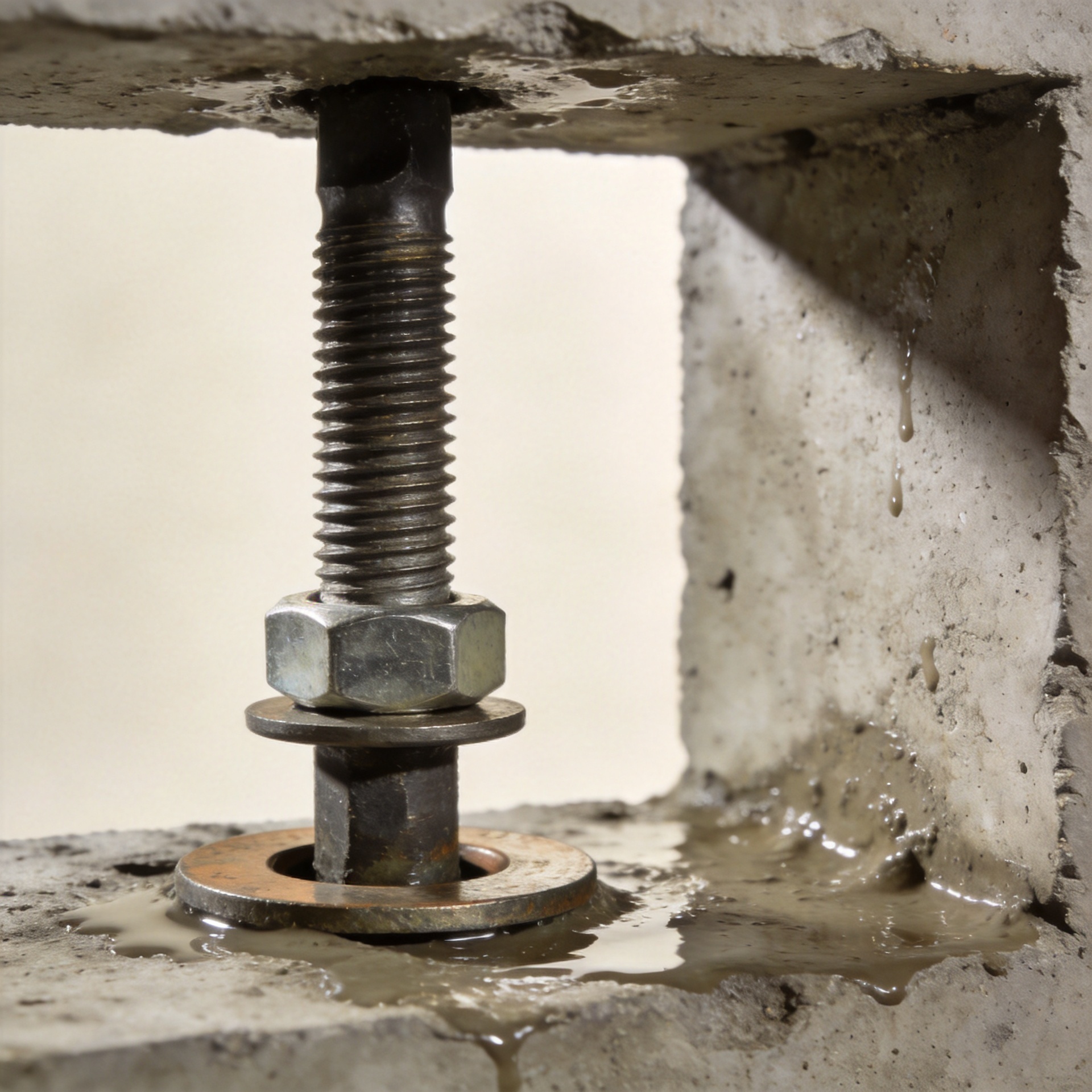
Why Chemical Anchors Lose Bond Strength in Wet Concrete Installation
When a chemical Anchor performs poorly in wet concrete, the resin is often blamed first. In practice, the failure usually starts earlier: the hole condition was misunderstood, the wrong approved installation method was chosen, or the installation sequence no longer matched the conditions used for the Anchor’s published design data. A wet hole is not simply a dry hole with extra water. It changes how the adhesive contacts concrete, how it occupies the annulus around the rod, and how long the assembly must remain undisturbed before loading.
For a fastener selection engineer, the useful question is not “Can this Anchor tolerate moisture?” It is “Is this exact Anchor system approved for this exact concrete condition, and can the crew execute every required step?” That distinction matters on structural work, retrofit work, and any installation where an Anchor must transfer sustained load into concrete.
Wet concrete conditions are not all the same
Site language can hide important differences. A damp drilled hole has visible moisture but no standing water. Water-saturated concrete has absorbed water through its pore structure. A water-filled hole has standing water in a drilled hole at the moment the Anchor is installed. Submerged work adds another condition again. Each condition can have a different approved resin, hole-cleaning sequence, injection method, setting time, and design value.
That is why an installer should not treat “wet” as a single jobsite category. If rain has entered the hole, groundwater is seeping back after cleaning, or drilling produces slurry that remains in the bore, stop and classify the condition before selecting the Anchor procedure. An approval for damp concrete does not automatically establish suitability for a water-filled hole.
How moisture reduces chemical Anchor bond strength
A water film interrupts contact at the concrete boundary
A chemical Anchor develops load transfer through adhesive contact with the prepared concrete wall and the embedded steel element. When free water covers the hole wall, resin may not displace that layer evenly. Local areas can have poor contact even though resin is visible at the hole opening. The installed Anchor can look acceptable while its bond line is discontinuous below the surface.
Water and drilling residue act together
Moisture alone is not the only concern. Dust, slurry, fragmented concrete, and standing water can combine into a soft layer between the resin and sound concrete. A crew may blow out a hole once, see it appear clean, and then inject an Anchor while residue or water remains deeper in the bore. The usual result is not a dramatic installation error; it is an uncertain bond condition that cannot be assumed to match the published Anchor data.
Resin placement can become incomplete
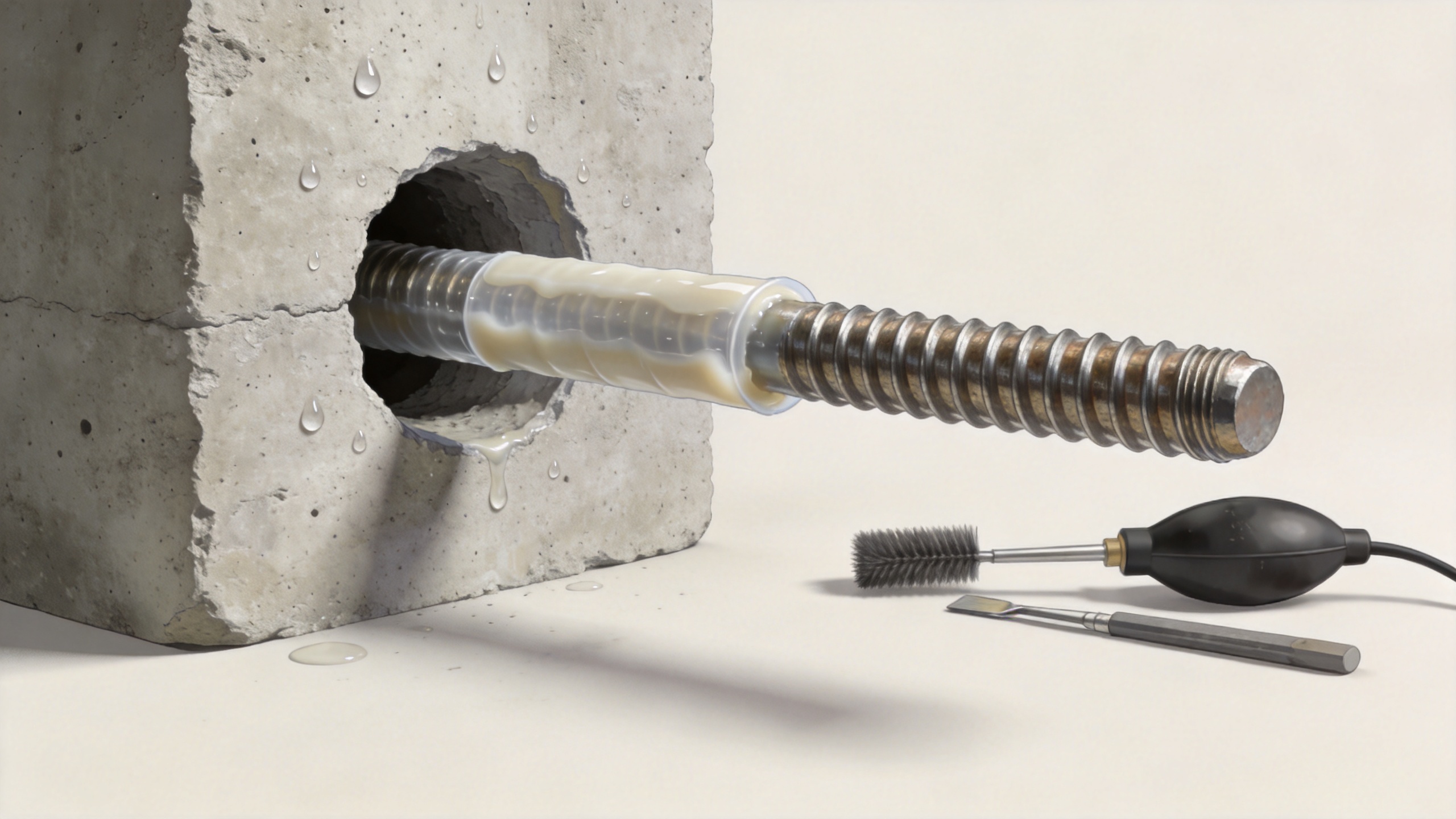
Many systems require injection from the bottom of the hole while the nozzle is withdrawn progressively. In wet conditions, a resin not intended for that exposure can mix poorly with water, be displaced, or leave voids. If the threaded rod is inserted too quickly, or is not rotated where the instructions require rotation, the Anchor may not achieve the intended full encapsulation. Voids reduce the effective bonded area and create variable load transfer.
Temperature and moisture can change the waiting period
Resin systems have installation-temperature limits and specified gel and set times. Cold, wet concrete can make the expected schedule unreliable. Loading an Anchor according to a dry-condition schedule before the manufacturer’s wet-condition waiting period has elapsed can disturb the developing bond. The restraint here is practical: use the current product instructions for the actual concrete temperature and moisture condition, not a remembered rule from another installation.
Common field decisions that create Anchor risk
- Using a general-purpose cartridge by default. A chemical Anchor should be selected from its current technical documentation for the substrate and moisture condition, not just by resin family or cartridge appearance.
- Skipping hole preparation after rain. If the hole condition changes after drilling, the Anchor installation plan may need to change too. Remove water and debris only by the approved method, then reassess before injection.
- Estimating embedment by eye. Hole diameter, depth, edge distance, rod condition, and embedment all influence an Anchor installation. Moisture does not replace those controls.
- Assuming mechanical anchors behave the same way. A wedge anchor, sleeve anchor, concrete anchor, or drop in anchor relies on mechanical engagement in a different way. Those alternatives still require correct drilling and installation, but their selection logic is not the same as a bonded Anchor system.
- Loading before the documented wait period. The Anchor should remain unloaded until the specified installation sequence and time requirements for that condition are met.
A jobsite process for wet-hole Anchor installation
- Identify the substrate and exposure. Confirm whether the concrete is cracked or uncracked where relevant, estimate its condition, and distinguish damp from water-saturated or water-filled.
- Check the approved application data. Review the exact Anchor system’s instructions, permitted moisture condition, temperature range, drill diameter, embedment range, cleaning method, and load-design assumptions.
- Prepare and inspect the hole. Use the stated drilling and cleaning sequence. If water returns or slurry remains, do not assume the hole still meets the procedure.
- Install with controlled placement. Use the designated mixing and injection components, discard initial material if the instructions call for it, inject as specified, and insert the rod to the required depth.
- Document the hold point. Record product batch information when project practice requires it, concrete condition, temperature, installation time, and the earliest permitted loading time.
- Escalate uncertainty. Where the hole condition or load path falls outside the published application, seek direction from the project engineer or the system’s technical representative before relying on the Anchor.
When a mechanical alternative may be worth reviewing
A wet hole does not automatically mean that a bonded Anchor must be abandoned. It does mean the chosen system must have applicable data and an executable procedure. Where that is not available, the engineer may review whether a wedge anchor, sleeve anchor, concrete anchor, or drop in anchor better suits the substrate, load direction, clearance, corrosion exposure, and installation access. This is a selection review, not an interchangeable substitution: each Anchor type has its own edge-distance, spacing, embedment, and capacity limits.
Final takeaway
Chemical Anchors lose bond strength in wet concrete when water, residue, unsuitable resin selection, incomplete placement, or early loading separates the installation from the conditions behind its design data. The dependable response is methodical rather than improvised: define the hole condition, verify the exact Anchor procedure, clean and inject as specified, respect the required wait period, and document the installation before load is applied. On critical work, that sequence is part of the Anchor system—not optional housekeeping.