EN

How to Choose Bolts for Large Scale Manufacturing Projects?
When a factory buys bolts by the pallet, a small specification gap can become thousands of assembly interruptions. The practical question is not “Which bolts are strongest?” It is which bolts will deliver the required joint performance, fit the production process, and arrive with repeatable evidence from lot to lot. For a manufacturing buyer, bolt selection should begin with the joint and end with a controlled purchase specification.
A manufacturing procurement lead can approach the decision in four steps: define operating conditions, turn them into measurable requirements, validate the first lot, and preserve the approved configuration on repeat orders. That approach makes bolt selection more reliable than comparing a catalog grade alone.
Start With the Joint, Not the Bolt Catalog
Before selecting bolts, document what the joint must do. Is the connection carrying steady tension, cyclic loading, shear, vibration, thermal movement, or a combination? Record the mating materials, hole type, available grip length, access for tools, installation rate, service temperature, and exposure to moisture or chemicals. A bolt that works in a dry indoor enclosure may be a poor fit for outdoor steelwork or equipment exposed to washdown.
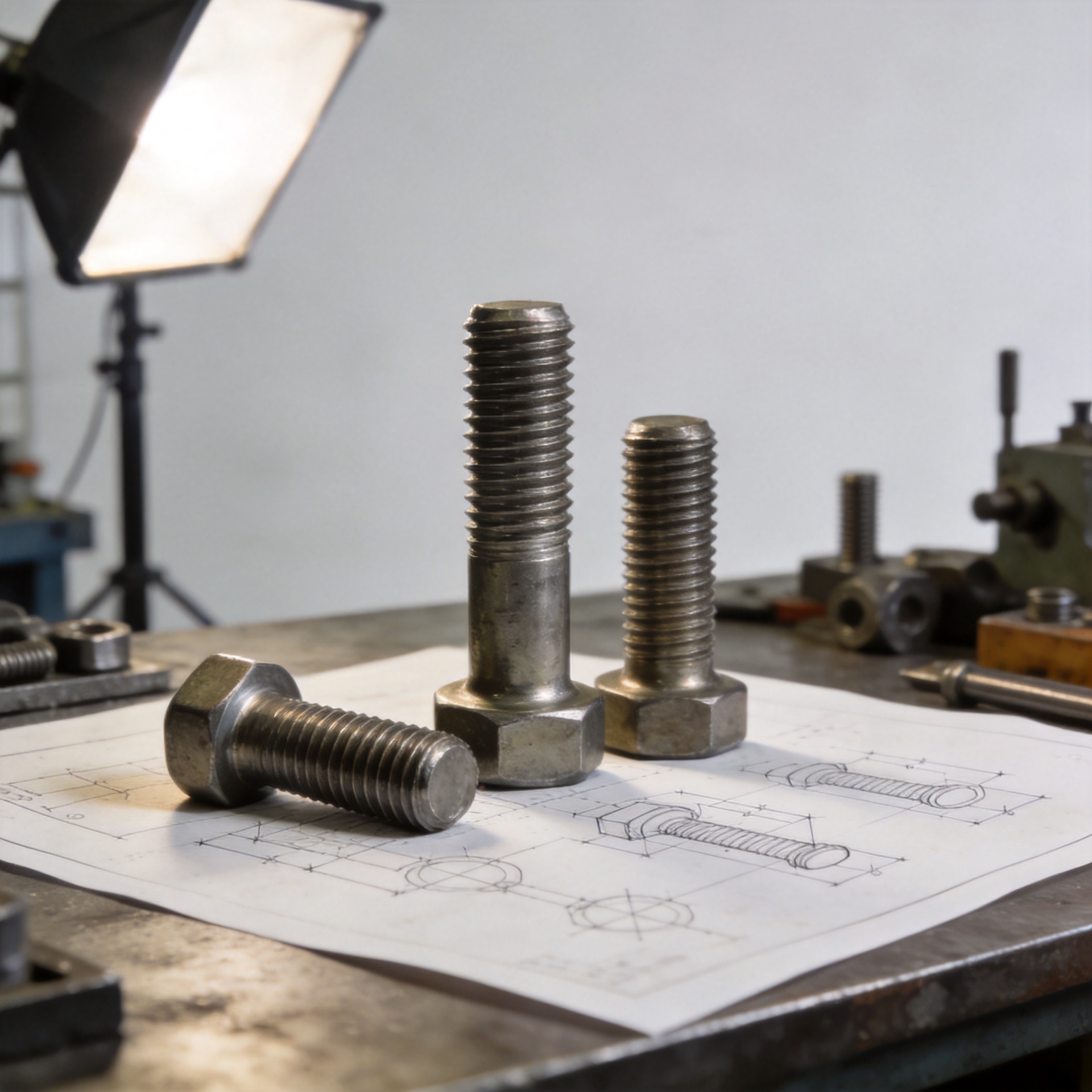
For large scale bolt purchasing, convert the drawing into a requirements sheet that includes diameter, thread series and pitch, nominal length, head style, thread length, washer and nut requirements, material, property class or grade, coating, and applicable standard. Include the assembly method too. A manufacturing bolt program becomes easier to control when engineering, quality, and purchasing are reviewing the same field list.
Match Strength to Load and Joint Design
Choosing a higher property class by default is not a substitute for design review. The bolt, nut, washer, clamped parts, and installation method work as a system. Higher-strength bolts can be appropriate for demanding loads, but they can also change ductility, tightening windows, nut compatibility, and the consequences of an installation error. Select the required property class from the governing design calculations and project specification.
Where carbon or alloy steel fasteners are specified, ISO 898-1 is a commonly referenced framework for mechanical and physical properties of bolts, screws, and studs at ambient temperature. Structural work may instead require a project-specific structural bolt assembly standard. For example, ASTM F3125/F3125M addresses high-strength structural bolt assemblies. The aim is not to apply every standard to every job. State the correct standard, the edition when required, and the acceptance criteria before requesting quotations.
Do not overlook grip. The unthreaded shank, thread engagement, clearance hole, and stack thickness affect how bolts load the joint. If the design is critical, have the responsible engineer verify tensile, shear, fatigue, bearing, and slip considerations rather than selecting from a generic strength chart.
Choose Material and Surface Protection for the Actual Environment
Material and coating should follow the exposure, not appearance. Carbon steel with an appropriate finish may suit controlled indoor manufacturing. Zinc-based finishes, hot-dip galvanizing, stainless grades, or other corrosion-control approaches may be considered when humidity, outdoor exposure, cleaning chemicals, salt, or dissimilar metals alter the risk. The mating components matter: an otherwise suitable bolt can create a corrosion concern when paired with a different metal in a wet environment.
Specify the surface condition precisely because it also influences installation. Coating thickness, lubrication, and finish can change friction. A torque value that produced a suitable clamp load on a dry trial assembly may not produce the same result after a coating or lubricant change. For a large scale bolt order, treat any finish change as an engineering and quality-control event, not a visual substitution.
Control Clamp Load Instead of Relying on Torque Alone
Bolts hold a joint through preload and clamping force, not through torque as an end in itself. Torque control is convenient for production, yet published engineering guidance notes that friction and geometry can create substantial torque-to-preload scatter. This is why a torque table should identify the exact bolt material, coating, lubrication condition, mating hardware, and tool method used during validation.
For critical joints, define the approved tightening method, tool calibration interval, sequence, and inspection frequency. Consider a pilot build using the same bolts, nuts, washers, coatings, and work instructions planned for production. If the joint faces vibration or cyclic load, validate the locking strategy and retained clamp load under representative conditions. Do not assume one torque setting transfers safely across suppliers or finishes.
Build a Supplier Qualification Plan for Repeatable Bolts
A project bolt decision is also a supplier-control decision. Request documents that match the order: dimensional inspection results, mechanical-property evidence where applicable, coating information, lot identification, and material traceability when the application requires it. For high-volume programs, agree on a sample approval process before the first full release.
Ask practical questions during supplier review:
- Can the supplier maintain the specified standard, property class, thread, and coating through repeat lots?
- How are lots identified on packaging and linked to inspection records?
- What change-control notice is given if a mill, plating source, process, or packaging method changes?
- Can the supplier provide first-article samples from the intended production route?
- How will nonconforming bolts be contained, replaced, and traced if an issue is found after delivery?
For international projects, also align packaging, labeling, corrosion protection in transit, and required commercial or compliance documents. Mixed lots, damaged threads, or incomplete paperwork can outweigh an initially low unit price when they stop an assembly line.
Use a Pilot Lot Before Releasing Full Volume
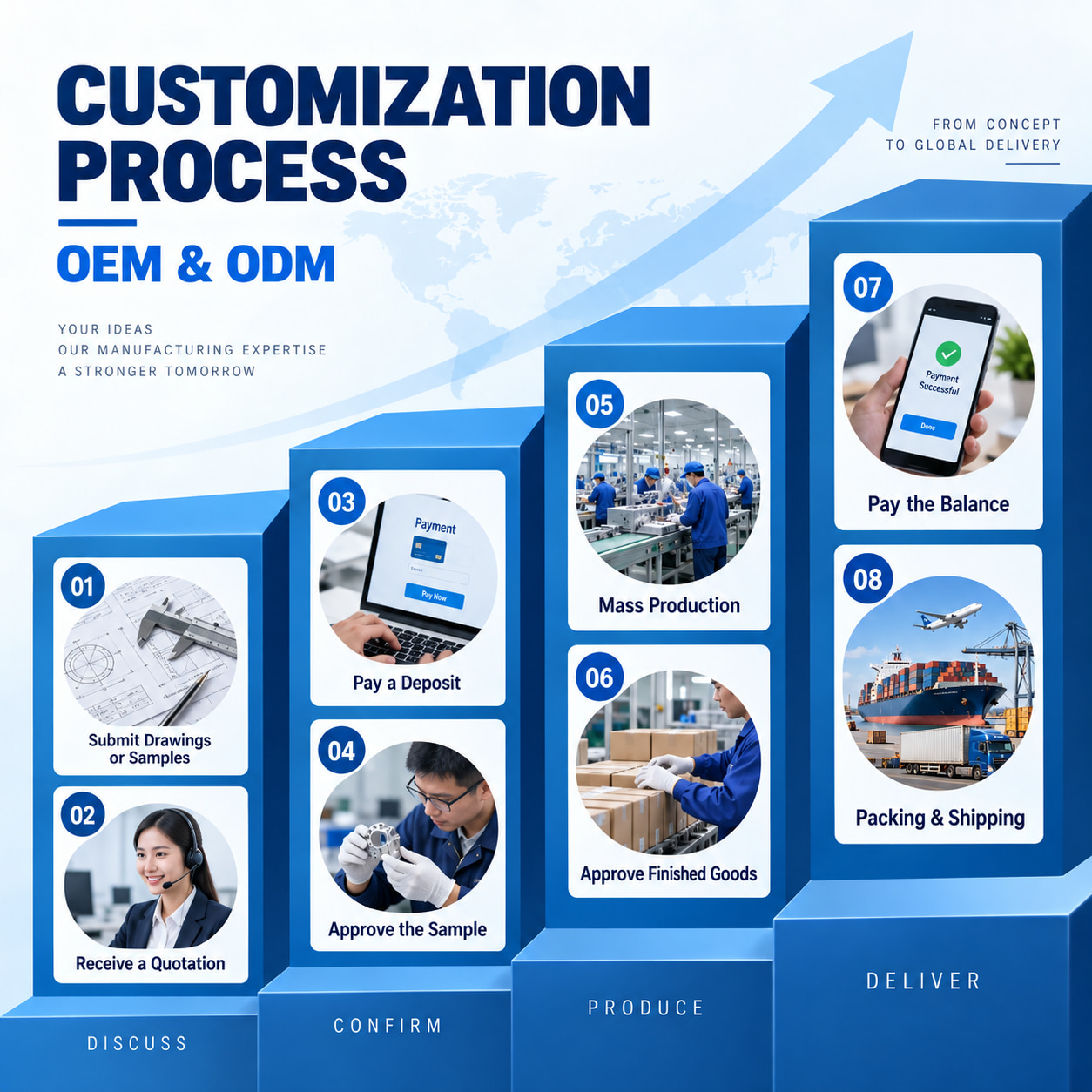
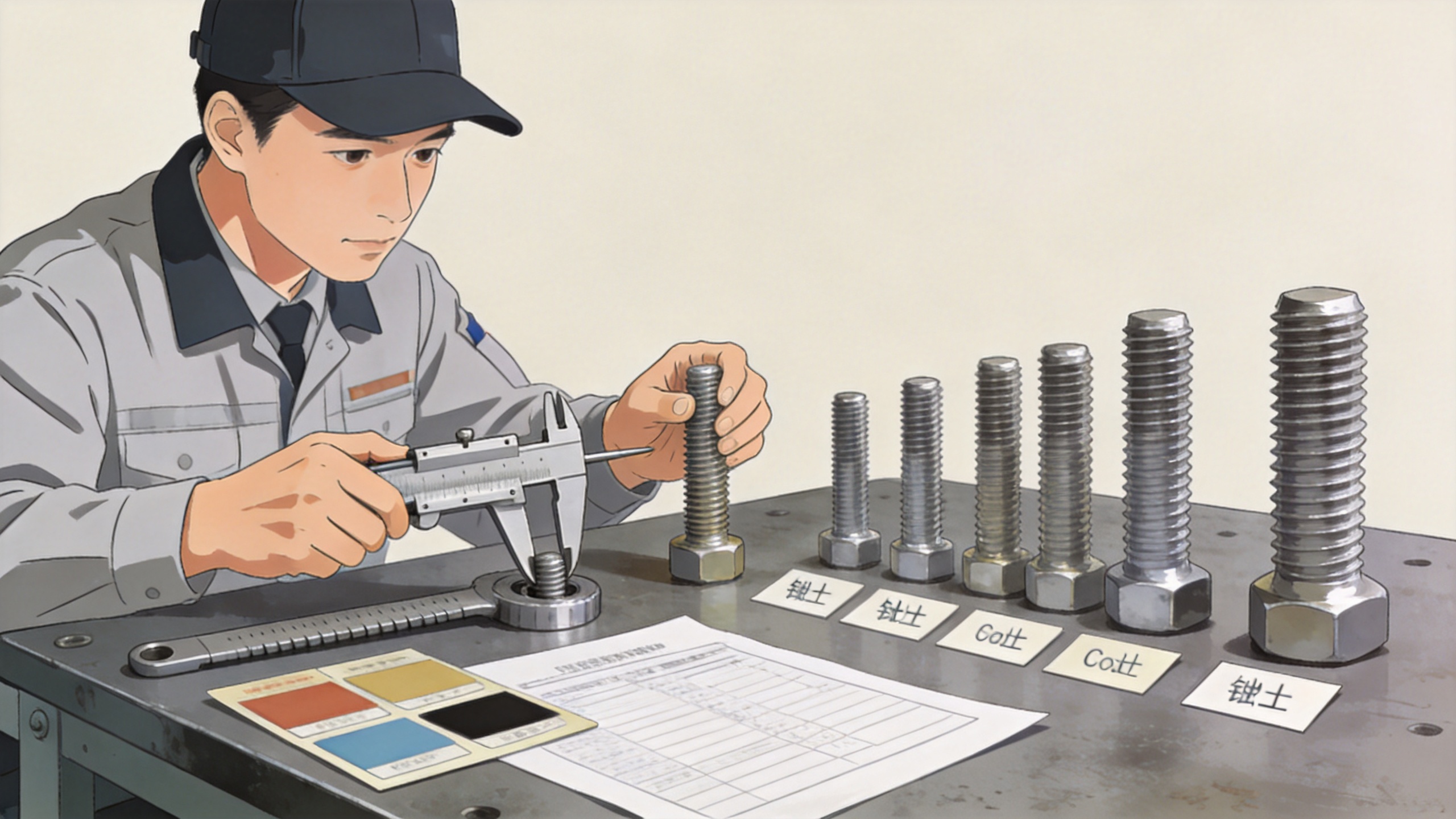
Large scale manufacturing projects benefit from staged approval. Start with samples or a pilot lot, inspect critical dimensions and threads, test fit with the real mating parts, and confirm the installation process. Then record the approved configuration in the BOM and purchasing specification. This sequence helps identify a mismatch between drawing intent and production reality before the order quantity becomes difficult to quarantine.
During pilot review, pay attention to lot consistency. A bolt may meet a basic dimension check while variation in coating, thread feel, head marking, packaging, or lubrication slows automated feeding and tightening. Capture those observations in the acceptance plan. In practice, those details often separate a technically acceptable manufacturing bolt from one that supports stable throughput.
Turn Bolt Selection Into a Reorderable Specification
After approval, lock the details that made the pilot successful: part number, drawing revision, standard, material or property class, dimensions, thread, coating, approved mating hardware, packing quantity, inspection documents, and change-notification rules. Keep a retained sample and the first-article record where the project risk justifies it. On later orders, compare incoming labels and certificates with the approved record before releasing bolts to the line.
Good bolt selection is therefore a managed process. Define the joint conditions, select bolts to the governing standard and verified load case, validate the tightening method, qualify the supplier, and protect lot traceability. That discipline gives manufacturing teams a clearer basis for cost, quality, and delivery decisions across the life of the project.