EN

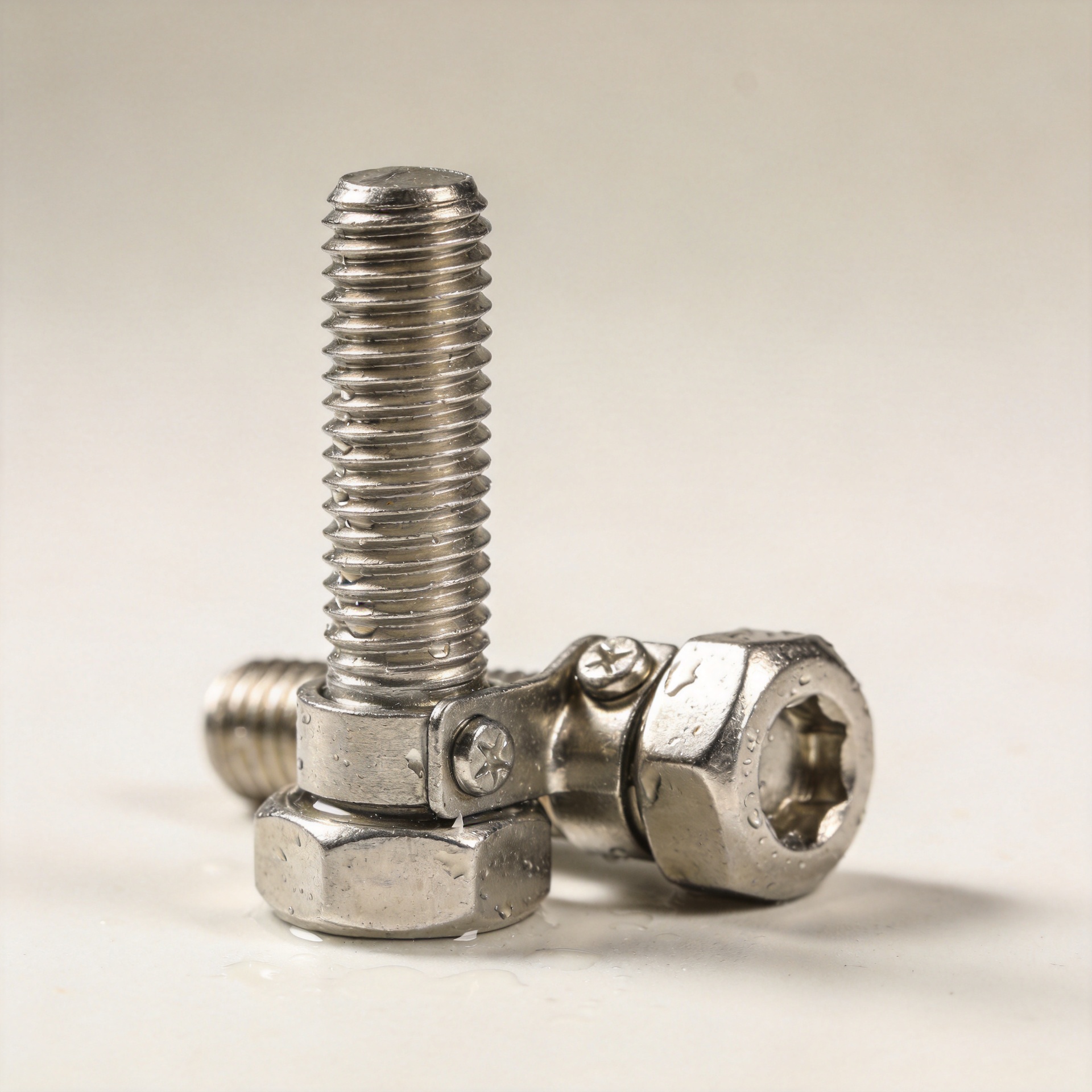
Why Do Stainless Screws Perform Well in Harsh Environments?
A stainless screw is often chosen when a joint will see rain, washdown, salt-laden air, humidity, or intermittent chemical exposure. Its value is not that a screw is immune to corrosion. Rather, the alloy and the condition of its surface can slow the corrosion processes that would quickly damage an ordinary carbon-steel fastener. For a fastening engineer, the first question is usually the same: what will actually reach the screw during service, and how long will it remain there?
That distinction matters because a harsh environment screw is selected as part of a joint, not as an isolated catalog item. Water can collect beneath a washer, chloride deposits can remain after drying, and a poorly matched mating metal can change the behavior of an otherwise suitable corrosion resistant screw. Understanding those conditions explains why stainless designs often offer dependable screw performance while also showing where their limits lie.
The protective mechanism behind a stainless screw
Stainless alloys contain enough chromium to develop a thin, chromium-rich passive film at the surface. When oxygen is available, that film can reform after minor surface disruption. This is fundamentally different from ordinary red rust on unprotected carbon steel, which is porous and can allow further attack below it. The passive film is the reason a stainless screw can retain a clean, functional surface for longer in many wet or outdoor applications.
Still, passivation is a mechanism, not a universal promise. A screw performance outcome depends on alloy grade, surface finish, temperature, deposits, joint geometry, and the time that moisture stays in contact with the fastener. In other words, a stainless screw performs well when the alloy and the local environment are compatible.
Why chromium and alloy grade matter
Chromium is central to the passive-film behavior of a stainless screw. Nickel can support the structure and corrosion behavior of common austenitic grades, while molybdenum is especially relevant where chlorides are present. That is why 304 and 316 should not be treated as interchangeable labels for every harsh environment screw application.
A 304 stainless screw is commonly appropriate for many indoor, mildly humid, and general outdoor settings when deposits are limited and the joint can dry. A 316 stainless screw is often considered when coastal exposure, de-icing salts, marine splash, or chloride-bearing process conditions increase the chance of localized attack. Molybdenum improves resistance to pitting and crevice corrosion in chloride service, but it does not remove the need to assess temperature, concentration, and cleaning conditions.
The practical lesson is not that a higher grade is necessarily required. A screw should be matched to the exposure. Over-specifying alloy can add cost without solving an installation problem, while under-specifying it can leave a joint vulnerable to staining, pitting, or difficult removal later.
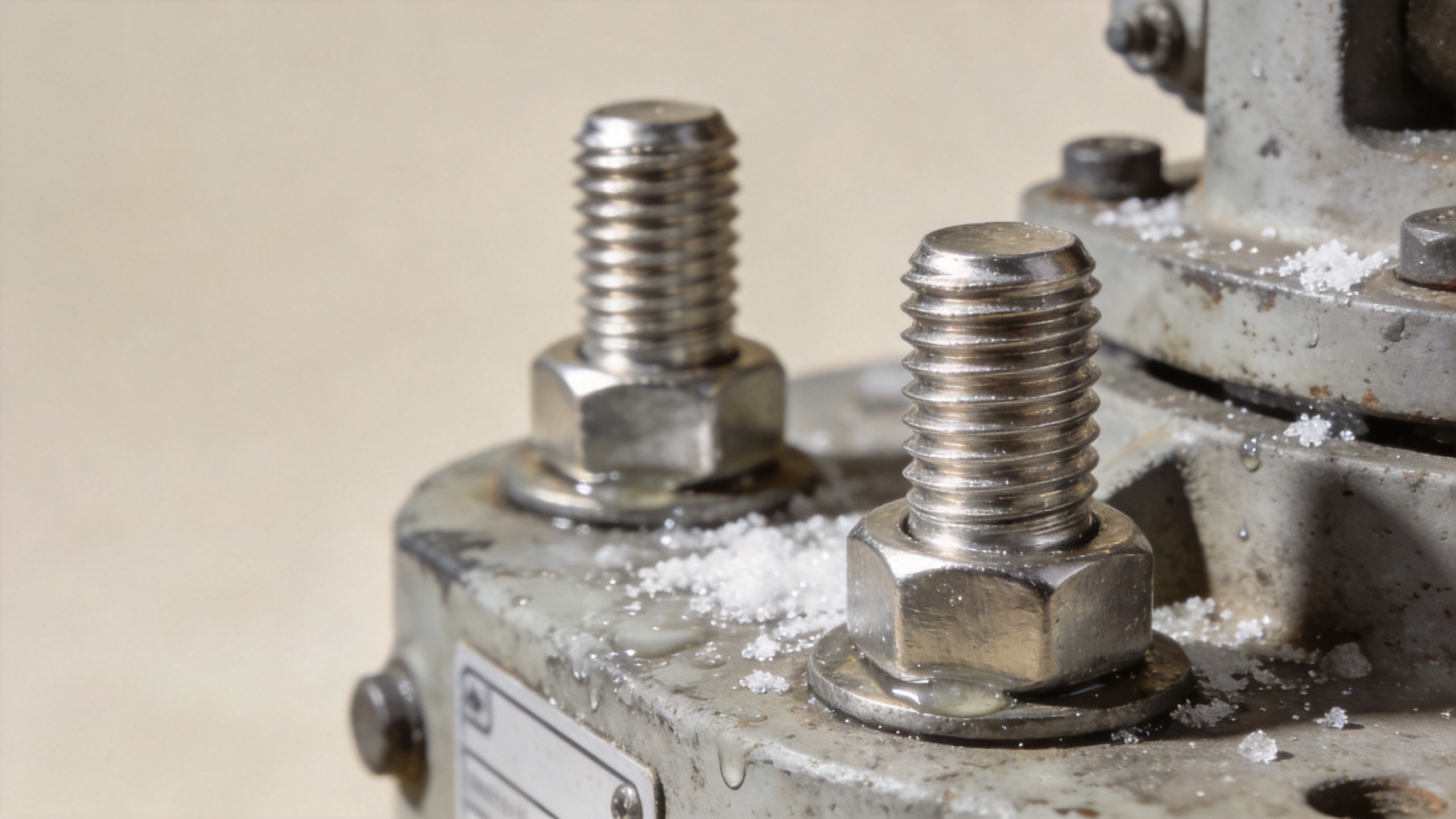
Harsh environments challenge the entire joint
Many corrosion failures begin in small, sheltered areas rather than on the visible head of the screw. A crevice under a washer, a thread engagement that traps water, or an unventilated lap joint can stay wet longer than the surrounding surface. Oxygen access may be reduced in those spaces, making it harder for a passive film to remain effective. Salt, dirt, and process residue can further concentrate there as water evaporates.
For this reason, a corrosion resistant screw should be evaluated with its washer, nut, substrate, sealant, and drainage path. If stainless is coupled directly to a more reactive metal in a wet electrolyte, galvanic corrosion can affect the less noble material. If a carbon-steel tool or abrasive contaminates the surface, it may create visible rust spots that are mistaken for failure of the stainless screw itself. Good screw performance therefore includes clean handling and a compatible joint design.
Mechanical performance still needs attention
Corrosion resistance does not automatically mean that every stainless screw is suited to every load or driving method. The required tensile capacity, thread form, engagement length, head style, and installation torque remain part of the selection. A screw can resist corrosion yet be damaged by over-tightening, cross-threading, or an unsuitable driver. Galling is another consideration for stainless threaded parts, particularly when mating surfaces are similar and assembly friction becomes high.
It is tempting to focus only on a grade name, but a useful harsh environment screw specification also defines dimensions, thread standard, material condition, finish, mating materials, and any inspection requirements. For critical joints, a sample assembly under representative lubrication and torque conditions can reveal problems before a larger installation begins.
How to choose a stainless screw for the exposure
Use this short evaluation sequence before selecting a screw:
- Describe the exposure: Identify salt, wash chemicals, humidity, temperature swings, standing water, and cleaning frequency.
- Check crevices and drainage: Ask whether the screw head, washer, and threads will dry after exposure.
- Match the grade: Consider 304 for moderate service and review 316 or another suitable alloy where chlorides or more aggressive media are material factors.
- Review mating materials: Examine the substrate and adjacent hardware for galvanic compatibility.
- Confirm installation: Define torque practice, tool condition, and methods that limit surface contamination or galling.
- Plan verification: For important projects, request material identification and agree on incoming inspection points before release.
Common assumptions that can reduce screw performance
One common mistake is assuming that a stainless screw will handle any outdoor or chemical setting without further review. Chlorides, elevated temperature, poorly drained crevices, and aggressive cleaners can be more decisive than the word “stainless” on a drawing. Another is selecting the highest available strength without considering ductility, installation method, or the actual load path. High strength and high corrosion resistance are separate properties that require a balanced choice.
It is also worth checking the supply specification. Material certificates, consistent thread dimensions, batch traceability, and a clear grade designation can be as valuable as the initial appearance of a screw. For repeat production, define what is to be inspected so that one acceptable sample is not mistaken for evidence of ongoing consistency.
The bottom line
A stainless screw performs well in harsh environments because its chromium-rich passive surface can resist many forms of everyday corrosion, and suitable alloy additions can extend that resistance in tougher service. Yet a stainless screw is not a stand-alone solution. The strongest approach is to match the grade, joint geometry, mating materials, installation method, and maintenance plan to the actual exposure. When those elements work together, a harsh environment screw can provide more reliable screw performance and reduce avoidable maintenance work over the life of the assembly.