EN

How Do Custom Bolts Help Manufacturers Reduce Production Issues?
In a production line, a bolt is rarely just a low-cost line item. It connects a drawing, a mating component, an assembly method, and a quality record. When that connection is vague, a nominally correct fastener can still arrive with the wrong thread fit, grip length, head geometry, coating, or packaging method. The result may be cross-threading, tool changes, rework, inspection holds, or an interrupted build. A well-defined custom bolt helps manufacturers turn those uncertain handoffs into controlled requirements.
From a manufacturing procurement perspective, the useful question is not whether a custom bolt is more sophisticated than a catalog part. It is whether the specification removes a recurring source of variation in a particular joint. This matters most where bolts are installed repeatedly, where access is limited, or where a mismatch is discovered only after parts reach the line.
Why standard bolts can create production friction
Catalog bolts are appropriate when the joint, thread, material, finish, and installation method already match an established standard. Problems begin when a drawing carries only a nominal diameter and length while the actual assembly depends on details outside that shorthand. A bolt that is too long can bottom out or interfere with adjacent components. One with the wrong unthreaded grip can place threads in a shear area. A head shape that does not suit the tool envelope can slow fastening or damage nearby surfaces.
Thread fit deserves the same attention. Thread tolerances set the permitted dimensional variation that allows mating parts to assemble consistently. If the bolt and its mating feature are sourced to assumptions rather than a shared thread designation and tolerance requirement, an incoming lot may feel tight, loose, or inconsistent across the assembly. That is not automatically a bolt-quality issue; it is often a definition issue that should be resolved before production.
Many teams initially focus on unit price. In practice, sorting questionable material, revising work instructions, and rechecking assemblies can be the larger cost. A custom bolt is valuable when it reduces those hidden tasks by making the part fit the joint and process from the start.
What manufacturers can control with a custom bolt
A production bolt can combine the characteristics that matter to a specific application instead of asking operators to compensate for a near match. The starting point is a usable drawing or specification that identifies the functional dimensions and the conditions around them.
- Thread and fit: Define the thread form, pitch, class or tolerance requirement, and mating-part expectation. This supports repeatable engagement and clearer incoming inspection.
- Length and grip: Set overall length, threaded length, and unthreaded grip in relation to the joint stack. This can reduce bottoming, excess protrusion, and thread placement errors.
- Head and drive: Choose head geometry and drive type that suit access, tool clearance, seating surface, and operator or automated-driver capability.
- Material and surface condition: Select material and finish for the actual exposure, contact materials, and required handling process. The choice should be confirmed against the application rather than treated as a cosmetic preference.
- Marking, packaging, and identification: Where several similar bolts travel through one facility, defined lot labels, pack quantities, or identification features can make receiving and line-side control easier.
An OEM bolt is therefore not simply a nonstandard size. It is a controlled combination of dimensions, material, finish, and documentation that reflects how the joint will be built.
How specification control reduces common production issues
1. It lowers assembly mismatch risk
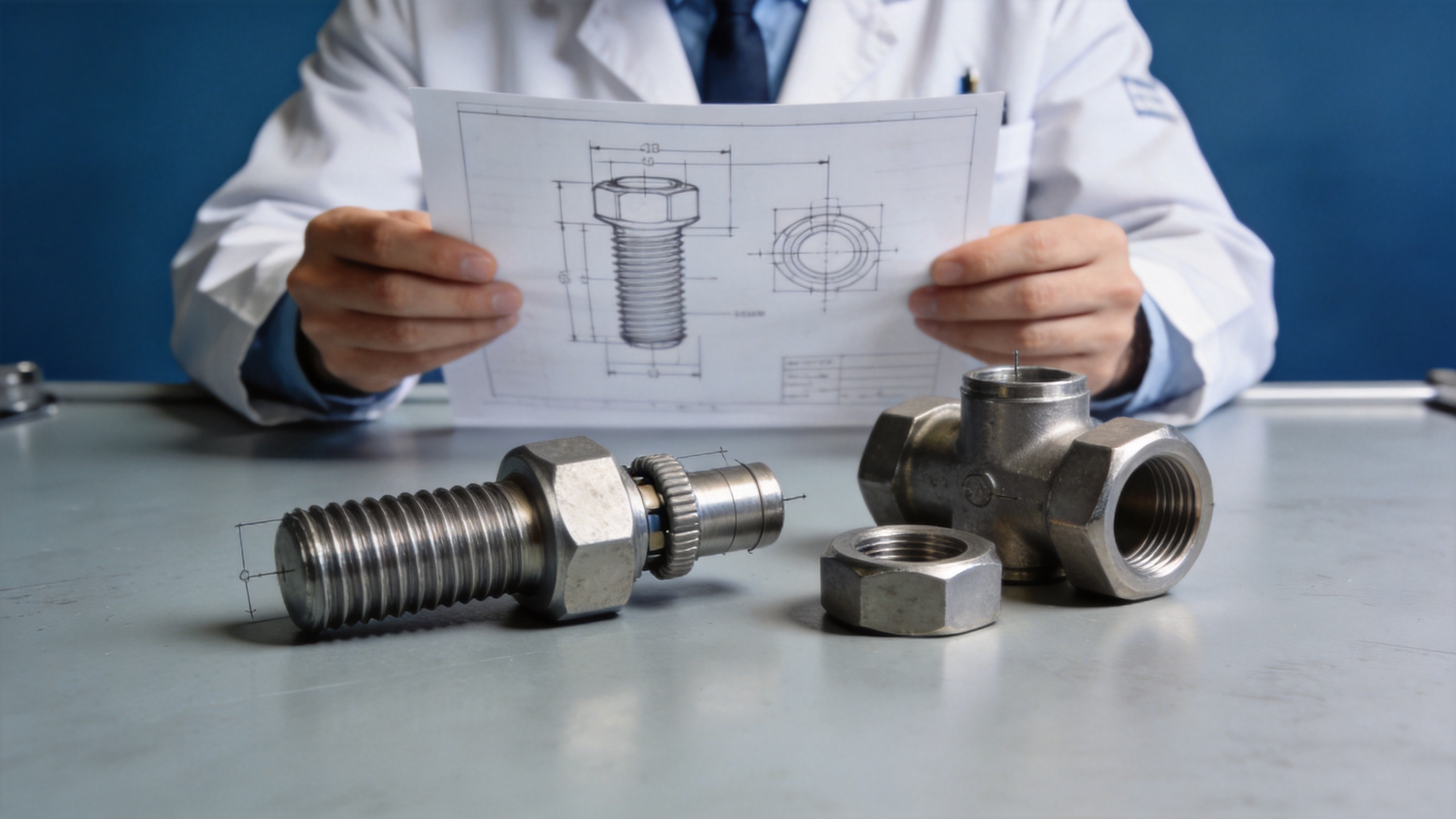
When the mating component, wrenching access, and joint stack are reviewed together, the bolt drawing can address the causes of poor engagement before parts are made. This is especially relevant after a design revision, a change in coating, or a move from manual to powered assembly. A sample assembly is useful here because it tests the relationship between components, not merely the dimensions of an isolated bolt.
2. It supports more consistent tightening
Joint integrity depends on more than the torque value printed in a work instruction. Preload and clamping force are influenced by the fastener, the joint, lubrication or finish, and the tightening method. For that reason, the bolt specification and installation validation should be considered together. If a process has vibration, changing loads, or sensitive joint materials, the engineering team should define the applicable tightening approach and verify it on the actual assembly rather than carrying forward a setting from a different bolt.
3. It makes incoming inspection more useful
Inspection is stronger when the purchase requirement identifies what to inspect. Instead of checking only diameter and length, a manufacturer can align inspection with thread fit, head dimensions, finish, marking, packaging, and documentation. This narrows the gap between an approved sample and a repeat production delivery. It also makes a nonconformance easier to isolate: the team can compare the lot to agreed requirements rather than debate what “standard” was meant to cover.
4. It improves traceability when a line issue appears
Lot-level traceability does not make a part flawless, but it gives a production and quality team a faster path to review. A purpose-built bolt program can define how lots are labeled, what inspection records accompany delivery, and how changes are communicated. When a concern appears, the team can identify affected material, compare it with the approved specification, and decide whether containment or further analysis is needed. That is more practical than treating all visually similar bolts as interchangeable.
A practical custom-bolt approval workflow
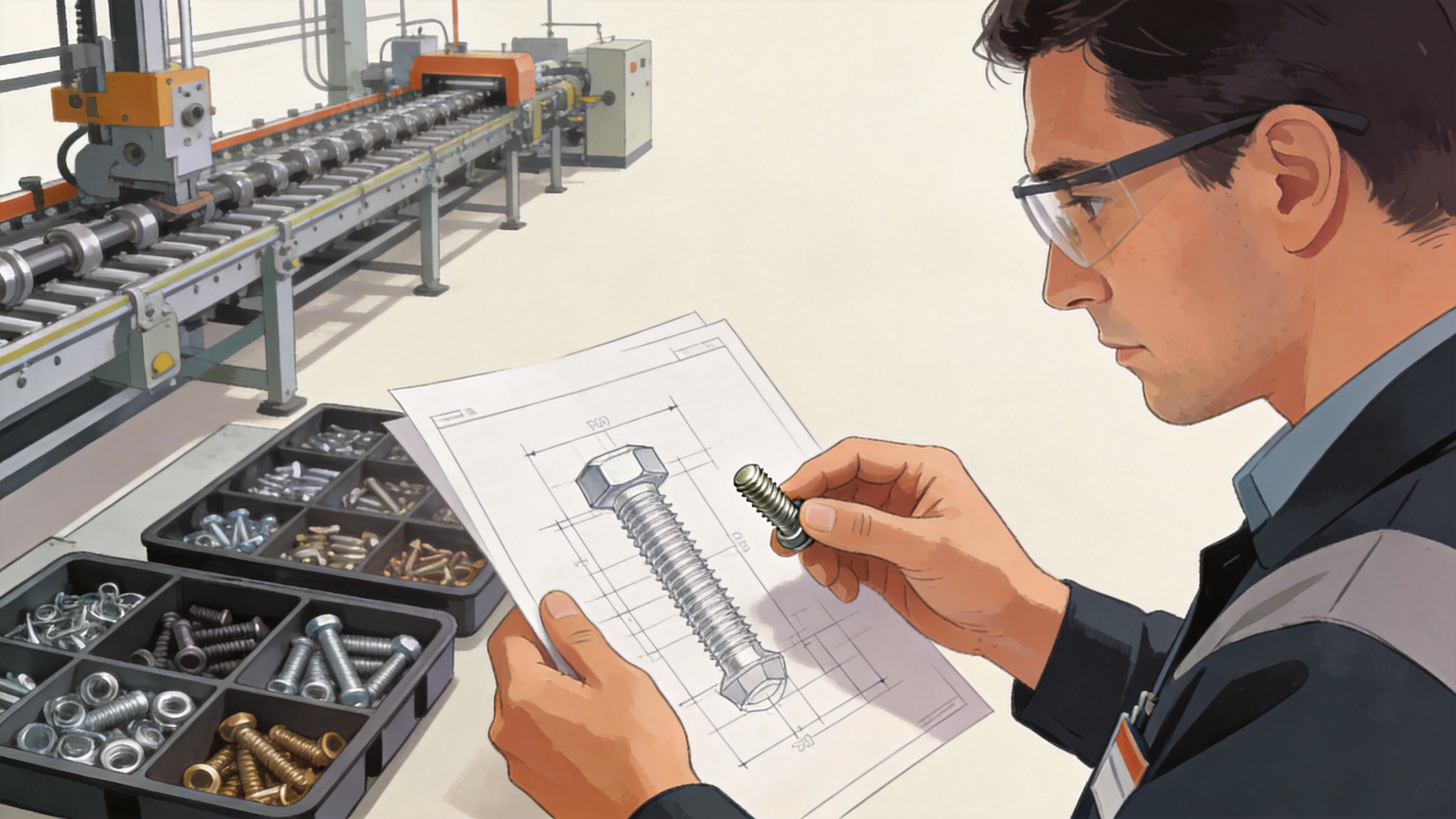
- Describe the joint, not only the fastener. Provide the mating material, thread requirement, joint stack, access limits, loading conditions, environment, and assembly method.
- Convert pain points into acceptance criteria. If the current issue is cross-threading, unclear lot identity, coating damage, or tool slip, identify the observable requirement that addresses it.
- Review the drawing with manufacturing and quality. Confirm the features that influence installation, inspection, and handling before a production order is released.
- Evaluate samples in the intended assembly. Check fit, seating, installation behavior, and any process-specific concerns on representative components.
- Lock the approved version and change process. Retain the drawing revision, inspection points, pack requirements, and documentation expectations for later orders.
This workflow also helps procurement communicate clearly with an OEM bolt supplier. It prevents a request for “the same bolt as last time” from becoming a source of ambiguity when a component or process has changed.
When a custom bolt is worth considering
Consider custom bolts when a standard part repeatedly causes fit or installation exceptions; a joint requires a specific grip, head, material, or finish combination; line-side identification matters; or a manufacturer needs clearer lot documentation. They can also be appropriate for equipment builders that want to standardize several assembly details into one approved part.
Customization is not a substitute for joint engineering. If the application involves high loads, severe vibration, unusual temperatures, or regulatory requirements, the responsible engineering team should validate the complete joint and applicable standards. The point of a custom specification is to give that validation a stable, repeatable part definition.
Build a repeatable bolt-control record
A concise control record helps each department work from the same definition. For every custom bolt, list the approved drawing revision, material and finish, thread requirement, inspection characteristics, sample decision, and packaging rule. Attach the same record to purchase releases so a production bolt is not reordered from a verbal description. For an OEM bolt used across several assemblies, note the mating part and approved installation method as well.
At line start, compare a small set of bolts with the approved reference before high-volume assembly begins. This simple practice can reveal a mix-up in length, head style, or finish while containment is still limited. Where several custom bolts look alike, distinct labels and controlled point-of-use storage make selection easier. If an OEM bolt is changed, treat the change as an engineering and quality review rather than a purchasing substitution.
The same discipline applies to a production bolt after delivery: receive it by lot, inspect the characteristics named in the control record, and keep any installation notes with the work instruction. Custom bolts are most useful when their definition travels intact from design through purchasing, receiving, and assembly. That continuity helps the team investigate deviations quickly and preserve the lessons for the next release.
Conclusion: turn a recurring bolt issue into a controlled requirement
Custom bolts help manufacturers reduce production issues by replacing assumptions with explicit requirements. The practical gains come from better fit with mating parts, clearer installation conditions, focused incoming checks, and traceable repeat orders. Begin with the production symptom, define the joint-level cause, and document the dimensions and controls that the process actually needs. With that discipline, bolts become less likely to create avoidable uncertainty on the line.