EN

Why Washer Thickness Matters for Preload Retention in Bolted Joints
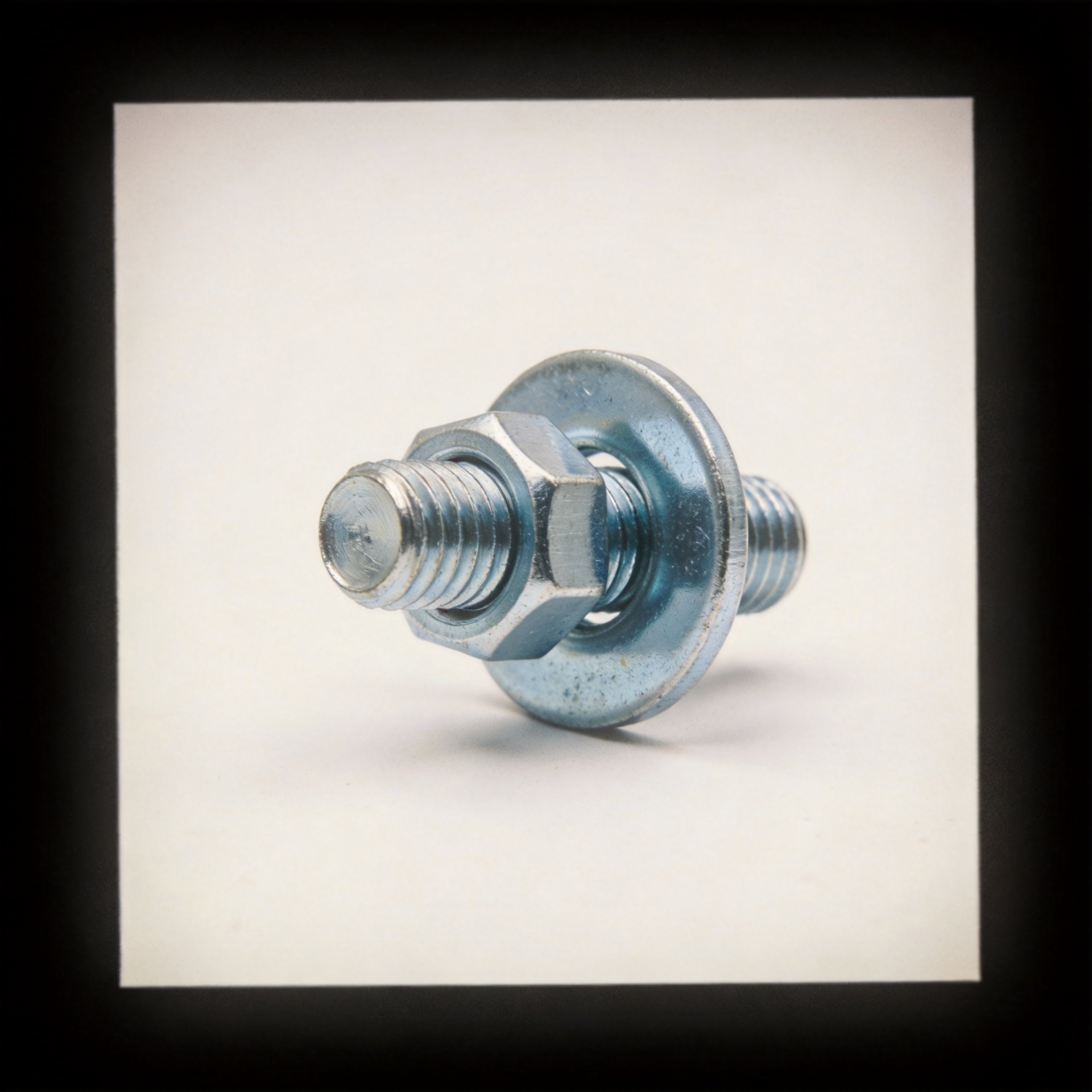
A washer is often treated as a small, interchangeable item under a bolt head or nut. In a loaded joint, that shortcut can change how the assembly performs. The washer thickness affects bearing stress, local deformation, the stiffness of the clamped stack, and the amount of preload that remains after the first tightening cycle. As a fastener-selection specialist, I treat the washer as part of the joint rather than as an accessory added at the end.
Preload is the tensile force created in a bolt when it is tightened. That force clamps the parts together so service loads are carried through friction and controlled load sharing. A joint can lose part of its clamp force through surface flattening, embedment, thermal movement, vibration, or yielding at the bearing face. Washer thickness does not solve every one of those mechanisms, but it can change how the load enters the clamped material and how much local settling occurs.
Thickness changes the bearing zone, not just the stack height
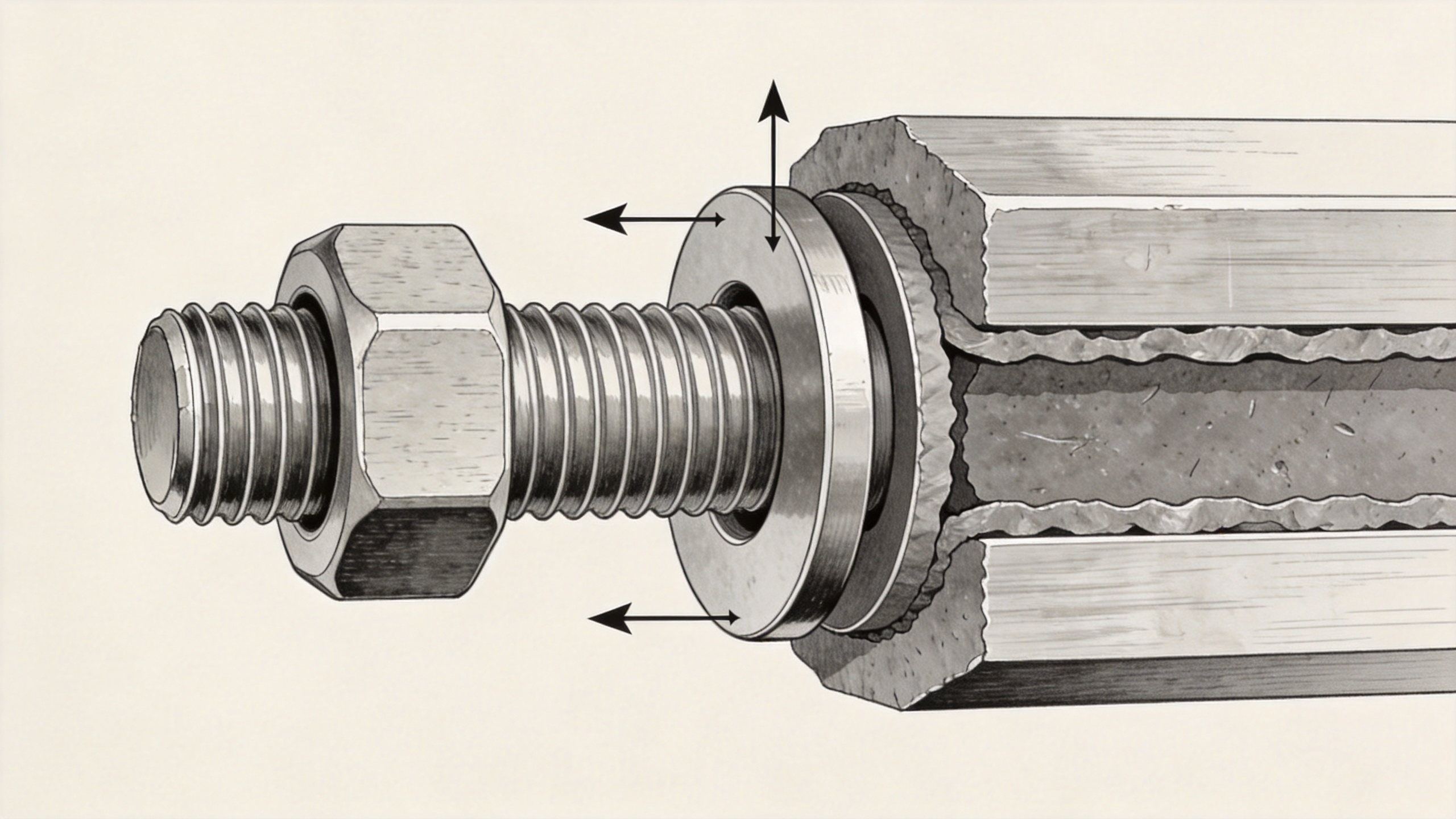
When a nut or bolt head bears directly on a soft, thin, painted, slotted, or uneven surface, the contact pressure can be concentrated in a narrow ring. A suitable flat washer spreads that load across a larger bearing area. Its thickness matters because a very thin washer can dish, cup, or conform to surface irregularities as the fastener is tightened. Once that happens, the washer may no longer distribute the load in the way the joint designer intended.
A thicker flat washer generally has greater bending resistance. It is more likely to keep a stable bearing face when the clamped material is softer than the fastener or when the hole edge is vulnerable to indentation. That stability can reduce local embedment: the small, permanent seating changes that shorten the grip length and reduce bolt stretch after assembly. The result is often better preload retention, provided the washer diameter, hardness, material, and installation torque are also appropriate.
One practical limit is worth keeping in view: thicker is not automatically the right answer. Increasing washer thickness also changes the effective grip length and the stiffness balance between the bolt and the joined parts. The geometry of the plates, hole size, washer outside diameter, material properties, and the contact surfaces all influence the outcome. A washer should therefore be specified as part of the full joint stack, not selected by thickness alone.
Why joint stiffness affects retained preload
A bolted joint behaves like two elastic systems working together: the bolt stretches and the clamped members compress. Joint stiffness describes how those systems share an external separating load. A washer can influence the compressed region beneath the head or nut, especially near thin sheet, aluminum, coatings, oversized holes, or softer materials. By supporting the bearing face, the washer may help the joint develop a more consistent compressed load path.
For preload retention, the early assembly period is often the critical one. Rough surfaces settle, coating peaks flatten, and a thin washer may seat into the material. Each small loss of stack height relaxes some bolt elongation. Because torque is only an indirect way of estimating clamp force, a torque reading alone cannot show whether a washer has yielded or whether embedment has consumed preload. Where clamp force is critical, methods based on measured bolt elongation are more direct; one engineering reference retrieved for this article lists bolt-elongation tightening accuracy at about ±3–5%, though the appropriate verification method depends on the application.
Flat washer, lock washer, spring washer, and sealing washer: different jobs
Flat washer
A flat washer is the primary choice when the aim is to spread bearing load, protect a surface, bridge an oversized hole, or create a more stable bearing surface. Thickness and hardness are central to this job. In a preload-sensitive connection, check whether the flat washer will remain flat at the intended clamp force and whether its outside diameter adequately supports the clamped material.
Lock washer
A lock washer is selected for a defined locking function, not merely because a joint needs more thickness. Its effectiveness depends on the style, mating surfaces, vibration conditions, and the specified installation procedure. A lock washer should not be assumed to replace sound preload, proper torque control, or joint design. When a lock washer is used, confirm that the assembly stack and bearing faces match the manufacturer’s application guidance.
Spring washer
A spring washer adds compliance to the stack, but it is not a universal remedy for preload loss. In some applications it may accommodate small movements; in others, its deflection can be consumed during tightening or it can alter the torque-to-tension relationship. Review the actual deflection range, material condition, and vibration environment before using a spring washer as part of a retention strategy.
Sealing washer
A sealing washer serves an environmental function, such as closing a path around a fastener penetration. Its compressible sealing element can change the joint’s relaxation behavior. The metal backing, elastomer, compression limit, fluid exposure, and temperature range should be reviewed together. Do not apply the thickness logic of a structural flat washer directly to a sealing washer without checking its sealing and compression requirements.
A practical selection sequence
- Define the joint objective. Decide whether the washer must distribute load, protect a coating, support thin material, provide locking behavior, seal a joint penetration, or serve more than one function.
- Map the clamped stack. Record bolt size, grip length, hole diameter, plate thickness, surface finish, coatings, and the hardness of each bearing surface.
- Check local bearing behavior. Select a washer diameter and thickness that can resist unacceptable cupping or indentation at the planned clamp load.
- Choose the washer type deliberately. Use a flat washer for bearing support, a lock washer only when its locking principle suits the application, a spring washer only after reviewing its working range, and a sealing washer when environmental closure is required.
- Validate tightening and retention. Establish a controlled installation method, inspect initial seating where practical, and evaluate preload loss under the actual thermal and vibration conditions.
Questions to send with a washer RFQ
For industrial purchasing, send a request that includes the bolt size and standard, material and coating, washer inside and outside diameter, target thickness or applicable standard, hardness requirement, mating-material details, intended torque or preload method, and environmental conditions. For project work, include drawing requirements and any documentation needed for the order. Qingdao Jeekuu Hardware Products can assist buyers with technical specification discussion and with fastener options aligned to DIN, ISO, or ASTM requirements where applicable; the final selection should remain tied to the joint drawing and service conditions.
Key takeaway
Washer thickness matters because it influences the stability of the bearing contact zone, local embedment, and the stiffness behavior of the assembled joint. A properly selected washer can support preload retention by reducing unwanted seating and by spreading load into the clamped material. It is one decision in a larger system that also includes bolt stretch, torque control, surface condition, washer type, and service loads. Treat the washer specification as an engineering input, then verify the assembled joint under conditions close to service.