EN


How Can Buyers Find Professional Stud Manufacturers?
When a buyer searches for studs, the search results can be misleading: the word is used for jewelry as well as industrial threaded fasteners. For an engineering, construction, machinery, or export purchase, the useful question is more specific: how do you find a stud manufacturer that can make the required part consistently and document what it supplied?
As a buyer who has worked through cross-border fastener sourcing, I would not begin with a long supplier list. I would begin with the application. A professional supplier can respond to a defined requirement with clear questions, a workable quotation scope, and evidence that matches the order. That matters more than a polished catalog or the lowest initial unit price.
Start by defining the stud, not by comparing supplier claims
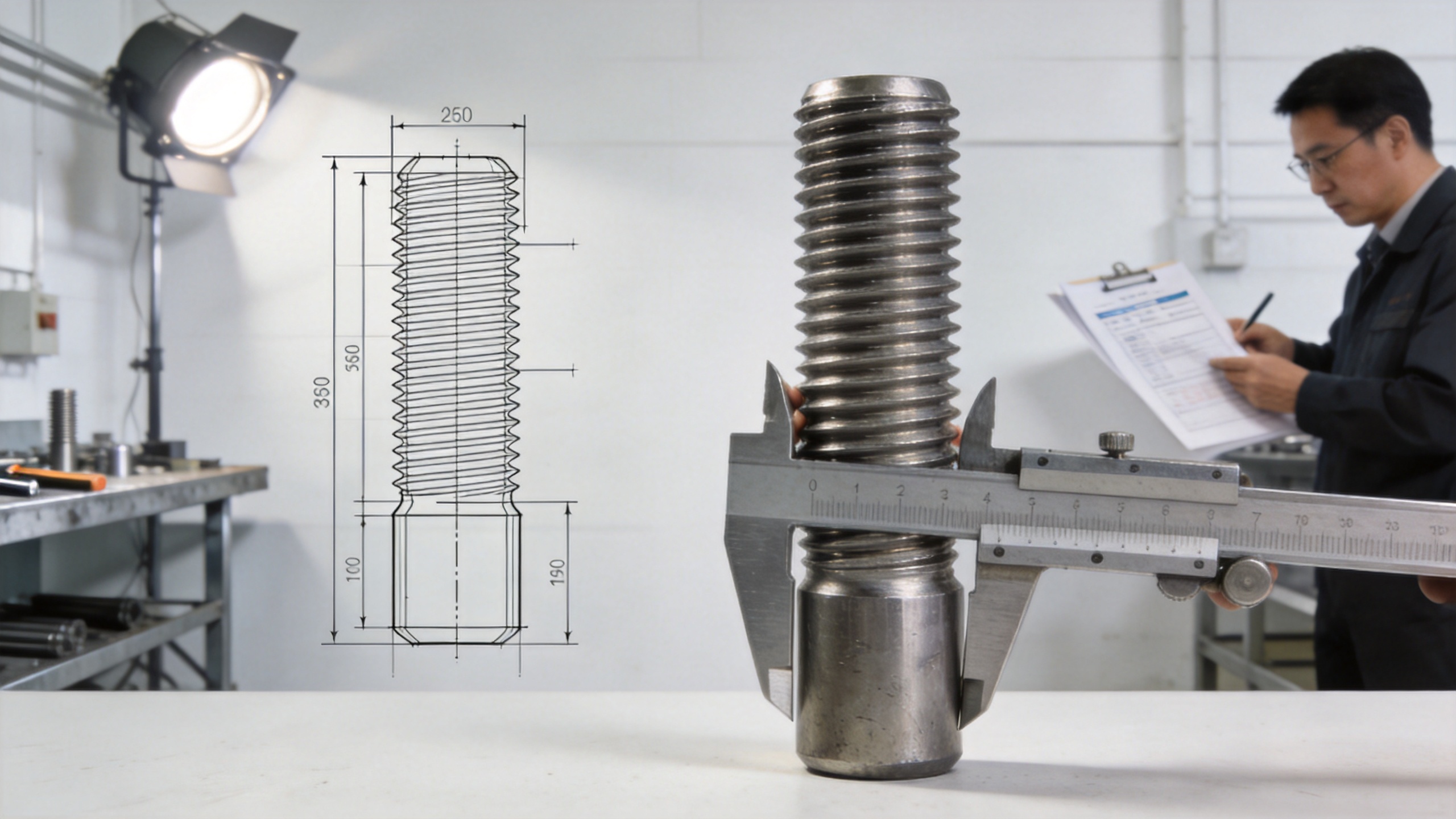
“Stud” can refer to threaded rods, double-end studs, welded studs, or application-specific fasteners. Before contacting a stud supplier, prepare a short requirement sheet. It should state the drawing or dimensional description, thread form and pitch, overall and threaded lengths, material grade, surface condition, quantity, target market, packaging needs, and any documents your quality team expects.
Include the working environment as well. Corrosion exposure, vibration, temperature, mating material, assembly method, and load direction can change the material or finishing discussion. If the requirement is still open, say so. A capable supplier should help separate the decisions that need engineering input from the ones that are simply commercial.
This preparation avoids a common sourcing problem: two quotations appear comparable, but each supplier has assumed a different material, tolerance, coating, or inspection scope. A price comparison is meaningful only after the scope is aligned.
Where to look for a professional stud manufacturer
Use several channels, then qualify every lead with the same checklist. Established B2B marketplaces, trade directories, industry referrals, and direct manufacturer websites can all produce candidates. The channel is less important than whether the company can answer technical questions and provide traceable documentation.
- Manufacturer websites: Look for a stated fastener range, production or inspection information, export experience, and a way to submit drawings or specifications.
- Industry referrals: Ask contacts in fabrication, machinery, steel structures, or maintenance for suppliers they have evaluated under similar conditions.
- B2B platforms and directories: Treat them as discovery tools, not as qualification proof. Move quickly from profile claims to an RFQ and evidence request.
- Trade events or video factory reviews: These can help buyers understand communication quality and process control, but they do not replace document review or samples.
For buyers seeking stud wholesale quantities, the short list should include both a supplier’s range and its ability to keep the same agreed specification across repeat orders. A broad catalog is useful; stable execution is the more important test.
Ask questions that reveal process control
A professional stud supplier should be comfortable clarifying the order before promising a delivery date. Ask how the team reviews drawings, distinguishes standard from custom work, and controls changes after approval. The answers do not need to be elaborate, but they should be specific to your request.
1. Can the supplier confirm the technical basis?
Request a written confirmation of dimensions, thread details, material, finish, and the applicable standard or drawing. International fastener standards generally address dimensions, tolerances, materials, and performance characteristics, but the applicable document depends on the part and market. Do not assume that a generic standards claim covers your exact order; ask what will be used to judge conformity.
2. What evidence links material and finished parts?
For critical or repeat orders, ask what material records and batch-linkage records can be supplied. Then ask how the supplier identifies the finished lot that corresponds to those records. A document alone is less useful if it cannot be connected to the delivered studs.
3. How are threads and dimensions checked?
Visual inspection is not enough for a threaded fastener. Ask which dimensions, thread characteristics, and surface condition are checked, when those checks occur, and what happens if a result falls outside the agreed requirement. If assembly fit is important, ask whether a sample can be evaluated with your mating part or gauge before volume production.
4. How is repeat-order consistency managed?
Many buyers initially focus on the first sample, then discover that later lots require the same attention. Batch consistency affects receiving inspection, assembly time, and production scheduling. Ask how approved specifications, packaging instructions, and inspection requirements are retained for future orders.
Evaluate a sample as a decision gate
Sampling is a practical way to test a stud manufacturer without treating the first shipment as the experiment. Send the supplier the same requirement sheet used for quotation. When the sample arrives, check the attributes that matter in your application: fit, thread engagement, length, finish, packaging, marking if required, and accompanying documentation.
Keep a record of what was approved and what was changed. If the result is acceptable only after a revision, make the revision explicit in the final order specification. This sounds basic, yet it prevents the all-too-common situation in which a drawing update exists in email but not in the purchase order.
For high-volume programs, define a small pre-shipment review: confirm the purchase-order revision, lot identification, agreed inspection items, packaging count, and shipping documents. The exact depth should match the application risk. A low-load maintenance item needs a different control plan from a fastener used in a safety-sensitive assembly.
Compare quotations on total sourcing clarity
It is tempting to choose the lowest-priced line item. In practice, the lower quote may omit a finish, documentation, tooling, inspection, or packaging requirement that another quotation already includes. Many procurement teams move from unit price to lifecycle cost after a late delivery, incoming rejection, or production interruption exposes the missing scope.
| Comparison point | What to request | Why it matters |
|---|---|---|
| Technical scope | Drawing or specification confirmation | Reduces mismatched assumptions |
| Material and finish | Stated grade and surface requirement | Supports application and corrosion decisions |
| Quality evidence | Agreed inspection and traceability records | Helps receiving teams verify the lot |
| Commercial scope | Quantity, tooling, packaging, and lead-time terms | Makes quotations comparable |
| Repeat supply | How approved requirements are retained | Supports future-order consistency |
If your priority is a predictable ongoing supply, assess the supplier’s response to these points before asking for a price concession. A transparent response can reveal more about future cooperation than a broad promise.
Use a two-stage supplier decision
First, screen candidates by communication quality and their willingness to work from a controlled requirement. Second, make the award decision after sample review and document confirmation. This approach is useful when sourcing from an export-oriented fastener company that offers bolts, screws, nuts, washers, self-drilling screws, rigging hardware, and threaded products: range can simplify procurement, but each stud order still needs its own defined controls.
For example, a supplier located near an export port may offer practical logistics options for international orders. That can be relevant to scheduling, yet it should sit alongside—not replace—technical review, inspection evidence, and a clear order scope. The same principle applies to platform profiles and years-in-business claims.
A practical RFQ checklist for studs
- Name the stud type and attach the current drawing or a complete dimensional description.
- State thread, material, finish, quantity, target market, and application conditions.
- Ask the stud supplier to identify assumptions or missing details before quoting.
- Request confirmation of inspection scope, lot identification, and documents needed at delivery.
- Approve a sample or first-article process when the application or order value warrants it.
- Record the approved revision and carry it into the purchase order and repeat-order controls.
Make the selection evidence-based
The right source for studs is not necessarily the largest listing or the fastest quote. It is the supplier whose capabilities, questions, sample, and documents line up with your application. Start with a precise RFQ, compare scope rather than headline price, and use the first sample to test communication as well as the part.
That process gives buyers a defensible way to find a professional manufacturer for studs, whether the need is a one-time custom order or an ongoing stud wholesale program. It also leaves a clearer record for engineering, purchasing, and quality teams to use on the next order.
Put every candidate on the same supplier scorecard
- Rate each stud manufacturer against its studs, stud supplier response, professional stud review, and stud wholesale terms.
- Ask the stud manufacturer how its studs are controlled; note each stud supplier reply, professional stud document, and stud wholesale condition.
- Test sample studs; compare the stud supplier response, professional stud evidence, and stud wholesale scope.
- Before award, review the stud manufacturer, its studs, stud supplier record, professional stud checklist, and stud wholesale packaging.
- For repeat orders, retain the approved stud manufacturer file for the same studs, stud supplier, professional stud requirements, and stud wholesale controls.
- Use the scorecard to verify studs with the stud supplier and document each professional stud and stud wholesale decision.