EN

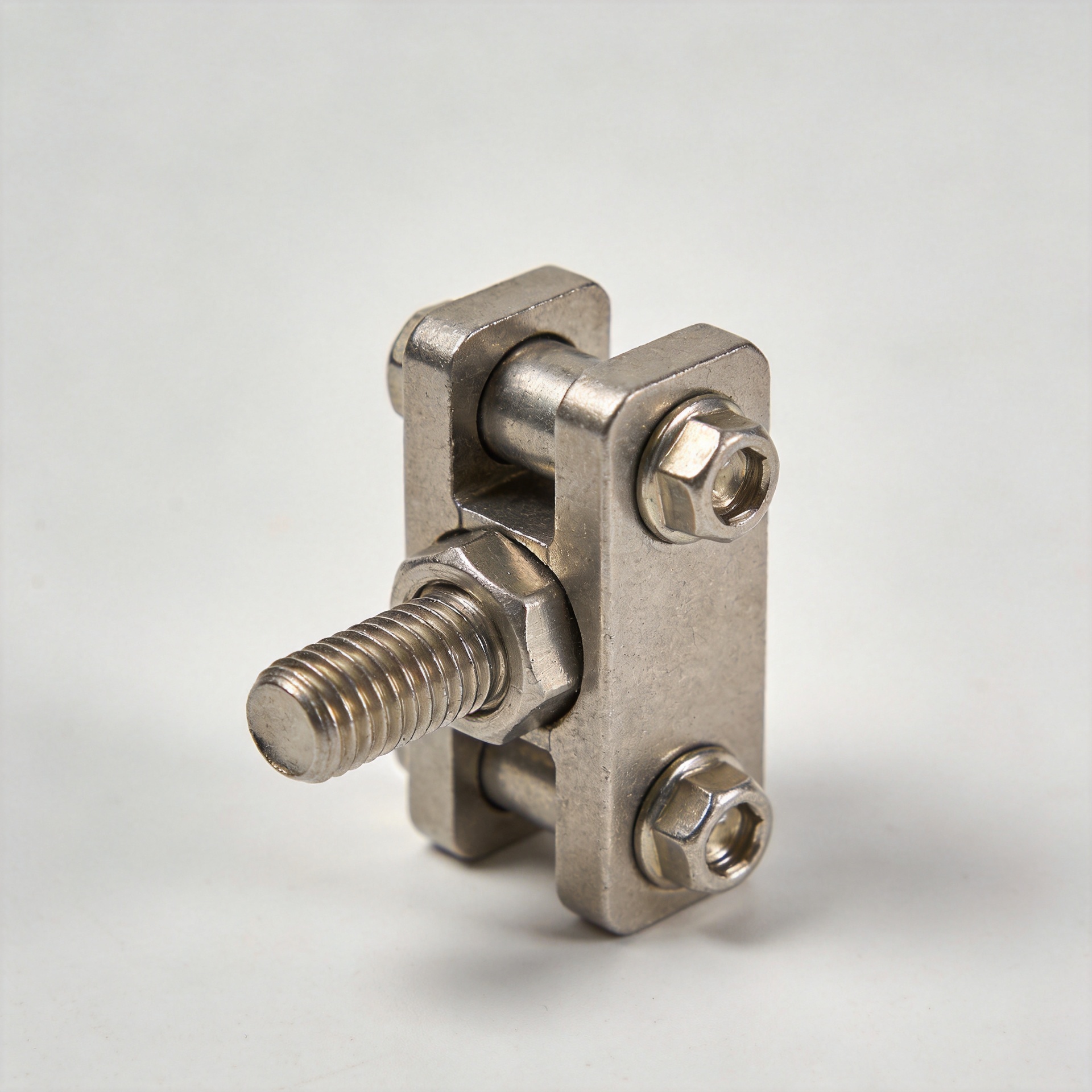
Why Screw Material Grade Changes Behavior in High Stress Joints
In a high-stress joint, a screw does more than hold two parts together. It acts like a spring that creates clamp load, carries part of the service load, and must keep doing both after vibration, temperature change, corrosion exposure, or repeated cycling. That is why material grade changes joint behavior, not merely the number on a purchase specification.
From a fastener-selection perspective, the useful question is not “Which screw has the highest strength?” It is “Which material and property class can create, retain, and safely use the required preload in this joint?” A stronger screw can add margin in one design and create a new installation or environmental constraint in another.
Start with the joint, not the grade stamp
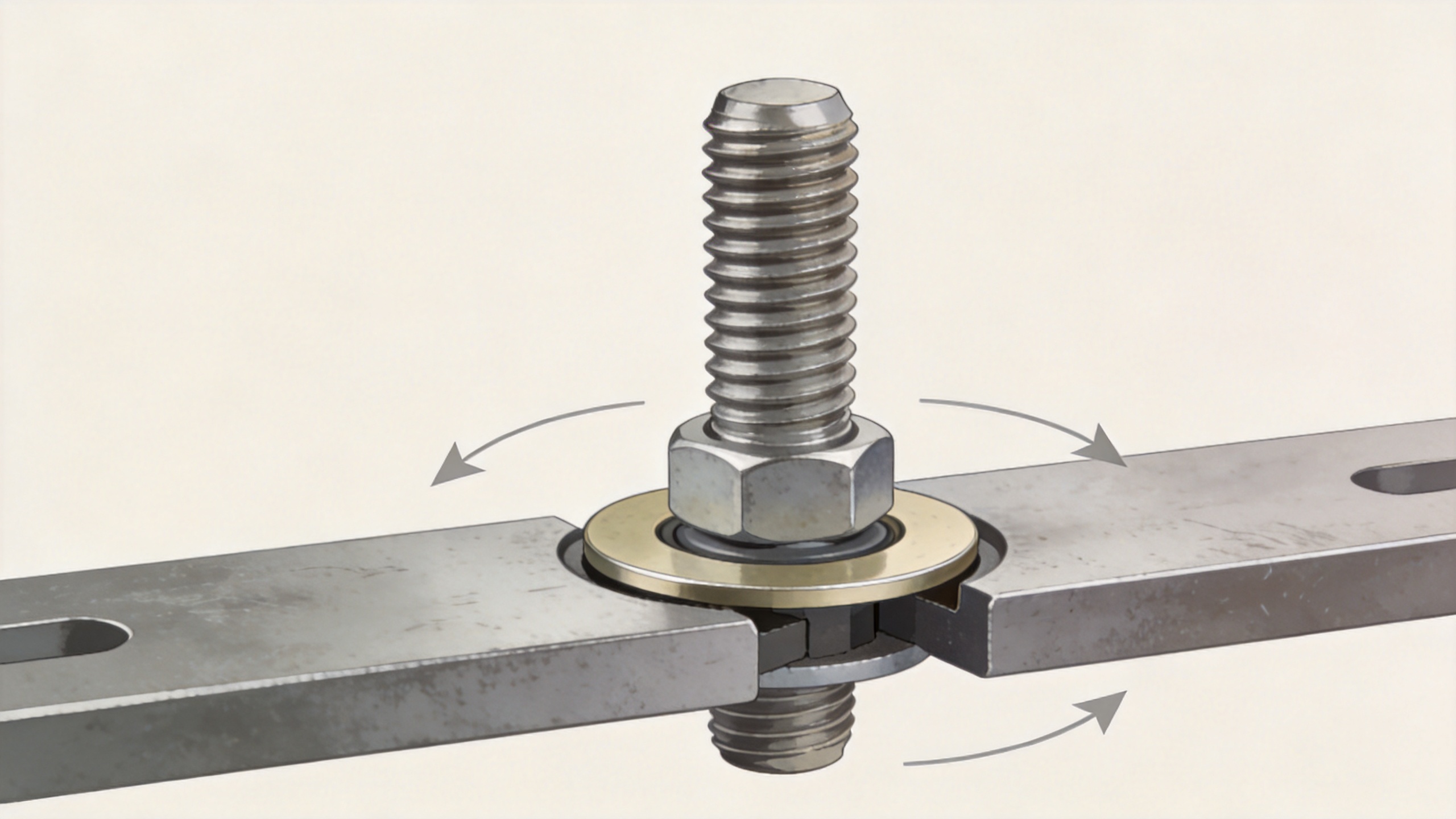
A tightened screw stretches slightly and compresses the clamped parts. That stored elastic stretch is preload. When an external tensile load arrives, a well-designed joint lets the clamped parts unload before the fastener sees the full increase. If preload falls too low, the joint can separate microscopically, slip, fret, or put the screw into a much harsher fatigue cycle.
Material grade influences the safe working range for that stretch. It affects proof strength, yield behavior, tensile capacity, ductility, hardness, and how the fastener responds to manufacturing and surface-treatment processes. It does not, however, override thread engagement, head geometry, mating-material strength, washer selection, or the torque method. In a high-stress joint, those features operate as one system.
What a property class tells you—and what it does not
For carbon-steel and alloy-steel externally threaded fasteners, ISO 898-1 provides a framework for specified mechanical property classes. Common metric classes such as 8.8, 10.9, and 12.9 indicate different strength levels under the standard’s defined test conditions. Retrieved reference material lists nominal minimum tensile strengths of 800 MPa, 1040 MPa, and 1220 MPa respectively for shown size ranges. Those figures are useful orientation points, not an automatic joint design.
A higher class may permit a higher preload target when the complete fastener and joint are designed for it. Yet a designer still needs the applicable standard revision, diameter range, thread series, supplier documentation, and a calculation for the actual assembly. Headed screws can have geometry-related limits, and a joint can fail in the female thread, bearing surface, or clamped material before the screw reaches its nominal capacity.
Why higher strength can change preload behavior
Consider two otherwise similar steel fasteners. The higher-strength option may have a larger elastic working window before permanent deformation. That can be valuable where service loading is high and consistent clamp load matters. But it also raises the importance of installation control. Torque is only an indirect way to estimate tension; much of the applied torque is consumed by thread and bearing-surface friction. A shift in coating, lubricant, or surface condition can move actual preload significantly even when the wrench setting is unchanged.
This is where the “stronger is inherently safer” instinct needs correcting. A very high-strength screw installed with uncontrolled friction can be overstressed during tightening. Conversely, a lower-grade screw in a joint with insufficient thread engagement may strip the mating threads or lose clamp load before its tensile limit becomes relevant. First identify the required preload and joint stiffness; then select a grade that supports the target with an appropriate assembly method.
Fatigue resistance depends on load sharing
High-stress joints often fail through repeated load rather than one dramatic overload. Grade matters because it affects the allowable stress range, but fatigue performance depends heavily on whether the joint stays clamped. When preload is adequate and the clamped parts are sufficiently stiff, a smaller portion of the external load increment reaches the screw. When preload relaxes or the joint separates, the stress range in the fastener rises sharply.
That is why an engineering review should pair material grade with the reason preload might decline: embedment of rough contact faces, settlement in soft coatings, thermal cycling, creep in a gasket or polymer layer, or vibration-induced rotation. A machine screw in a metal enclosure may face a different fatigue problem from a structural threaded fastener, even if the strength marking looks familiar. Design checks should match the actual geometry and service duty rather than transfer a class recommendation between unrelated assemblies.
Corrosion resistance and strength solve different problems
Stainless grades are often chosen for corrosive or wet environments, while quenched-and-tempered alloy or carbon steels are commonly selected where high mechanical strength is central. Neither family is universally preferable. A stainless selection can improve environmental durability yet require attention to thread galling, especially in stainless-on-stainless contact under high friction. A high-strength coated steel can provide useful preload capability but needs a coating system and maintenance plan appropriate to its environment.
Ask three linked questions: What media reaches the joint? How long does the exposure last? What happens if coating damage, crevice conditions, or dissimilar metals are present? Material selection without those answers can produce a screw that looks suitable on a datasheet but changes behavior after installation.
Do not apply the same rule to every screw type
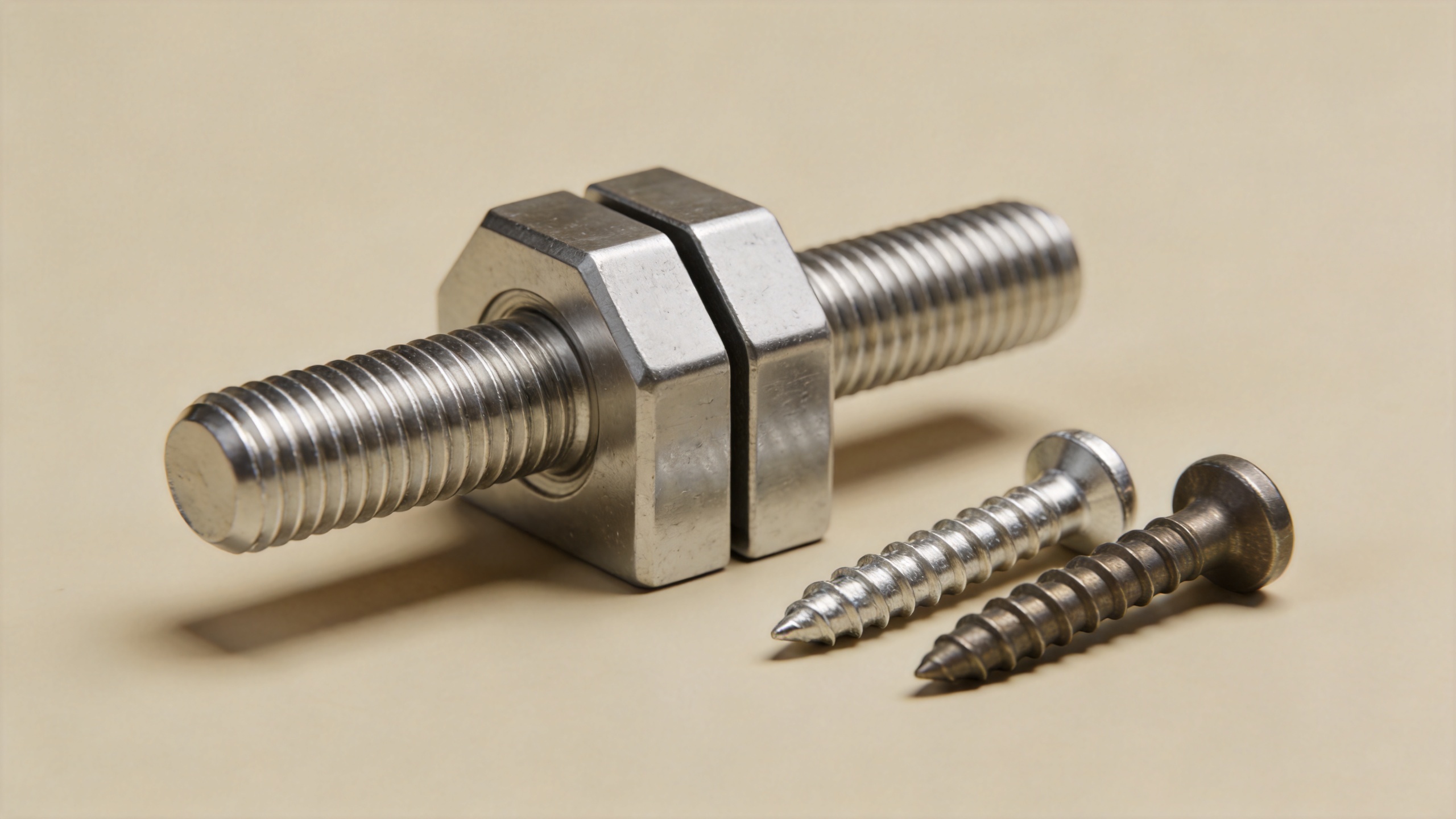
A wood screw relies on withdrawal resistance and thread purchase in a variable substrate, so base-material density, pilot-hole practice, moisture movement, and splitting risk may dominate. Raising the screw’s material strength does not automatically make the wood connection stronger. In fact, a brittle or overly hard selection can be less tolerant of installation misalignment.
A self tapping screw adds thread-forming or thread-cutting demands. The material and heat treatment must suit driving torque and the target sheet or plastic while retaining enough resistance to service load. Here, the installation torque window, pilot feature, and parent-material thickness are just as important as nominal tensile strength.
A hex screw used in a serviceable metal joint may allow more controlled tool engagement and higher torque transmission, but that does not remove the need to verify bearing-face friction, washer use, and the strength of the tapped hole or nut. The product type helps define the installation method; it does not replace the joint calculation.
A practical material-grade verification sequence
- Define the load path. Separate clamp load, external tensile or shear load, vibration, temperature, and any required disassembly cycles.
- Identify the weak interfaces. Check female-thread stripping, head or bearing-face deformation, joint-member compression, and available engagement length before selecting a higher class.
- Choose the material family for the environment. Evaluate corrosion exposure, compatible mating metals, temperature, and galling potential alongside strength.
- Set the property class and proof-load basis. Use the applicable standard and supplier documentation for the exact size and product form; do not generalize a table value across every screw geometry.
- Validate installation. Specify the tightening method, friction assumptions, lubrication or coating condition, and any torque-angle or tension verification needed for the risk level.
- Review retention in service. Consider relaxation, embedment, cyclic loading, and inspection access. A reliable joint is one that retains functional clamp load, not merely one that survived initial tightening.
Match the screw form to the material-grade decision
Record the product form alongside the grade during design review. A machine screw needs controlled engagement and tightening. A wood screw needs checks for timber density, pilot holes, and moisture movement. A self tapping screw requires review of forming torque, material thickness, and service load. For a hex screw, confirm tool access, washer condition, and the strength of the nut or tapped hole. In every case, the screw material decision should be tied to the specific load path rather than copied from a neighboring fastener.
Before release, ask whether the selected screw has a documented material condition, whether the assembly method can reach the intended preload, and whether inspection can detect a loss of clamp load. This short check keeps a machine screw, wood screw, self tapping screw, or hex screw from being treated as interchangeable merely because each is called a screw.
The procurement information that makes a technical decision easier
For a high-stress application, a purchase request should identify more than “high-grade screw.” Include the standard and property class, material family, dimensions and thread, surface condition, mating material, target environment, required certificates, and any installation-control requirement. A supplier with batch inspection and traceability processes can support this review by linking the delivered lot to the requested specification; the buyer still needs to confirm the joint design and applicable standard requirements.
In short, material grade changes how a screw stretches, carries load, resists environmental damage, and reacts to installation. The right choice is the one that fits the whole joint: preload target, load cycle, mating parts, environment, and verification method. Treat the grade marking as the start of the engineering conversation, not its conclusion.