EN

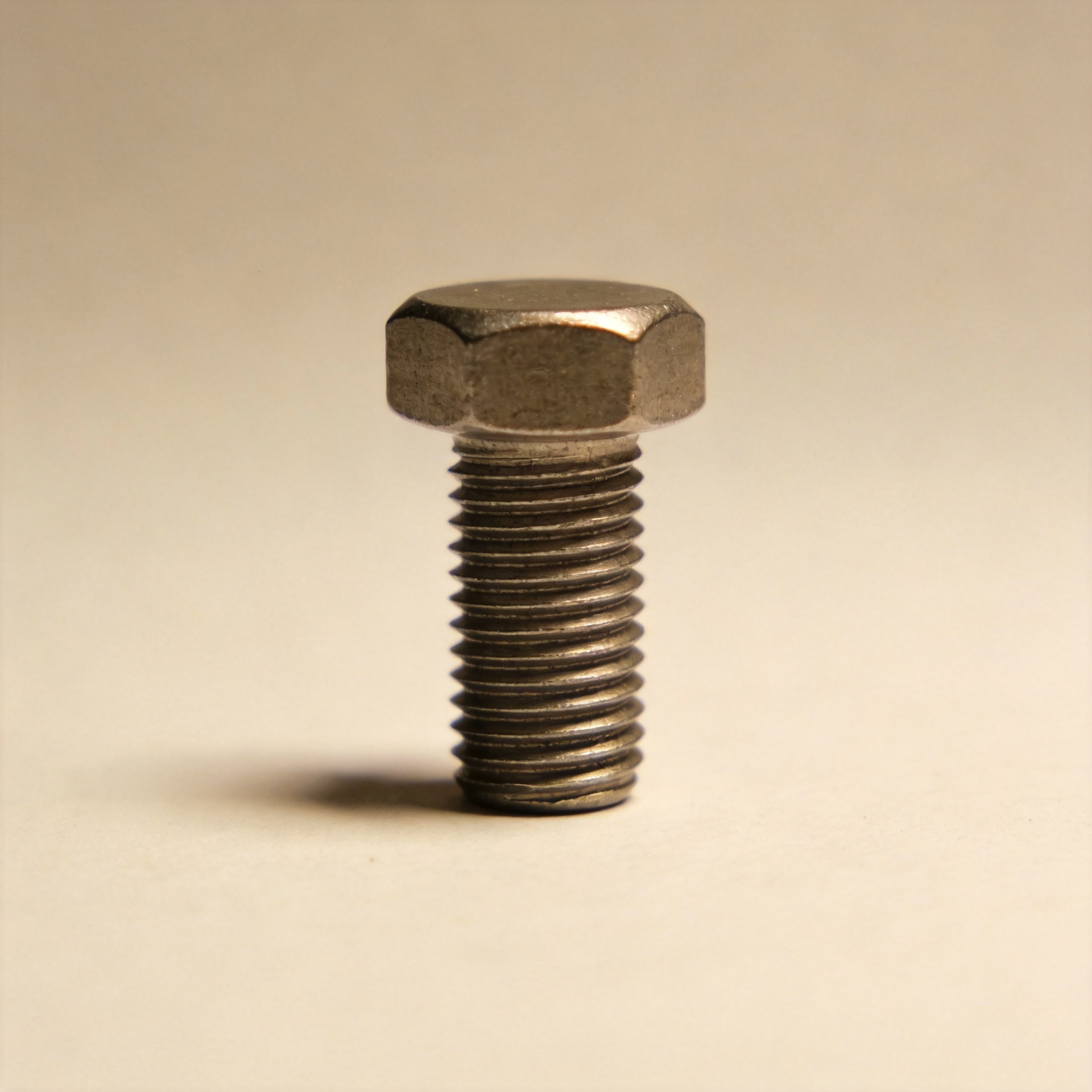
Why Stud Manufacturing Method Affects Grain Flow at Critical Zones
For fatigue-sensitive assemblies, Studs are more than pieces of threaded bar. The route used to make them influences how metal is displaced around the thread root, the runout, and any change in diameter. Those are the locations where local stress rises first. As a fastener-selection engineer reviewing drawings and assembly conditions, I start with load direction, cyclic loading, and the geometry at these transitions rather than with a simple “rolled versus cut” label.
This matters whether the part is a threaded stud for a flange, a double ended stud joining two components, a welding stud attached to sheet or structure, or a stud bolt under preload. Manufacturing method is one input to a controlled design-and-process decision; material grade, heat treatment, surface condition, engagement length, and installation torque remain important too.
What grain flow means in a stud
Metal grain flow describes the directional pattern created as steel is worked. In a formed part, material is displaced and its flow lines can follow the part contour. In a machined part, material is removed to create the geometry. Neither description alone predicts service life, but it explains why the same nominal thread can behave differently when repeated loading concentrates at a root or transition.
For Studs, the critical question is not “Is there grain flow?” It is whether the chosen process leaves a sound, controlled surface and favorable local condition where the thread starts, ends, or meets an unthreaded shank. A thread root is a geometric notch. If it is also rough, damaged, decarburized, poorly rolled, or placed directly at a bending transition, its effect can become more significant.
Why thread rolling changes the local condition
Thread rolling forms a thread by pressing dies into a prepared blank. Because metal is displaced rather than removed, the process can preserve a contour-following flow pattern and can cold-work the flanks and roots. Technical manufacturing sources describe root hardening of up to roughly 30 percent in some rolled-thread conditions. That figure is not a specification for every alloy or size, but it illustrates why process route deserves attention when fatigue is part of the design case.
A well-controlled rolled threaded stud may therefore offer a smoother root profile and compressive residual stress near the root. Both characteristics can be useful under cyclic tension. The result still depends on blank diameter, die condition, lubrication, thread form, material ductility, rolling sequence, and any later thermal treatment. Rolling a part outside its material or geometry window can introduce its own defects; it is not a substitute for process validation.
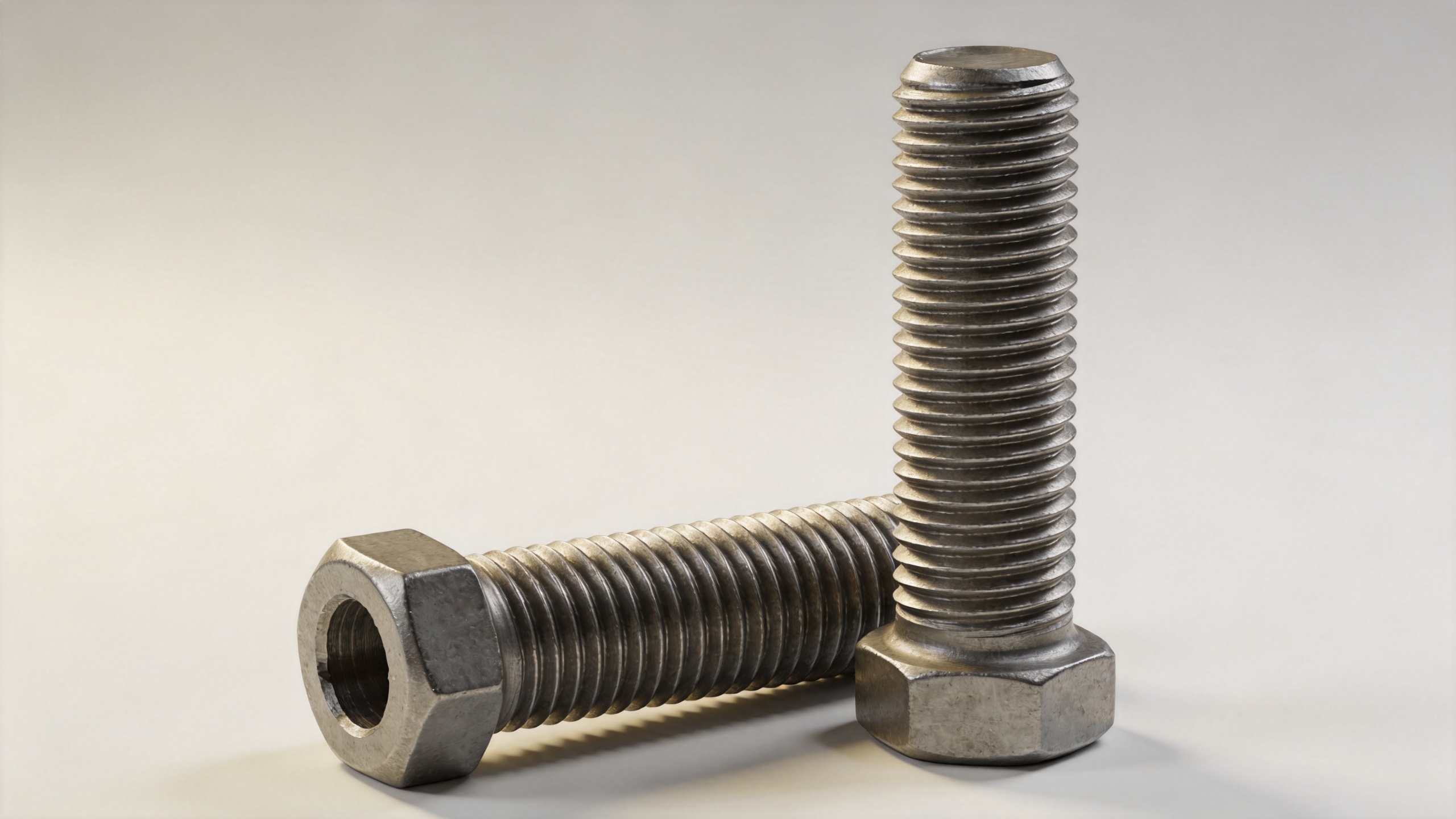
Where cut threads remain a practical choice
Cutting produces the thread by removing metal with a tool, die, or grinding operation. It is often useful for small runs, oversized parts, nonstandard profiles, repair work, and materials or shapes that are difficult to roll. A cut stud bolt should not be rejected simply because it is cut. Instead, the drawing review should ask whether the surface finish, root radius, runout location, and inspection plan suit the duty cycle.
The tradeoff is that cutting interrupts the original surface and grain pattern, while tool marks or an abrupt root can create stress raisers if they are not controlled. For low-cycle, static, or lightly loaded joints, those differences may have little practical effect. For high-cycle vibration, thermal cycling, or tension-critical joints, the manufacturing route deserves explicit discussion between the designer and supplier.
Critical zones deserve more attention than the thread label
Thread runout and the first engaged threads
The runout is where full thread geometry transitions to the shank. It is often a fatigue-sensitive area because it combines a change in section with thread-root stress. On Studs that carry fluctuating load, specify a controlled runout geometry and keep the transition outside the highest-bending region where possible. Confirm whether rolling occurs before or after heat treatment, because the sequence can affect dimensions and local properties.
Body-to-thread transitions on a double ended stud
A double ended stud has two threaded ends and may have an unthreaded center section. Its center, the two runouts, and the first engaged thread on each end can see different loading. Unequal engagement, different mating materials, and assembly torque can shift the load path. Review both ends instead of assuming one manufacturing route automatically creates identical performance across the part.
The joining end of a welding stud
A welding stud adds a second process: attachment to a base material. The weld junction, heat-affected zone, and the transition between the welded end and the threaded portion require their own qualification. Grain flow in the threaded section does not compensate for unsuitable welding parameters, poor surface preparation, or an application that overloads the welded joint. Treat thread manufacture and weld procedure as connected but separate controls.
A practical process-review checklist for Studs
- Define the loading: identify static preload, cyclic tension, bending, vibration, temperature change, and corrosion exposure.
- Locate the critical zone: mark thread runouts, diameter changes, first engaged threads, weld transitions, and points of constrained bending on the drawing.
- Select the thread route deliberately: assess rolling, cutting, or grinding against material condition, lot size, thread form, and fatigue demand.
- Control the blank: blank diameter, straightness, material cleanliness, and surface condition affect a formed thread before the dies ever touch it.
- Specify verification: use suitable dimensional checks, visual examination, thread gauges, and—when the application warrants it—process qualification or fatigue validation.
- Review downstream operations: heat treatment, coating, plating, handling, welding, and installation can change the local condition created during manufacture.
How buyers can write a clearer inquiry
When requesting Studs, provide more than diameter, pitch, and overall length. State the application, material standard, strength class where applicable, thread length at each end, surface treatment, required inspection records, and whether the joint sees cyclic loading. For a threaded stud or stud bolt used in a critical joint, ask the supplier to identify the intended thread-forming route and the inspection controls associated with it.
Many procurement teams initially focus on unit price. In a critical assembly, however, rework, downtime, and investigation after a field issue can outweigh the small price difference between manufacturing routes. The better question is: which controlled process produces a part whose geometry and local condition match this joint’s actual service requirements?
The balanced takeaway
Manufacturing method affects the grain flow and local condition of Studs, especially at thread roots and transitions. Rolled threads can offer useful advantages when the material, geometry, and process window are appropriate. Cut threads remain appropriate in many designs. The dependable approach is to evaluate the complete system: loading, material, thread geometry, runout placement, heat treatment, surface finish, joining method, and verification plan.
For a double ended stud, a welding stud, or a stud bolt, the critical-zone review should be part of the drawing and supplier conversation early in the project. That approach gives engineering, quality, and purchasing teams a common basis for selecting a process rather than relying on a simplified rule.