EN

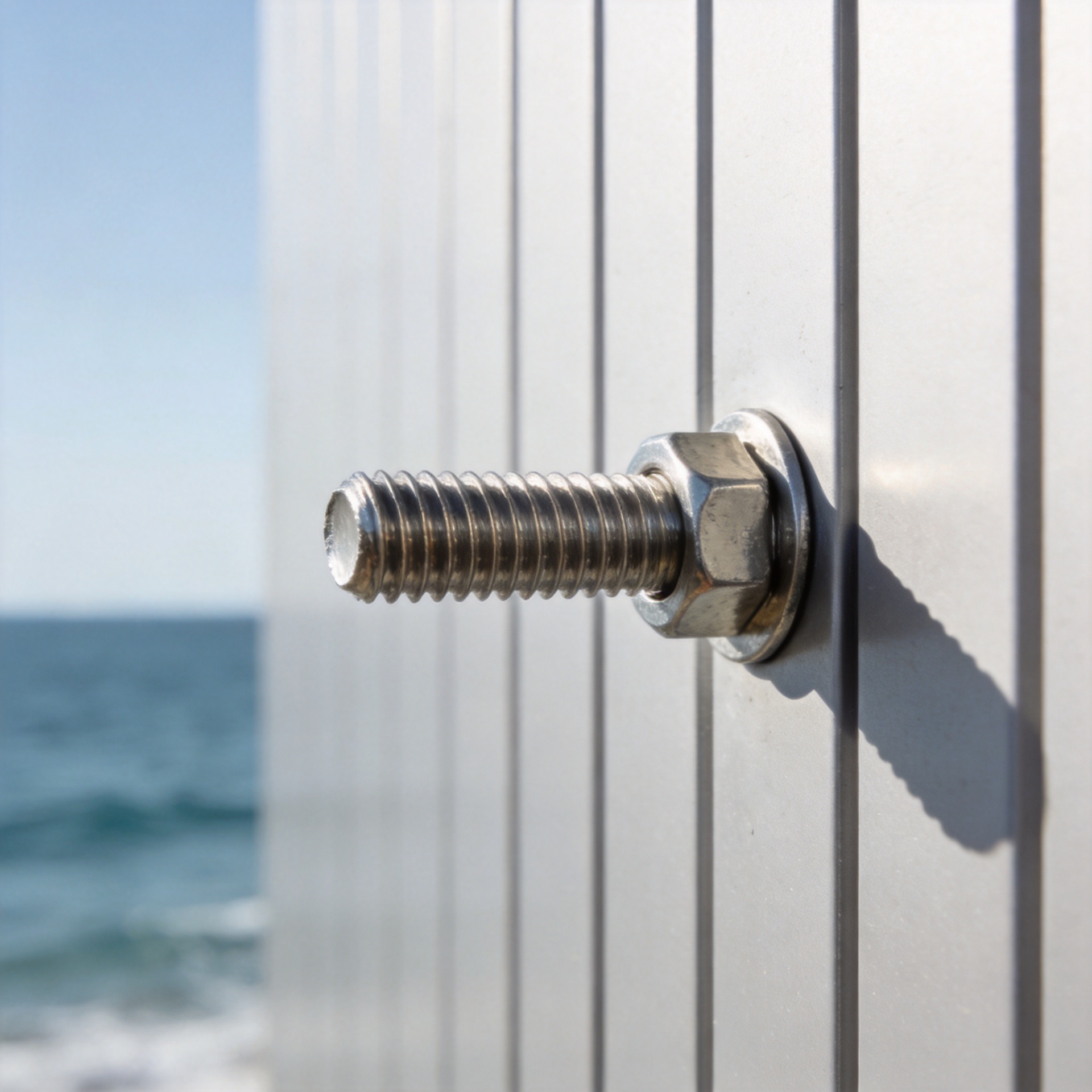
Why Stainless Screws Corrode in Coastal Builds Despite the Rating
A stainless screw is often specified for a coastal job with the assumption that its grade label settles the corrosion question. It does not. The label identifies a material family, while the installed screw must also survive chloride deposits, trapped moisture, joint geometry, handling damage, contact with other metals, and the project’s cleaning routine. In other words, a rating is a starting point for selection, not a field-life promise.
For a manufacturing procurement team, the useful question is not simply “Is this a stainless screw?” It is “What alloy, finish, thread form, mating materials, exposure cycle, and verification record does this screw have?” That shift helps construction buyers separate cosmetic discoloration from early warning signs of localized corrosion.
What stainless steel is actually resisting
Stainless alloys resist corrosion by forming a very thin chromium-rich passive film. In clean, oxygenated conditions, that film can reform after minor damage. Coastal exposure changes the conditions around every screw. Sea-salt aerosol leaves chloride on horizontal ledges, under heads, inside threads, and behind cladding. Dew or rain dissolves those deposits into a concentrated electrolyte. When the assembly dries, salts remain and the cycle starts again.
The first visible issue may be tea staining: brown surface discoloration caused by deposits and corrosion products. That is not automatically a structural failure. A more serious condition is pitting, where chloride attack creates small, deep cavities. Crevice corrosion is similarly localized but develops in an oxygen-starved gap, such as beneath a washer, within a lap joint, or at the interface between a fastener head and a coated panel. A screw can look acceptable across most of its exposed surface while deterioration progresses at the concealed mating area.
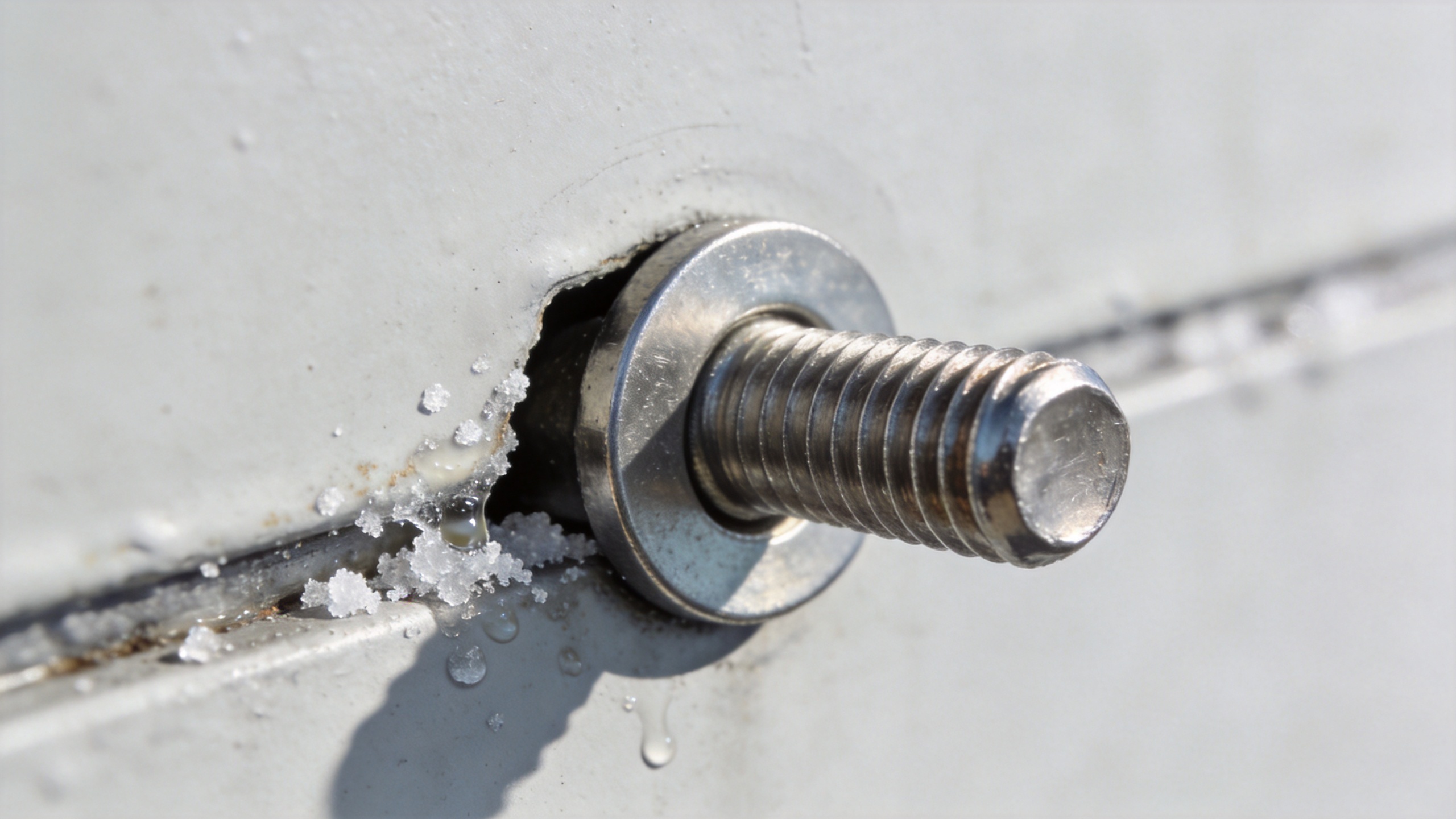
Why a grade designation is not a coastal service rating
Many specifications call 304 “stainless” and 316 “marine grade.” Those labels are useful shorthand, but they do not describe the whole assembly. Molybdenum in 316 generally improves resistance to chloride pitting compared with 304. It does not make a 316 screw immune to stagnant saltwater, persistent deposits, narrow crevices, or an unsuitable mating material. A grade name also says nothing by itself about actual heat chemistry, cold-worked strength, machining condition, passivation, or whether the delivered lot matches the purchase requirement.
It is easy to focus on the alloy number and miss the joint. In a sheltered soffit near surf, a machine screw can stay wet longer than a visibly exposed fastener that rain rinses regularly. On a timber deck, a wood screw may hold moisture and preservative residues at the shank. On thin sheet, a self tapping screw can create a tight, debris-holding interface as it forms the thread. A hex screw with a washer may add another crevice unless the detail drains and dries.
Five reasons a stainless screw fails early near the coast
- Salt remains on the surface. Wind-driven spray reaches much farther inland than direct splash zones. Covered corners, louvers, parapets, and underside fixings receive little natural rinsing, so chloride can accumulate around the screw.
- The joint traps moisture. Tight overlaps, soft gasket compression, burrs, sealant residues, and washer mating areas can restrict oxygen. The passive film on a screw has less opportunity to recover in these areas.
- Installation damages the surface. Driver slip, an incorrect bit, excessive torque, or steel-tool contamination can scratch a fastener or leave embedded particles. The problem may begin at the head recess or thread runout rather than in the open shank.
- Dissimilar metals create a galvanic couple. If a stainless screw contacts a more active metal while saltwater bridges the joint, corrosion may accelerate on the less noble component. The result can stain the fastener or undermine the surrounding panel even when the stainless fastener itself remains largely intact.
- The supplied grade is not verified. A project drawing may state 316, but a carton label is not material traceability. For critical locations, ask for the ordered grade, applicable standard, lot identification, and material documentation before releasing the screw to site.
How to specify the screw as part of a system
Start by mapping the exposure rather than using one fastener schedule for the entire façade. Identify splash-prone zones, sheltered zones that collect salt, ventilation gaps, contact metals, timber treatments, and locations that crews cannot inspect easily. Then define the required alloy and evidence package for each zone. A supplier with batch traceability and documented outgoing checks can support a more disciplined review of the screw specification.
Write the purchase description so it covers more than diameter and length. Include alloy grade, thread type, head style, finish or passivation requirement where applicable, mating material, washer or isolator detail, applicable dimensional standard, and lot traceability. For a machine screw, specify the compatible threaded insert or nut material. For a wood screw, check moisture-retaining timber species and preservative chemistry. For a self tapping screw, review coating compatibility and the joint’s ability to drain. For a hex screw, verify flange, washer, and socket access before installation.
Installation details matter as much as alloy choice
Before a crew starts, use a sample panel to confirm the right driver engagement, pilot-hole practice, torque window, and seating condition. The aim is not maximum torque; it is a secure screw joint without stripping threads, crushing a gasket, or damaging the head. Keep carbon-steel grinding dust and unclean tools separate from stainless work. Store cartons dry and off the ground so a fastener does not arrive at the installation point with contaminated packaging or standing water.
Where design permits, use insulating washers, sleeves, or separation materials to manage dissimilar-metal contact. Detail laps to drain rather than form a capillary pocket. Do not hide a corrosion-prone mating area under sealant without a maintenance plan. A small change that lets the screw head dry can be more valuable than an unexamined upgrade in nominal grade.
Inspection and maintenance: distinguish staining from attack
Set an inspection interval based on exposure, not on a generic calendar. Look first at sheltered and slow-drying zones: beneath heads, around washers, inside panel laps, and at the lowest points of assemblies. Record staining, roughness, red-brown deposits, looseness, and pitting separately. Surface staining may call for cleaning and a review of drainage; a pit, crevice attack, or loss of section calls for engineering assessment of the affected screw and adjacent materials.
Use cleaning methods appropriate to the material system and follow the project’s maintenance instructions. Abrasive tools that embed foreign steel can worsen the original problem. If a recurring issue appears across one lot or one elevation, preserve representative fasteners and their packaging for traceability review instead of replacing everything before evidence is collected.
A practical coastal screw checklist
- Classify direct spray, airborne salt, sheltered deposit, and rinsed exposure zones.
- Match each screw grade to the exposure and crevice risk, not to a marketing label alone.
- Confirm the mating metals, washers, coatings, timber treatment, and drainage path.
- Request lot identification and material documentation for project-critical fasteners.
- Trial the driving method and torque on the actual assembly.
- Plan access for cleaning and inspection where salt can collect.
The central lesson is simple: stainless is corrosion-resistant, not corrosion-proof. A coastal screw performs well when alloy selection, verified supply, joint design, installation control, and maintenance all work together. Treat the fastener as one part of the assembly, and the grade designation becomes useful evidence rather than a false assurance.