EN

Why Fasteners Fail in Salt Laden Air and What Engineers Recommend
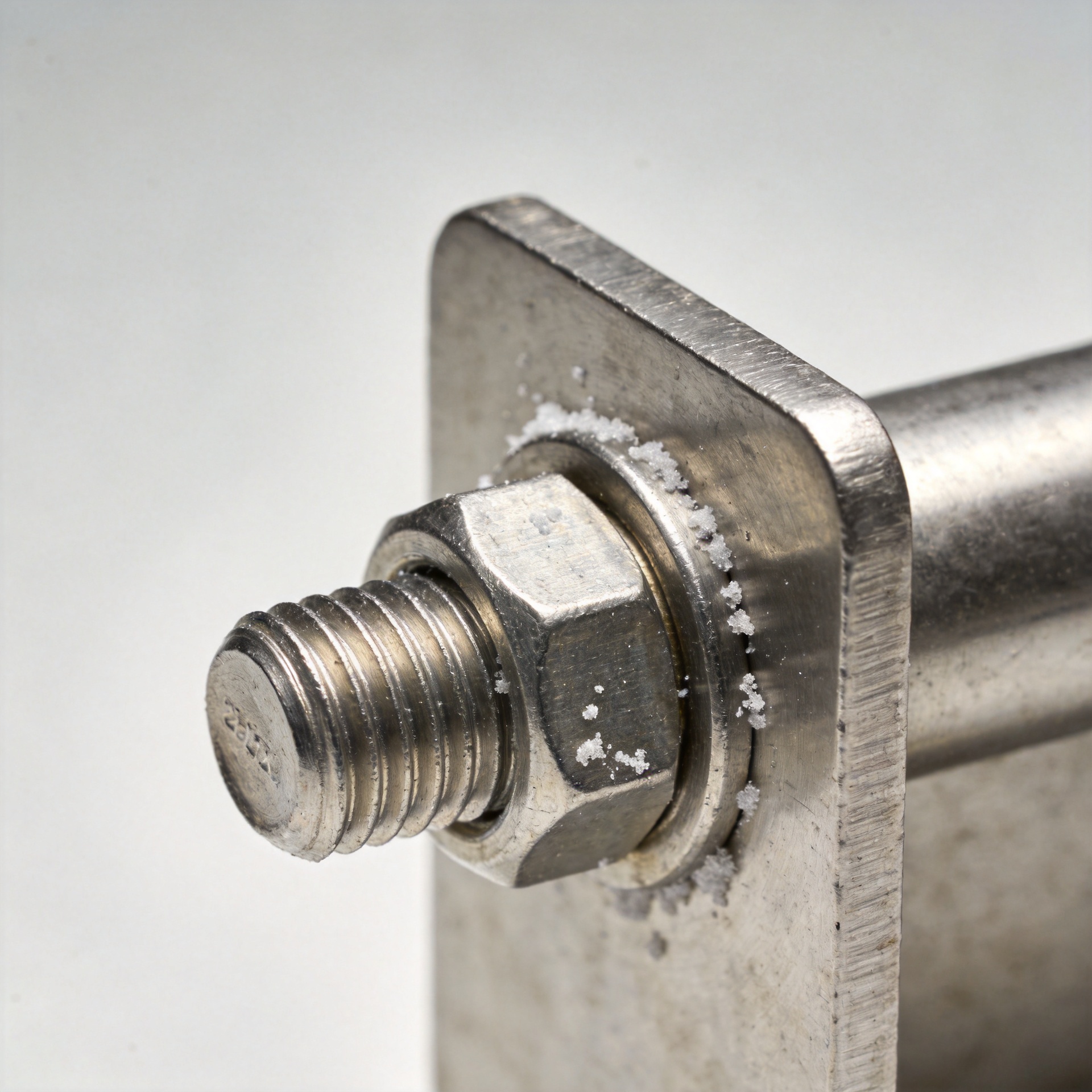
Salt-laden air creates a demanding service condition because a fastener does not need to be immersed in seawater to corrode. Windborne chlorides settle on threads, under washers, and in head-to-surface contact zones. When humidity rises, those deposits can become an electrolyte. The result is often localized attack that starts where a joint traps moisture, not where an inspector first looks.
From a fastener-selection engineer’s viewpoint, the useful question is not simply “Which metal resists rust?” It is whether the material, geometry, coating, preload, mating materials, and maintenance plan suit the actual chloride exposure. A threaded fastener that performs well in a dry indoor enclosure may be a poor fit beside the coast, on a marine deck, or in equipment exposed to salt spray.
Why Salt-Laden Air Is Hard on a Fastener
Salt aerosol leaves chloride-bearing residue even when a surface looks dry. Repeated wet-dry cycles are especially troublesome: moisture dissolves the deposits, oxygen supports electrochemical reactions, and drying can concentrate salts in tiny gaps. Carbon steel can develop general rusting, while stainless alloys may suffer more localized pitting or crevice corrosion if chlorides disrupt the passive surface film.
The most vulnerable positions are usually hidden: the engaged threads of a threaded fastener, the underside of a bolt head, the washer contact area, and seams where water cannot drain. These locations have restricted oxygen access and can hold concentrated solution longer than an exposed shank. That is why a clean-looking head does not prove the joint is healthy.
Many teams initially focus on purchase price. In coastal service, the hidden cost is often access, shutdown time, replacement labor, and loss of clamp load after corrosion begins. Evaluating total lifecycle cost is generally more useful than comparing unit price alone.
Four Failure Mechanisms Engineers Look For
1. Loss of cross-section and clamp load
Corrosion consumes material and can reduce the effective section of a mechanical fastener. More subtly, corrosion products at bearing contact zones may relax preload or distort the load path. A joint that was tightened correctly at installation can loosen as the contact condition changes.
2. Pitting and crevice attack
Chloride ions can challenge stainless steel’s passive layer. In sheltered crevices, oxygen conditions and salt concentration differ from the exposed surface, so damage may deepen locally. Threads are not just a connection detail; they create multiple crevice-like regions that deserve attention during material selection and inspection planning.
3. Galvanic acceleration
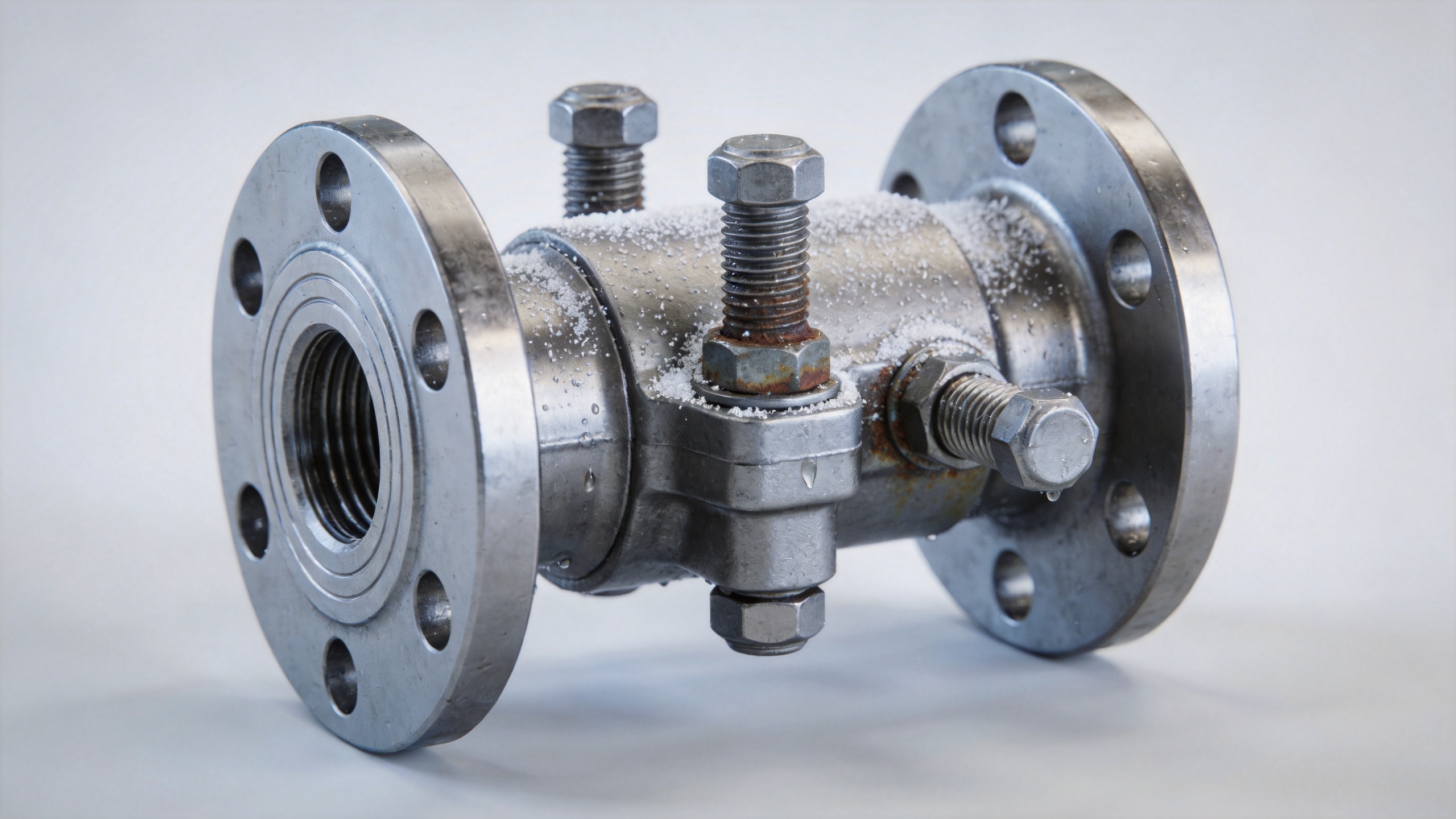
A fastener joined to a dissimilar metal can become part of a galvanic couple when saltwater residue bridges the surfaces. The risk depends on the material pair, relative area, electrical continuity, and how long the joint remains wet. Isolating washers, compatible material choices, or suitable barriers may be considered, but each should be assessed for temperature, load, and installation effects.
4. Installation damage and trapped contamination
Tool marks, embedded carbon-steel particles, damaged coatings, and unsealed crevices can create starting points for corrosion. The fastener itself may be sound, yet the assembled joint can still fail because the mating surfaces retain salt and water. This is why corrosion resistance is a system question rather than a single-part claim.
Why “Stainless” Is Not a Complete Specification
A stainless fastener is not automatically suitable for every marine atmosphere. Alloy composition, surface condition, temperature, chloride deposition, crevice geometry, stress level, and cleaning access all change the outcome. In many chloride-bearing applications, engineers consider 316-type material or ASTM A193 B8M rather than 304-type material because molybdenum improves resistance to pitting and crevice corrosion. That is a starting point for evaluation, not a blanket approval.
For higher temperatures, severe splash zones, persistent crevices, aggressive chemicals, or critical structural duty, the project engineer may need a different alloy family, a specified coating system, or a documented corrosion assessment. Strength class also matters. Choosing a more corrosion-resistant grade without checking proof load, nut compatibility, thread engagement, and tightening method can replace one problem with another.
A Practical Engineering Selection Process
- Classify the exposure. Record distance from the shore, salt spray or washdown, wet-dry frequency, operating temperature, contaminants, and whether the joint can drain and be cleaned.
- Define joint function. Identify preload, shear, fatigue, vibration, safety consequence, and the required design life. A lightly loaded cover and a critical flange connection should not use the same decision shortcut.
- Specify the complete joint. Select bolt, nut, washer, coating or finish, lubricant, and mating-material strategy as one system. Include thread standard, strength class, and documentation requirements.
- Control crevices and drainage. Avoid geometry that retains salt solution where possible. Detail joints so they can dry, be washed, and be inspected instead of creating inaccessible traps.
- Validate the supply and installation plan. Confirm material identity, lot traceability, surface condition, packaging, torque or tension procedure, and any project-required test records before release.
For a custom fastener, provide the application data early: drawing, mating materials, target preload, environmental description, applicable standard, and inspection expectations. The specification can then address corrosion performance and mechanical duty together rather than treating them as separate purchase-line items.
Match the Fastener System to the Exposure
For a coastal assembly, start the fastener review with the joint rather than the catalog label. A threaded fastener needs a compatible nut and washer, realistic thread engagement, and a finish or alloy suitable for the deposited-salt cycle. The mechanical fastener also needs enough strength for its load case after the selected material and tightening method are considered.
Where a stainless fastener is being evaluated, ask whether the location is sheltered, regularly washed by rain, exposed to direct spray, or adjacent to another metal. A stainless fastener may be appropriate in one zone and need a different specification in another. This distinction is particularly important for a custom fastener because a drawing can define dimensions without defining the actual corrosion duty.
Procurement documentation should identify every fastener in the connection, not merely the bolt. Listing the threaded fastener, nut, washer, lubricant, grade, and required records makes substitution easier to detect. It also gives quality teams a clearer basis for receiving inspection when a mechanical fastener is supplied for chloride service.
During design review, engineers should also look at the installation sequence. If a stainless fastener will be tightened against carbon steel, aluminum, or a coated structural member, the contact arrangement needs review. A custom fastener can address unusual geometry, but only when the material and fabrication requirements are tied to the measured environment and load path.
What to Verify Before Installation
- Material grade and any required material test documentation match the purchase specification.
- The bolt, nut, washer, and lubricant are compatible with the intended preload procedure.
- Threads are clean, undamaged, and free of foreign-metal contamination.
- Contact with dissimilar metals has been reviewed for the expected wet time and area ratio.
- Joint geometry allows drainage and provides a realistic inspection or washdown path.
- Protective packaging limits salt and moisture exposure during shipping and site storage.
Maintenance Is Part of the Corrosion Strategy
Even a well-selected fastener needs a practical inspection plan. Engineers commonly focus checks on sheltered joints, horizontal ledges, mixed-metal contact zones, and locations subject to washdown or airborne spray. Look for staining around washers, swelling deposits at threads, coating damage, seized nuts, or a change in torque response. Findings should trigger a review of the joint environment and specification, not only a one-for-one replacement.
There is no single grade, coating, or maintenance interval that suits all salt-laden environments. The sound approach is to match a fastener system to exposure severity and joint duty, then verify it through material control, installation discipline, and planned inspection. That process helps engineers reduce premature corrosion while keeping the mechanical requirements visible.